- BPM
- 75
- Key
- E Major
- Camelot
- 12B
Pictures At An Exhibition: Il. Vecchio Castello by Modest Mussorgsky, Tamriko Siprashvili, Mark Anderson Song Details
"Pictures At An Exhibition: Il. Vecchio Castello" by Modest Mussorgsky, Tamriko Siprashvili, Mark Anderson had its release date on April 1, 2004. With this song being about 5 minutes long, at This song is fairly a long song compared to the average song length. This song does not have an "Explicit" tag, making it safe for all ages. The track order of this song in Tamriko Siprashvili, Mark Anderson's "Mussorgsky & Stravinsky: Music for 2 Pianos" album is number 18 out of 29. On top of that, United Kingdom appears to be the country where this track was created. Pictures At An Exhibition: Il. Vecchio Castello is unknown right now. In our opinion, the overall tone is not very danceable and projects negative sounds, such as being sad, depressed, or angry.
BPM and Tempo
We consider the tempo marking of Pictures At An Exhibition: Il. Vecchio Castello by Modest Mussorgsky, Tamriko Siprashvili, Mark Anderson to be Adagio (slowly with great expression) because the track has a tempo of 75 BPM, a half-time of 38BPM, and a double-time of 150 BPM. Based on that, the speed of the song's tempo is slow. The time signature for this track is 4/4.
Music Key
This song is in the music key of E Major. This also means that this song has a camelot key of 12B. So, the perfect camelot match for 12B would be either 12B or 1A. While, 1B can give you a low energy boost. For moderate energy boost, you would use 9B and a high energy boost can either be 2B or 7B. Though, if you want a low energy drop, you should looking for songs with either a camelot key of 12A or 11B will give you a low energy drop, 3B would be a moderate one, and 10B or 5B would be a high energy drop. Lastly, 9A allows you to change the mood.
Want to find the BPM and music key for other songs? Check out our BPM and Key Finder page!
- Popularity
- 0%
- Loudness
- -20.909 dB
- Acousticness
- 98%
- Danceability
- 28%
- Energy
- 15%
- Instrumentalness
- 89%
- Liveness
- 9%
- Loudness
- 65%
- Speechiness
- 4%
- Valence
- 4%
Recommendations
| Track | Artist | Key | Energy | Camelot | BPM | ||
|---|---|---|---|---|---|---|---|
 | Sonata In G Minor For Cello & Piano, Op. 19: 3. Andante | Sergei Rachmaninoff, Alisa Weilerstein, Inon Barnatan | F Major | 2 | 7B | 82 BPM | |
 | Pictures at an Exhibition (Orch. Ravel): II. Il castello vecchio "The Old Castle" | Modest Mussorgsky, London Symphony Orchestra, Claudio Abbado | F♯ Minor | 0 | 11A | 73 BPM | |
 | Symphony No. 7 in A Major, Op. 92: II. Allegretto | Ludwig van Beethoven, Wiener Philharmoniker, Carlos Kleiber | A Major | 3 | 11B | 75 BPM | |
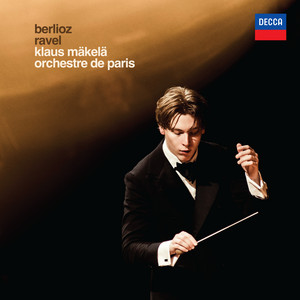 | Symphonie fantastique, H. 48: II. Un bal. Valse | Hector Berlioz, Orchestre de Paris, Klaus Mäkelä | A Major | 1 | 11B | 100 BPM | |
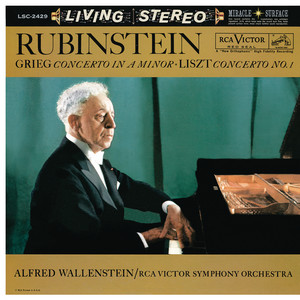 | Piano Concerto in A Minor, Op. 16: I. Allegro molto moderato - Remastered | Edvard Grieg, Arthur Rubinstein, RCA Victor Symphony Orchestra, Alfred Wallenstein | A Minor | 1 | 8A | 82 BPM | |
 | Brook Green Suite: II. Air | Gustav Holst, English Sinfonia, Howard Griffiths | E♭ Major | 0 | 5B | 128 BPM | |
 | The Hebrides, Op. 26 "Fingal's Cave" | Felix Mendelssohn, John Eliot Gardiner, London Symphony Orchestra | D Major | 1 | 10B | 137 BPM | |
 | La Mer, L.109: 2. Play of the Waves (Jeux de vagues) | Claude Debussy, Orchestre Symphonique de Montréal, Charles Dutoit | E Major | 1 | 12B | 113 BPM | |
 | Symphony No. 7 in C Major, Op. 105: Adagio | Jean Sibelius, Berliner Philharmoniker, Sir Simon Rattle | C Major | 0 | 8B | 78 BPM | |
 | Enigma Variations, Op. 36: Var. 8. Allegretto "W.N." | Edward Elgar, BBC Symphony Orchestra, Leonard Bernstein | G Major | 0 | 9B | 84 BPM | |
 | Scottish Fantasy for Violin and Orchestra, Op. 46: I. Introduction: Grave, Adagio cantabile | Max Bruch, Joshua Bell, Academy of St. Martin in the Fields | E♭ Major | 2 | 5B | 60 BPM | |
 | Warsaw Concerto | Richard Addinsell, Jean-Yves Thibaudet, BBC Symphony Orchestra, Hugh Wolff | B Major | 1 | 1B | 76 BPM | |
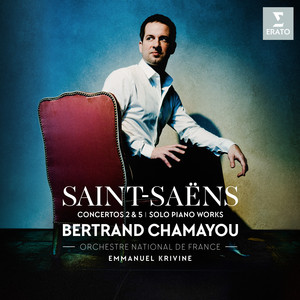 | Saint-Saëns: Piano Concerto No. 2 in G Minor, Op. 22: I. Andante sostenuto | Camille Saint-Saëns, Bertrand Chamayou, Emmanuel Krivine, Orchestre National De France | G Minor | 2 | 6A | 94 BPM | |
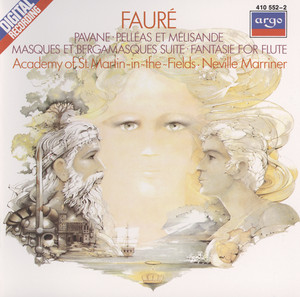 | Pelléas et Mélisande, Op.80: 3. Sicilienne | Gabriel Fauré, Academy of St. Martin in the Fields, Sir Neville Marriner | G Minor | 0 | 6A | 111 BPM | |
 | Sibelius : Symphony No.5 in E flat major Op.82 : II Andante mosso, quasi allegretto | Jean Sibelius, Sakari Oramo, City Of Birmingham Symphony Orchestra | G Major | 0 | 9B | 142 BPM | |
 | Die Fledermaus: Overture | Johann Strauss II, Bavarian State Orchestra, Carlos Kleiber | G Major | 1 | 9B | 100 BPM | |
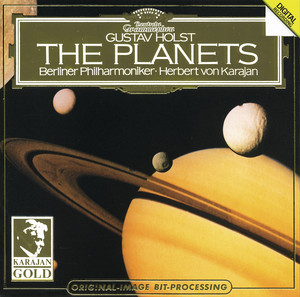 | The Planets, Op. 32: 5. Saturn, the Bringer of Old Age | Gustav Holst, Berliner Philharmoniker, Herbert von Karajan | C Major | 0 | 8B | 106 BPM | |
 | Symphony No. 1 in D Major "Titan": III. Feierlich und gemessen, ohne zu schleppen | Gustav Mahler, Leonard Bernstein, New York Philharmonic | A♭ Major | 0 | 4B | 72 BPM | |
 | Symphony No. 10 in E Minor, Op. 93: II. Allegro | Dmitri Shostakovich, Royal Liverpool Philharmonic Orchestra, Vasily Petrenko | B♭ Minor | 6 | 3A | 89 BPM | |
 | Suite No. 3, P. 172: IV. Passacaglia: Maestoso | Ottorino Respighi, RTÉ National Symphony Orchestra | G Minor | 2 | 6A | 119 BPM | |
| Enigma Variations, Op. 36: Var. 5. Moderato "R.P.A." | Edward Elgar, BBC Symphony Orchestra, Leonard Bernstein | C Minor | 0 | 5A | 83 BPM | |
 | Concerto for Orchestra, Sz. 116: V. Finale. Pesante – Presto | Béla Bartók, Berliner Philharmoniker, Herbert von Karajan | G Major | 3 | 9B | 121 BPM | |
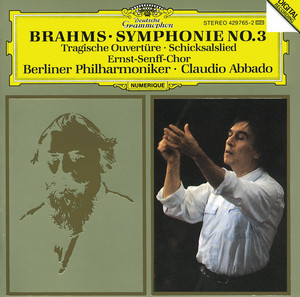 | Symphony No. 3 in F Major, Op. 90: II. Andante | Johannes Brahms, Berliner Philharmoniker, Claudio Abbado | C Major | 0 | 8B | 82 BPM | |
 | Boris Godunov, Prologue Scene 1: "Slava Tebe, Tvortsu Vsevyshnemu" | Modest Mussorgsky, Nikolai Rimsky-Korsakov, хор Большого театра, Mark Ermler, Оркестр Большого театра | A Minor | 1 | 8A | 88 BPM | |
 | Má vlast, JB 1:112: II. Vltava "The Moldau" | Bedřich Smetana, Chicago Symphony Orchestra, Daniel Barenboim | G Major | 1 | 9B | 142 BPM |
- ISRC
- GBAJU0400076
- Label
- L-M Records/RCA Records