- BPM
- 87
- Key
- D♭ Major
- Camelot
- 3B
Dybbuk: Part I: IV. Dream by Leonard Bernstein, Mel Ulrich, Mark Risinger, Nashville Symphony Orchestra, Andrew Mogrelia Song Details
"Dybbuk: Part I: IV. Dream" by Leonard Bernstein, Mel Ulrich, Mark Risinger, Nashville Symphony Orchestra, Andrew Mogrelia had its release date on November 21, 2006. With this song being around four minutes long, at 3:58, the duration of this song is pretty average compared to other songs. This track is safe for children and doesn't appear to contain any foul language, since the "Explicit" tag was not present in this track. The song is number 5 out of 29 in Bernstein: Dybbuk / Fancy Free by Leonard Bernstein, Andrew Mogrelia. Going off of the ISRC code of this track, we detected that the origin of this track is from Hong Kong. Dybbuk: Part I: IV. Dream is below average in popularity right now. In our opinion, the overall tone is not very danceable and projects negative sounds, such as being sad, depressed, or angry.
BPM and Tempo
The tempo marking of Dybbuk: Part I: IV. Dream by Leonard Bernstein, Mel Ulrich, Mark Risinger, Nashville Symphony Orchestra, Andrew Mogrelia is Andante (at a walking pace), since this song has a tempo of 87 BPM. With that information, we can conclude that the song has a slow tempo. This song can go great with yoga or pilates. The time signature for this track is 3/4.
Music Key
This song is in the music key of D♭ Major. This also means that this song has a camelot key of 3B. So, the perfect camelot match for 3B would be either 3B or 4A. While, 4B can give you a low energy boost. For moderate energy boost, you would use 12B and a high energy boost can either be 5B or 10B. Though, if you want a low energy drop, you should looking for songs with either a camelot key of 3A or 2B will give you a low energy drop, 6B would be a moderate one, and 1B or 8B would be a high energy drop. Lastly, 12A allows you to change the mood.
Want to find the BPM and music key for other songs? Check out our BPM and Key Finder page!
- Popularity
- 21%
- Loudness
- -34.208 dB
- Acousticness
- 91%
- Danceability
- 15%
- Energy
- 1%
- Instrumentalness
- 49%
- Liveness
- 12%
- Loudness
- 43%
- Speechiness
- 4%
- Valence
- 3%
Recommendations
| Track | Artist | Key | Energy | Camelot | BPM | ||
|---|---|---|---|---|---|---|---|
 | Symphony No. 2 in D Major, Op. 43: III. Vivacissimo | Jean Sibelius, Leonard Bernstein, New York Philharmonic | B♭ Major | 3 | 6B | 98 BPM | |
 | The Crown of India, Op. 66: March of the Mogul Emperors | Edward Elgar, BBC Symphony Orchestra, Leonard Bernstein | B Minor | 4 | 10A | 90 BPM | |
 | Pictures At An Exhibition: Promenade I | Modest Mussorgsky, Chicago Symphony Orchestra, Carlo Maria Giulini | F Major | 1 | 7B | 79 BPM | |
 | Carmen Suite No. 1 (Arr. E. Guiraud): IV. Séguedille | Georges Bizet, Orquestra Simfònica de Barcelona i Nacional de Catalunya, Pablo González | G Minor | 0 | 6A | 66 BPM | |
 | Scheherazade: The Sea & Sinbad's Ship | Nikolai Rimsky-Korsakov, Lars Hjalmar Joakim | E Major | 1 | 12B | 82 BPM | |
 | Piano Concerto No. 2 Op. 102 in F Major: II. Andante | Dmitri Shostakovich, Alexander Melnikov, Mahler Chamber Orchestra, Teodor Currentzis | C Minor | 0 | 5A | 78 BPM | |
 | In the Steppes of Central Asia | Alexander Borodin, Ukraine National Radio Symphony Orchestra, Theodore Kuchar | G Minor | 1 | 6A | 73 BPM | |
 | Short Ride in a Fast Machine | John Adams, Berliner Philharmoniker, Alan Gilbert | E Minor | 5 | 9A | 146 BPM | |
 | Firebird Suite - 1919 Version | Chicago Symphony Orchestra | B Major | 1 | 1B | 80 BPM | |
| Piano Concerto No. 2, Allegro,Opus 102 | Chicago Symphony Orchestra | B♭ Major | 3 | 6B | 144 BPM | |
 | Symphony No. 8 in G Major, Op. 88, B. 163: III. Allegretto grazioso - Molto vivace | Antonín Dvořák, Los Angeles Philharmonic, Gustavo Dudamel | C Major | 1 | 8B | 127 BPM | |
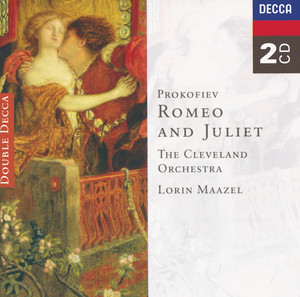 | Romeo and Juliet, Op. 64 / Act 1: Dance Of The Knights | Sergei Prokofiev, The Cleveland Orchestra, Lorin Maazel | B♭ Major | 6 | 6B | 124 BPM | |
 | Samson et Dalila, Op. 47: Bacchanale | Camille Saint-Saëns, Leonard Bernstein, New York Philharmonic | D Minor | 2 | 7A | 145 BPM | |
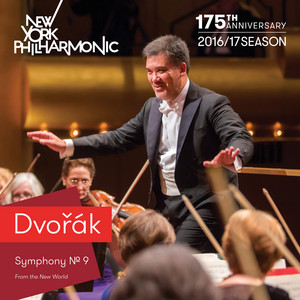 | Symphony No. 9 in E Minor, Op. 95 "From the New World": II. Largo | Antonín Dvořák, New York Philharmonic, Alan Gilbert | D♭ Major | 0 | 3B | 87 BPM | |
 | Symphony No. 2, Op. 30 "Romantic": III. Allegro con brio | Howard Hanson, Seattle Symphony Orchestra, Gerard Schwarz | D♭ Major | 2 | 3B | 128 BPM | |
 | Symphony No. 3 in E-Flat Major, Op. 97 "Rhenish": IV. Feierlich | Robert Schumann, Leonard Bernstein, New York Philharmonic | E♭ Minor | 2 | 2A | 113 BPM | |
 | Symphony No. 8: III. Presto | William Schuman, Leonard Bernstein, New York Philharmonic | D Major | 2 | 10B | 67 BPM | |
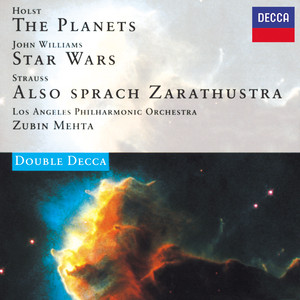 | The Planets, Op. 32: 2. Venus, the Bringer of Peace | Gustav Holst, Los Angeles Philharmonic, Zubin Mehta | F Minor | 0 | 4A | 88 BPM | |
 | Tristan und Isolde, Act I: Prelude | Richard Wagner, Staatskapelle Dresden, Carlos Kleiber | A Major | 1 | 11B | 82 BPM | |
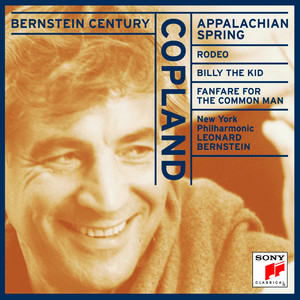 | Appalachian Spring: VIII. Coda. Moderato | Aaron Copland, Leonard Bernstein, New York Philharmonic | C Major | 0 | 8B | 106 BPM | |
| Enigma Variations, Op. 36: Theme. Andante | Edward Elgar, BBC Symphony Orchestra, Leonard Bernstein | G Minor | 0 | 6A | 113 BPM | |
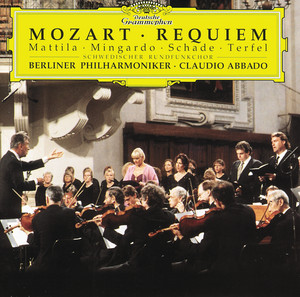 | Requiem in D Minor, K. 626: 3. Sequentia: Confutatis - Live | Wolfgang Amadeus Mozart, Claudio Abbado, Berliner Philharmoniker, Swedish Radio Choir, Kay Johannsen | F Major | 0 | 7B | 70 BPM | |
 | Keyboard Concerto No. 1 in D Minor, BWV 1052: I. Allegro | Johann Sebastian Bach, Glenn Gould, Columbia Symphony Orchestra, Leonard Bernstein | D Minor | 3 | 7A | 180 BPM | |
 | The Rite of Spring: Part Two: The Sacrifice: Sacrificial Dance (The Chosen One) | Igor Stravinsky, Teodor Currentzis, musicAeterna | D Minor | 5 | 7A | 136 BPM | |
 | La Mer, L.109: 1. From Dawn Till Noon On The Sea (De l'aube à midi sur la mer) | Claude Debussy, Orchestre Symphonique de Montréal, Charles Dutoit | F♯ Major | 1 | 2B | 61 BPM |
- ISRC
- HKI190614705
- Label
- L-M Records/RCA Records