- BPM
- 81
- Key
- C Major
- Camelot
- 8B
Petrushka: Tableau 1: Russian Dance (1911 Version) by Igor Stravinsky, Robert Groslot, Brussels Philharmonic, Ali Rahbari Song Details
Igor Stravinsky, Robert Groslot, Brussels Philharmonic, Ali Rahbari's ' "Petrushka: Tableau 1: Russian Dance (1911 Version)" was released on its scheduled release date, August 3, 1990. The duration of This song is about two minutes long, specifically at 2:40. This song does not appear to have any foul language. Petrushka: Tableau 1: Russian Dance (1911 Version)'s duration is considered a little bit shorter than the average duration of a typical track. There are a total of 25 in the song's album "Stravinsky: Firebird (The) / Petrushka / Suites Nos. 1 and 2". In this album, this song's track order is #9. Furthermore, we believe that the track originated from Hong Kong. Petrushka: Tableau 1: Russian Dance (1911 Version) is not that popular right now. Since there is more of a neutral sound being played, this makes the track somewhat danceable.
BPM and Tempo
With Petrushka: Tableau 1: Russian Dance (1911 Version) by Igor Stravinsky, Robert Groslot, Brussels Philharmonic, Ali Rahbari having a BPM of 81 with a half-time of 40 BPM and a double-time of 162 BPM, we would consider this track to have a Andante (at a walking pace) tempo marking. Because of this, we believe that the song has an overall slow tempo. The time signature for this track is 5/4.
Music Key
This song is in the music key of C Major. Or for those who are familiar with the camelot wheel, this song has a camelot key of 8B. So, the perfect camelot match for 8B would be either 8B or 9A. While, 9B can give you a low energy boost. For moderate energy boost, you would use 5B and a high energy boost can either be 10B or 3B. Though, if you want a low energy drop, you should looking for songs with either a camelot key of 8A or 7B will give you a low energy drop, 11B would be a moderate one, and 6B or 1B would be a high energy drop. Lastly, 5A allows you to change the mood.
Want to find the BPM and music key for other songs? Check out our BPM and Key Finder page!
- Popularity
- 6%
- Loudness
- -14.691 dB
- Acousticness
- 92%
- Danceability
- 45%
- Energy
- 48%
- Instrumentalness
- 86%
- Liveness
- 32%
- Loudness
- 76%
- Speechiness
- 7%
- Valence
- 54%
Recommendations
| Track | Artist | Key | Energy | Camelot | BPM | ||
|---|---|---|---|---|---|---|---|
 | Slavonic March, Op. 31, TH 45 | Pyotr Ilyich Tchaikovsky, Russian National Orchestra, Mikhail Pletnev | B♭ Minor | 2 | 3A | 110 BPM | |
 | Ruslan and Ludmila: Overture | Mikhail Glinka, The USSR Bolshoy Theatre Orchestra, Yevgeny Svetlanov | F Major | 3 | 7B | 81 BPM | |
 | Polovetsian Dances from Prince Igor: Introduzione | Alexander Borodin, George Szell, The Cleveland Orchestra | A Major | 1 | 11B | 83 BPM | |
 | Romanian Folk Dances, Sz. 56 - Arr. for String Orchestra by Arthur Wilner | Béla Bartók, Orchestra of the Swan, David le Page | B Minor | 0 | 10A | 78 BPM | |
 | Klezmer Dance No. 2 | Göran Fröst, Martin Fröst, Royal Stockholm Philharmonic Orchestra | D Minor | 2 | 7A | 87 BPM | |
 | Symphony in E Minor, Op. 32, "Gaelic Symphony": I. Allegro con fuoco | Amy Beach, Nashville Symphony Orchestra, Kenneth Schermerhorn | E Minor | 1 | 9A | 111 BPM | |
 | Ancient Airs & Dances, Suite III, P. 172: IV. Passacaglia (Roncalli) | Ottorino Respighi, Boston Symphony Orchestra, Seiji Ozawa | G Minor | 3 | 6A | 116 BPM | |
 | Orientale No. 9, Op. 50 from Kaleidoscope | César Cui, Midori, Robert McDonald | G Minor | 1 | 6A | 106 BPM | |
 | Sicilienne, Op. 78 | Gabriel Fauré, Harriet Krijgh, Kamilla Isanbaeva | G Minor | 1 | 6A | 123 BPM | |
 | Peter and the Wolf, Op. 67: The Bird | Sergei Prokofiev, Slovak Radio Symphony Orchestra, Ondrej Lenard | C Major | 0 | 8B | 99 BPM | |
 | 21 Hungarian Dances, WoO 1: Hungarian Dance No. 4 in F Minor. Poco sostenuto (Orch. Juon in F-Sharp Minor) | Johannes Brahms, Wiener Philharmoniker, Claudio Abbado | F♯ Minor | 2 | 11A | 80 BPM | |
 | Piano Concerto No. 2 in C Minor, Op. 18: I. Moderato | Sergei Rachmaninoff, Arthur Rubinstein, Fritz Reiner | C Minor | 1 | 5A | 71 BPM | |
 | Scherzo-tarantelle in G Minor, Op.16 - 1987 Remastered Version | Henryk Wieniawski, Itzhak Perlman, Samuel Sanders | D Major | 3 | 10B | 114 BPM | |
 | Pictures at an Exhibition (Orch. Ravel): IX. The Hut on Chicken's Legs | Modest Mussorgsky, Wiener Philharmoniker, Gustavo Dudamel | G Major | 2 | 9B | 166 BPM | |
 | St. Paul's Suite, Op. 29 No. 2: II. Ostinato | Gustav Holst, English Sinfonia, Howard Griffiths | C Major | 1 | 8B | 108 BPM | |
 | Carnival of the Animals: XIV. Finale | Camille Saint-Saëns, Barry Wordsworth, London Symphony Orchestra | C Major | 3 | 8B | 94 BPM | |
 | Debussy: Syrinx, CD 137, L. 129 | Emmanuel Pahud | A♭ Major | 0 | 4B | 65 BPM | |
 | Peer Gynt Suite No. 1, Op. 46: III. Anitra's Dance | Edvard Grieg, Berliner Philharmoniker, Herbert von Karajan | D Minor | 0 | 7A | 84 BPM | |
 | The Wolf and the Seven Young Goats: VII. The Wolf Attacks and Eats the Seven Young Goats | Alexander Litvinovsky, Metamorphose String Orchestra, Pavel Lyubomudrov, Alexey Lundin | A Major | 1 | 11B | 87 BPM | |
 | Nocturnes, CD 98: II. Fêtes | Claude Debussy, Berliner Philharmoniker, Claudio Abbado | A Major | 2 | 11B | 79 BPM | |
 | The Rite of Spring, K15, Pt. 2: XI. Glorification of the Chosen One | Igor Stravinsky, Berliner Philharmoniker, Herbert von Karajan | F Minor | 5 | 4A | 164 BPM | |
 | Dance of the goblins | Razvan Stoica | C Major | 4 | 8B | 177 BPM | |
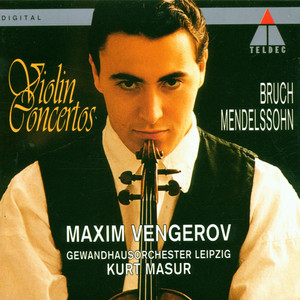 | Mendelssohn: Violin Concerto in E Minor, Op. 64, MWV O14: II. Andante | Felix Mendelssohn, Maxim Vengerov, Kurt Masur, Gewandhausorchester | C Major | 1 | 8B | 96 BPM | |
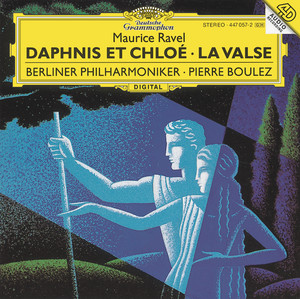 | Daphnis et Chloé, M. 57 / Troisième partie: Danse générale | Maurice Ravel, Berliner Philharmoniker, Pierre Boulez, Rundfunkchor Berlin | D♭ Minor | 4 | 12A | 173 BPM | |
 | Scaramouche, Op. 165c: II. Modéré | Darius Milhaud, Sohre Rahbari, Brussels Philharmonic, Ali Rahbari | F Minor | 5 | 4A | 164 BPM |
- ISRC
- HKI199313809
- Label
- L-M Records/RCA Records