- BPM
- 107
- Key
- B♭ Major
- Camelot
- 6B
Variations on an Original Theme by Handel: Variation 11 by Johannes Brahms, David Wilde Song Details
On March 2, 2009, the song "Variations on an Original Theme by Handel: Variation 11" was released by Johannes Brahms, David Wilde. With This song being less than a minute long, we are pretty confident that this song does not contain any foul language. That being said, this song is pretty short compared to other songs. This song is part of Wilde Plays Brahms: Two Rhapsodies, Variations on an Original Theme, Three Intermezzi by Johannes Brahms, David Wilde. The song's track number on the album is #29 out of 44 tracks. Based on our data, United Kingdom was the country where this track was produced or recorded. In terms of popularity, Variations on an Original Theme by Handel: Variation 11 is currently unknown. The mood doesn't appear to be that danceable, but it still produces a high amount of positive energy.
BPM and Tempo
Since Variations on an Original Theme by Handel: Variation 11 by Johannes Brahms, David Wilde has a tempo of 107 beats per a minute, the tempo markings of this song would be Andante (at a walking pace). With Variations on an Original Theme by Handel: Variation 11 being at 107 BPM, the half-time would be 54 BPM with a double-time of 214 BPM.In addition, we consider the tempo speed to be pretty slow for this song. The time signature for this track is 3/4.
Music Key
This song is in the music key of B♭ Major. Or for those who are familiar with the camelot wheel, this song has a camelot key of 6B. So, the perfect camelot match for 6B would be either 6B or 7A. While, 7B can give you a low energy boost. For moderate energy boost, you would use 3B and a high energy boost can either be 8B or 1B. Though, if you want a low energy drop, you should looking for songs with either a camelot key of 6A or 5B will give you a low energy drop, 9B would be a moderate one, and 4B or 11B would be a high energy drop. Lastly, 3A allows you to change the mood.
Want to find the BPM and music key for other songs? Check out our BPM and Key Finder page!
- Popularity
- 0%
- Loudness
- -17.157 dB
- Acousticness
- 98%
- Danceability
- 37%
- Energy
- 30%
- Instrumentalness
- 85%
- Liveness
- 12%
- Loudness
- 71%
- Speechiness
- 4%
- Valence
- 90%
Recommendations
| Track | Artist | Key | Energy | Camelot | BPM | ||
|---|---|---|---|---|---|---|---|
 | Violin Concerto No. 3 in G Major, K. 216: I. Allegro | Wolfgang Amadeus Mozart, Arabella Steinbacher, Festival Strings Lucerne (musical direction), Lucerne Festival Strings, Daniel Dodds | G Major | 1 | 9B | 119 BPM | |
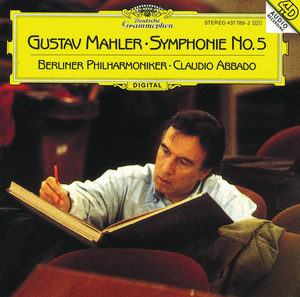 | Symphony No. 5: IV. Adagietto. Sehr langsam | Gustav Mahler, Berliner Philharmoniker, Claudio Abbado | F Major | 0 | 7B | 91 BPM | |
 | Bach, JS: Concerto for Two Violins in D Minor, BWV 1043: I. Vivace | Johann Sebastian Bach, Anne-Sophie Mutter, Leslie Pearson, Salvatore Accardo, English Chamber Orchestra | D Minor | 3 | 7A | 179 BPM | |
 | Liebesleid - Arr. Mischa Maisky | Fritz Kreisler, Mischa Maisky, Pavel Gililov | A Minor | 0 | 8A | 83 BPM | |
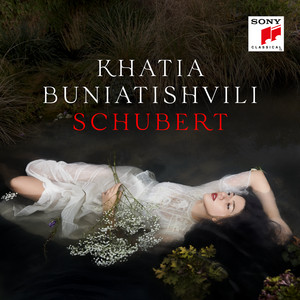 | Ständchen, S. 560 (Trans. from Schwanengesang No. 4, D. 957) | Franz Schubert, Franz Liszt, Khatia Buniatishvili | D Major | 0 | 10B | 67 BPM | |
 | 21 Hungarian Dances, WoO 1 (arr. J. Joachim for violin and piano): No. 12 in D Minor | Joseph Joachim, Johannes Brahms, Marat Bisengaliev, John Lenehan | D Minor | 1 | 7A | 77 BPM | |
 | Halvorsen: Passacaglia (After Handel's Keyboard Suite, HWV 432) | Johan Halvorsen, Itzhak Perlman, Pinchas Zukerman | G Minor | 2 | 6A | 109 BPM | |
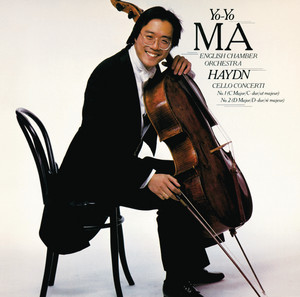 | Cello Concerto No. 1 in C Major, Hob. VIIb:1: II. Adagio | Joseph Haydn, Yo-Yo Ma, English Chamber Orchestra, José-Luis Garcia | F Major | 1 | 7B | 62 BPM | |
 | Scottish Fantasy for Violin and Orchestra, Op. 46: I. Introduction: Grave, Adagio cantabile | Max Bruch, Joshua Bell, Academy of St. Martin in the Fields | E♭ Major | 2 | 5B | 60 BPM | |
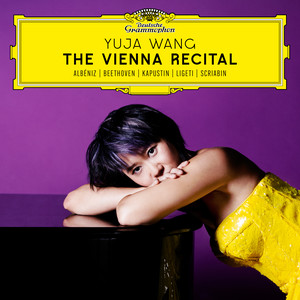 | Orfeo ed Euridice, Wq. 30: Melodie dell'Orfeo (Arr. Sgambati for Piano) | Yuja Wang | D♭ Minor | 1 | 12A | 80 BPM | |
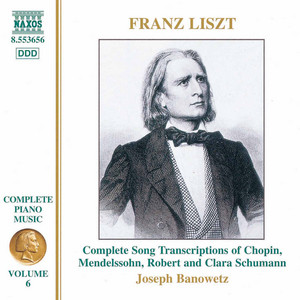 | Mendelssohn - Lieder, S547/R217 (7 Lieder From Mendelssohn, Op, 19a, 34, 47) : Auf Flugeln Des Gesanges(From Op. 34, No. 2) | Joseph Banowetz, Franz Liszt | A♭ Major | 0 | 4B | 149 BPM | |
 | Zdes' khorosho ('How Fair This Spot'), Op. 21, No. 7 | Sergei Rachmaninoff, Pablo Ferrandez, Denis Kozhukhin | A Major | 0 | 11B | 87 BPM | |
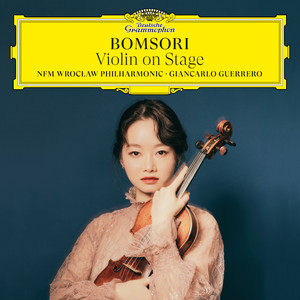 | Thaïs: Méditation | Jules Massenet, Bomsori, NFM Wrocław Philharmonic, Giancarlo Guerrero | D Major | 0 | 10B | 84 BPM | |
 | Variations on a Theme from Bizet's Carmen (The Gypsy Song Act II) - White House Version | Vladimir Horowitz, Yuja Wang | E Major | 3 | 12B | 131 BPM | |
 | Symphony No. 7 in A Major, Op. 92: II. Allegretto | Ludwig van Beethoven, Berliner Philharmoniker, Kirill Petrenko | E Minor | 0 | 9A | 68 BPM | |
 | Le Carnaval des Animaux, R. 125: Le Cygne | Camille Saint-Saëns, Mischa Maisky, Martha Argerich, Nelson Freire | G Major | 0 | 9B | 88 BPM | |
 | Keyboard Sonata in B Minor, Wq. 55/3, H. 245: Cantabile | Carl Philipp Emanuel Bach, Christopher Hinterhuber | E Minor | 1 | 9A | 106 BPM | |
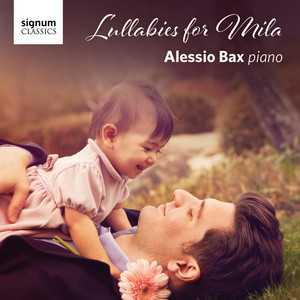 | Lyric Pieces, Book 5, Op. 54: Nocturne | Edvard Grieg, Alessio Bax | C Major | 0 | 8B | 72 BPM | |
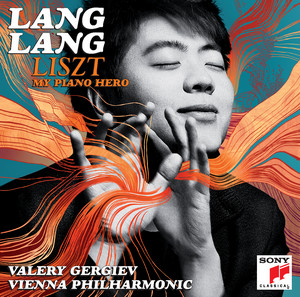 | Liebestraum No. 3 in A-Flat Major, S. 541 / 3 | Franz Liszt, Lang Lang | A♭ Major | 0 | 4B | 137 BPM | |
 | Kinderszenen, Op. 15: VII. Träumerei | Robert Schumann, Alfred Brendel | F Major | 0 | 7B | 135 BPM | |
 | Kinderszenen | Robert Schumann, Ivan Moravec | F Major | 0 | 7B | 131 BPM | |
 | 6 Studies in English Folksong (Version for Cello & Piano): No. 3, Larghetto "Van Dieman's Land" | Ralph Vaughan Williams, Gerald Peregrine, Antony Ingham | D Minor | 0 | 7A | 81 BPM | |
![21 Hungarian Dances, WoO 1: Hungarian Dance No. 1 in G Minor (arr. For orchestra) [Orch. J. Brahms] by Johannes Brahms, London Philharmonic Orchestra, Marin Alsop](https://i.scdn.co/image/ab67616d00001e02652a3346f04f528486b5a47f) | 21 Hungarian Dances, WoO 1: Hungarian Dance No. 1 in G Minor (arr. For orchestra) [Orch. J. Brahms] | Johannes Brahms, London Philharmonic Orchestra, Marin Alsop | G Minor | 2 | 6A | 133 BPM | |
 | Five pieces for Two Violins and Piano: I. Prelude- Moderato | Dmitri Shostakovich, Brodsky Quartet, Christian Blackshaw | B Minor | 0 | 10A | 82 BPM | |
 | Mozart: Clarinet Concerto in A Major, K. 622: II. Adagio | Wolfgang Amadeus Mozart, Sabine Meyer, Berliner Philharmoniker, Claudio Abbado | D Major | 0 | 10B | 95 BPM |
- ISRC
- GBEBL0904029
- Label
- L-M Records/RCA Records