- BPM
- 140
- Key
- F Major
- Camelot
- 7B
Variations And Fugue On A Theme By Ludwig van Beethoven, Op. 86: 4. Var. III: Andantino grazioso by Max Reger, Bamberg Symphony, Horst Stein Song Details
"Variations And Fugue On A Theme By Ludwig van Beethoven, Op. 86: 4. Var. III: Andantino grazioso" by Max Reger, Bamberg Symphony, Horst Stein had its release date on June 29, 2018. The duration of This song is about two minutes long, specifically at 2:24. This song does not appear to have any foul language. Variations And Fugue On A Theme By Ludwig van Beethoven, Op. 86: 4. Var. III: Andantino grazioso's duration is considered a little bit shorter than the average duration of a typical track. The track order of this song in Max Reger, Various Artists's "Max Reger - Orchestral Edition - Variations, Suites, Romances" album is number 43 out of 56. On top of that, Germany appears to be the country where this track was created. Based on our statistics, Variations And Fugue On A Theme By Ludwig van Beethoven, Op. 86: 4. Var. III: Andantino grazioso's popularity is unknown right now. In our opinion, the overall tone is not very danceable and projects negative sounds, such as being sad, depressed, or angry.
BPM and Tempo
We consider the tempo marking of Variations And Fugue On A Theme By Ludwig van Beethoven, Op. 86: 4. Var. III: Andantino grazioso by Max Reger, Bamberg Symphony, Horst Stein to be Allegro (fast, quick, and bright) because the track has a tempo of 140 BPM, a half-time of 70BPM, and a double-time of 280 BPM. Based on that, the speed of the song's tempo is fast. Activities such as, jogging or cycling, can go well with this song. The time signature for this track is 3/4.
Music Key
This song is in the music key of F Major. This also means that this song has a camelot key of 7B. So, the perfect camelot match for 7B would be either 7B or 8A. While, 8B can give you a low energy boost. For moderate energy boost, you would use 4B and a high energy boost can either be 9B or 2B. Though, if you want a low energy drop, you should looking for songs with either a camelot key of 7A or 6B will give you a low energy drop, 10B would be a moderate one, and 5B or 12B would be a high energy drop. Lastly, 4A allows you to change the mood.
Want to find the BPM and music key for other songs? Check out our BPM and Key Finder page!
- Popularity
- 0%
- Loudness
- -27.821 dB
- Acousticness
- 97%
- Danceability
- 15%
- Energy
- 6%
- Instrumentalness
- 86%
- Liveness
- 12%
- Loudness
- 54%
- Speechiness
- 4%
- Valence
- 4%
Recommendations
| Track | Artist | Key | Energy | Camelot | BPM | ||
|---|---|---|---|---|---|---|---|
 | All-night Vigil, Op. 37: No. 6, Rejoice, O Virgin "Ave Maria" | Sergei Rachmaninoff, MDR Rundfunkchor, Risto Joost | D Major | 2 | 10B | 102 BPM | |
 | Nielsen: 5 Piano Pieces, Op. 3: No. 1, Folk Tune | Carl Nielsen, Leif Ove Andsnes | C Major | 0 | 8B | 76 BPM | |
 | Piano Trio in G: IV. Finale (Appassionato) | Claude Debussy, Trio Parnassus | E Minor | 0 | 9A | 177 BPM | |
 | Liszt: Ave Maria IV, S. 545 | Franz Liszt, Stephen Hough | G Major | 0 | 9B | 93 BPM | |
 | Rossini: Péchés de vieillesse, Vol. 6 "Album pour les enfants dégourdis": No. 7, Une caresse à ma femme | Gioachino Rossini, Aldo Ciccolini | E♭ Major | 1 | 5B | 143 BPM | |
 | Love Like the Dawn Came Stealing - Duo-Art 6079 | Charles Cadman, Peter Phillips | F♯ Minor | 0 | 11A | 78 BPM | |
 | Paradis / Arr. Dushkin: Sicilienne in E-Flat Major | Maria Theresia von Paradis, Jacqueline du Pré, Gerald Moore | E♭ Major | 0 | 5B | 81 BPM | |
 | Trauermusik | Paul Hindemith, Kim Kashkashian, Dennis Russell Davies, Stuttgart Chamber Orchestra | E Minor | 1 | 9A | 99 BPM | |
 | Consolations, S. 172: No. 2 in E Major. Un poco più mosso | Franz Liszt, Leif Ove Andsnes | B Major | 0 | 1B | 131 BPM | |
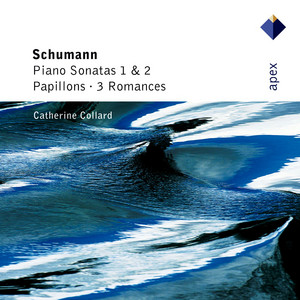 | Schumann: Romance No. 2 in F-Sharp Major, Op. 28 | Robert Schumann, Catherine Collard | F♯ Major | 0 | 2B | 128 BPM | |
 | 3 Romanzen, Op. 94: III. Nicht schnell | Robert Schumann, Céline Moinet, Florian Uhlig | D Major | 0 | 10B | 169 BPM | |
 | Franck: Violin Sonata in A Major, FWV 8: I. Allegretto ben moderato | César Franck, Guido de Neve, Jan Michiels | D Major | 0 | 10B | 104 BPM | |
 | Larghetto in F Minor | Samuel Sebastian Wesley, John Robinson | F Minor | 0 | 4A | 90 BPM | |
 | Piano Concerto in A Minor, Op. 7: I. Allegro maestoso – | Clara Schumann, Tasmanian Symphony Orchestra, Howard Shelley | A♭ Major | 1 | 4B | 134 BPM | |
 | Songs of Farewell: There is an Old Belief | Hubert Parry, Tenebrae, Nigel Short | G Major | 0 | 9B | 62 BPM | |
 | Violin Sonata in A Major, FWV 8 (Arr. for Cello and Piano by Jules Delsart): I. Allegro ben moderato | César Franck, Lidy Blijdorp, Tobias Borsboom | F♯ Minor | 0 | 11A | 78 BPM | |
 | 24 Preludes and Fugues, Op. 87: Fugue No. 7 in A Major: Allegretto | Dmitri Shostakovich, Konstantin Scherbakov | B♭ Major | 2 | 6B | 74 BPM | |
 | 24 Preludes, Op. 11: No. 21 in B-Flat Major | Alexander Scriabin, Evgeny Zarafiants | E♭ Major | 0 | 5B | 67 BPM | |
 | Paulus: I. Teil: Ouvertüre | Felix Mendelssohn, Philippe Herreweghe, Orchestre des Champs-Élysées | G Major | 2 | 9B | 116 BPM | |
 | Schumann, Clara: Piano Concerto No. 1 in A Minor, Op. 7: II. Romanze (Andante non troppo con grazia) | Clara Schumann, Beatrice Rana, Chamber Orchestra of Europe, Yannick Nézet-Séguin | A♭ Major | 0 | 4B | 100 BPM | |
 | Variations & Fugue on a Theme by J.S. Bach, Op. 81: Var. 12. Andante sostenuto | Max Reger, Marc-André Hamelin | E♭ Major | 0 | 5B | 92 BPM | |
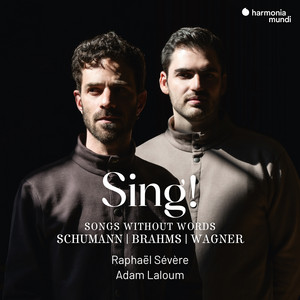 | Myrthen, Op. 25: No. 1, Widmung (Arr. for Clarinet and Piano by R. Sévère) | Robert Schumann, Raphaël Sévère, Adam Laloum | A♭ Major | 0 | 4B | 74 BPM | |
 | Les Danses de Ravel (After Le Tombeau de Couperin): I. Prélude | Franck Tortiller, Quatuor Debussy | E Minor | 2 | 9A | 75 BPM | |
 | Le Tombeau des seventies: II. Néo-Menuet 1770 | Guillaume Connesson, Stradivaria, Guillaume Cuiller | F♯ Minor | 0 | 11A | 78 BPM | |
 | A Midsummer Night's Dream, Op. 61 (arr. for Wind Quintet): VI. Scherzo. Allegro vivace | Felix Mendelssohn, Ma'alot Quintett | F♯ Minor | 0 | 11A | 78 BPM |
- ISRC
- DEN120504466
- Label
- L-M Records/RCA Records