- BPM
- 99
- Key
- A Major
- Camelot
- 11B
The Rake's Progress, Act I Scene 2: Chorus. The sun Is bright (Chorus, Nick) by Igor Stravinsky, Jayne West, Jon Garrison, Arthur Woodley, John Cheek, Shirley Love, Wendy White, Melvin Lowery, Jeffrey Johnson, Gregg Smith Singers, Orchestra of St. Luke's, Robert Craft Song Details
Igor Stravinsky, Jayne West, Jon Garrison, Arthur Woodley, John Cheek, Shirley Love, Wendy White, Melvin Lowery, Jeffrey Johnson, Gregg Smith Singers, Orchestra of St. Luke's, Robert Craft's ' "The Rake's Progress, Act I Scene 2: Chorus. The sun Is bright (Chorus, Nick)" was released on its scheduled release date, May 26, 2009. The duration of This song is about two minutes long, specifically at 2:09. This song does not appear to have any foul language. The Rake's Progress, Act I Scene 2: Chorus. The sun Is bright (Chorus, Nick)'s duration is considered a little bit shorter than the average duration of a typical track. There are a total of 73 in the song's album "Stravinsky, I.: Rake's Progress (The) [Opera]". In this album, this song's track order is #20. Furthermore, we believe that the track originated from Hong Kong. In terms of popularity, The Rake's Progress, Act I Scene 2: Chorus. The sun Is bright (Chorus, Nick) is currently not that popular. Since there is more of a neutral sound being played, this makes the track somewhat danceable.
BPM and Tempo
With The Rake's Progress, Act I Scene 2: Chorus. The sun Is bright (Chorus, Nick) by Igor Stravinsky, Jayne West, Jon Garrison, Arthur Woodley, John Cheek, Shirley Love, Wendy White, Melvin Lowery, Jeffrey Johnson, Gregg Smith Singers, Orchestra of St. Luke's, Robert Craft having a BPM of 99 with a half-time of 50 BPM and a double-time of 198 BPM, we would consider this track to have a Andante (at a walking pace) tempo marking. Because of this, we believe that the song has an overall slow tempo. The time signature for this track is 4/4.
Music Key
This song is in the music key of A Major. Or for those who are familiar with the camelot wheel, this song has a camelot key of 11B. So, the perfect camelot match for 11B would be either 11B or 12A. While, 12B can give you a low energy boost. For moderate energy boost, you would use 8B and a high energy boost can either be 1B or 6B. Though, if you want a low energy drop, you should looking for songs with either a camelot key of 11A or 10B will give you a low energy drop, 2B would be a moderate one, and 9B or 4B would be a high energy drop. Lastly, 8A allows you to change the mood.
Want to find the BPM and music key for other songs? Check out our BPM and Key Finder page!
- Popularity
- 3%
- Loudness
- -21.165 dB
- Acousticness
- 97%
- Danceability
- 41%
- Energy
- 18%
- Instrumentalness
- 0%
- Liveness
- 43%
- Loudness
- 65%
- Speechiness
- 6%
- Valence
- 54%
Recommendations
| Track | Artist | Key | Energy | Camelot | BPM | ||
|---|---|---|---|---|---|---|---|
 | Symphony No. 1 in E Minor, Op. 39: I. Andante, ma non troppo - Allegro energico | Jean Sibelius, Berliner Philharmoniker, Sir Simon Rattle | E Minor | 1 | 9A | 77 BPM | |
 | Mathis der Maler Symphony: II. Grablegung | Paul Hindemith, Berliner Philharmoniker, Claudio Abbado | A♭ Minor | 0 | 1A | 87 BPM | |
 | Concerto for Viola & Orchestra: I. Andante comodo | William Walton, Yuri Bashmet, André Previn | D Minor | 0 | 7A | 87 BPM | |
 | Petrushka: The Shrove-Tide Fair | Robert Groslot, Belgian Radio and Television Philharmonic Orchestra, Igor Stravinsky | D Minor | 5 | 7A | 80 BPM | |
 | Pictures At An Exhibition: Gnomus | Modest Mussorgsky, Chicago Symphony Orchestra, Carlo Maria Giulini | B Major | 0 | 1B | 99 BPM | |
 | Japanese Suite, Op. 33, H. 126: II. Ceremonial Dance | Gustav Holst, Ulster Orchestra, Joann Falletta | C Minor | 3 | 5A | 103 BPM | |
 | The Planets, Op. 32: VI. Uranus, the Magician | Gustav Holst, Berliner Philharmoniker, Herbert von Karajan | C Major | 3 | 8B | 110 BPM | |
 | The Rite of Spring: Part One: Adoration of the Earth: Dance of the Earth | Igor Stravinsky, Teodor Currentzis, musicAeterna | G Major | 5 | 9B | 89 BPM | |
 | Sinfonietta: IV. Allegretto (The Street Leading to the Castle) - Live | Leoš Janáček, Leon Botstein, American Symphony Orchestra | F♯ Major | 1 | 2B | 138 BPM | |
 | Oedipus Rex: Epilogue | Igor Stravinsky, Joseph Cornwell, Edward Fox, Andrew Greenan, Martyn Hill, Jennifer Lane, David Wilson-Johnson, Simon Joly Male Chorus, Philharmonia Orchestra, Robert Craft | D♭ Major | 6 | 3B | 90 BPM | |
 | Elgar: Cello Concerto in E Minor, Op. 85: I. Adagio - Moderato | Edward Elgar, Jacqueline du Pré, London Symphony Orchestra, Sir John Barbirolli | E Minor | 1 | 9A | 96 BPM | |
 | Symphonie espagnole, Op. 21: I. Allegro non troppo | Édouard Lalo, Itzhak Perlman, Orchestre de Paris, Daniel Barenboim | D Minor | 1 | 7A | 75 BPM | |
 | The Miraculous Mandarin, Sz. 73: Introduction. Allegro | Béla Bartók, Chicago Symphony Orchestra, Pierre Boulez | D♭ Minor | 4 | 12A | 59 BPM | |
 | Concerto for Orchestra, Sz. 116: IV. Intermezzo interrotto. Allegretto | Béla Bartók, Berliner Philharmoniker, Herbert von Karajan | F Major | 0 | 7B | 96 BPM | |
 | Schoenberg: Verklärte Nacht, Op. 4: IV. Adagio (1943 Version) | Arnold Schoenberg, Daniel Barenboim, Chicago Symphony Orchestra | D Major | 1 | 10B | 82 BPM | |
| The Planets, Op. 32: II. Venus, the Bringer of Peace | Gustav Holst, Berliner Philharmoniker, Herbert von Karajan | F Minor | 0 | 4A | 85 BPM | |
 | Fountains of Rome, P. 106: I. The Valle Giulia Fountain at Dawn | Ottorino Respighi, Berliner Philharmoniker, Herbert von Karajan | C Major | 0 | 8B | 63 BPM | |
 | Piano Concerto No. 1 in C Minor, Op. 35: II. Lento | Dmitri Shostakovich, Ronald Brautigam, Peter Masseurs, Royal Concertgebouw Orchestra, Riccardo Chailly | C Major | 0 | 8B | 69 BPM | |
 | Quatuor pour la fin du Temps: VI. Danse de la fureur, pour les sept trompettes | Olivier Messiaen, Martin Fröst | D♭ Major | 2 | 3B | 107 BPM | |
 | Symphony No. 1 in D Major: III. Feierlich und gemessen, ohne zu schleppen - Live | Gustav Mahler, Berliner Philharmoniker, Claudio Abbado | G Minor | 0 | 6A | 56 BPM | |
 | Piano Concerto in G Major, M. 83: I. Allegramente | Maurice Ravel, Krystian Zimerman, The Cleveland Orchestra, Pierre Boulez | D Major | 1 | 10B | 129 BPM | |
 | Pelléas et Mélisande, Op.80: 2. Fileuse. Andantino quasi Allegretto | Gabriel Fauré, Boston Symphony Orchestra, Seiji Ozawa | G Major | 1 | 9B | 88 BPM | |
 | Turangalîla-Symphonie: I. Introduction | Olivier Messiaen, Yuja Wang, Cécile Lartigau, Boston Symphony Orchestra, Andris Nelsons | B Major | 4 | 1B | 152 BPM | |
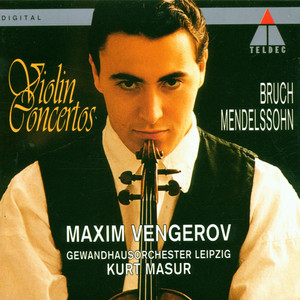 | Mendelssohn: Violin Concerto in E Minor, Op. 64, MWV O14: III. Allegretto non troppo - Allegro molto vivace | Felix Mendelssohn, Maxim Vengerov, Kurt Masur, Gewandhausorchester | E Major | 2 | 12B | 161 BPM | |
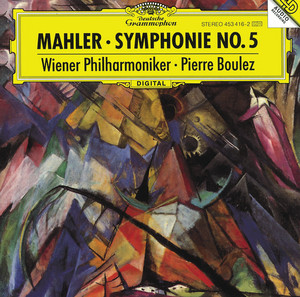 | Symphony No. 5: II. Stürmisch bewegt, mit größter Vehemenz | Gustav Mahler, Wiener Philharmoniker, Pierre Boulez | B♭ Minor | 2 | 3A | 82 BPM |
- ISRC
- HKI190908220
- Label
- L-M Records/RCA Records