- BPM
- 148
- Key
- A Minor
- Camelot
- 8A
A Midsummer Night's Dream, Op. 61: IX. Wedding March (String Quartet) by Felix Mendelssohn, Stringspace Song Details
Felix Mendelssohn, Stringspace's 'A Midsummer Night's Dream, Op. 61: IX. Wedding March (String Quartet)' had a release date set for February 17, 2020. With This song being less than two minutes long, at 1:56, we are fairly confident that this song is not explicit and is safe for all ages. Based on the duration of this song, this song duration is much smaller than the average song duration. There are a total of 23 in the song's album "Strings for Weddings". In this album, this song's track order is #22. Based on our statistics, A Midsummer Night's Dream, Op. 61: IX. Wedding March (String Quartet)'s popularity is not that popular right now. In our opinion, the overall tone is not very danceable and projects negative sounds, such as being sad, depressed, or angry.
BPM and Tempo
With A Midsummer Night's Dream, Op. 61: IX. Wedding March (String Quartet) by Felix Mendelssohn, Stringspace having a BPM of 148 with a half-time of 74 BPM and a double-time of 296 BPM, we would consider this track to have a Allegro (fast, quick, and bright) tempo marking. Because of this, we believe that the song has an overall fast tempo. Looking at the BPM of this song, this song might go great with jogging or cycling. The time signature for this track is 4/4.
Music Key
A Minor is the music key of this track. Which also means that the camelot key for this song is 8A. So, the perfect camelot match for 8A would be either 8A or 7B. While, a low energy boost can consist of either 8B or 9A. For moderate energy boost, you would use 5A and a high energy boost can either be 10A or 3A. However, if you are looking for a low energy drop, finding a song with a camelot key of 7A would be a great choice. Where 11A would give you a moderate drop, and 6A or 1A would be a high energy drop. Lastly, 11B allows you to change the mood.
Want to find the BPM and music key for other songs? Check out our BPM and Key Finder page!
- Popularity
- 3%
- Loudness
- -17.911 dB
- Acousticness
- 98%
- Danceability
- 30%
- Energy
- 30%
- Instrumentalness
- 75%
- Liveness
- 40%
- Loudness
- 70%
- Speechiness
- 5%
- Valence
- 39%
Recommendations
| Track | Artist | Key | Energy | Camelot | BPM | ||
|---|---|---|---|---|---|---|---|
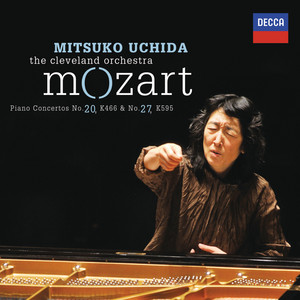 | Piano Concerto No. 27 in B-Flat Major, K. 595: III. Rondo. Allegro - Live at Severance Hall, Cleveland, 2010 | Wolfgang Amadeus Mozart, Mitsuko Uchida, The Cleveland Orchestra | B♭ Major | 1 | 6B | 92 BPM | |
 | 10 Preludes, Op. 23: No. 5. Alla marcia in G Minor | Sergei Rachmaninoff, Nikolai Lugansky | G Minor | 2 | 6A | 106 BPM | |
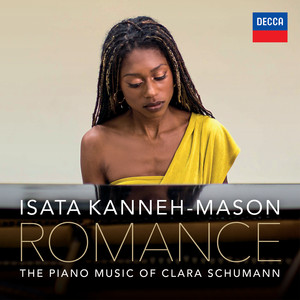 | 3 Romances, Op. 11: No. 1, Andante | Clara Schumann, Isata Kanneh-Mason | E♭ Minor | 0 | 2A | 127 BPM | |
 | Couperin, F: Second livre de pièces de clavecin, Sixième ordre: V. Les baricades mistérieuses | François Couperin, David Fray | B♭ Major | 0 | 6B | 75 BPM | |
 | Moods, Impressions and Souvenirs, Op. 41: IV. Poème | Zdeněk Fibich, Balazs Szokolay | E Major | 0 | 12B | 126 BPM | |
 | Violin Concerto in D Minor, Op. 47: III. Allegro, ma non tanto | Jean Sibelius, Anne-Sophie Mutter, Staatskapelle Dresden, André Previn | D Major | 2 | 10B | 112 BPM | |
 | Violin Concerto No. 5 in A Major, K. 219 "Turkish": III. Rondeau. Tempo di Menuetto | Wolfgang Amadeus Mozart, Arabella Steinbacher, Daniel Dodds, Lucerne Festival Strings | A Major | 1 | 11B | 118 BPM | |
 | Violin Sonata, CFF 123: IV. Allegretto poco mosso | César Franck, Augustin Dumay, Maria João Pires | A Major | 2 | 11B | 73 BPM | |
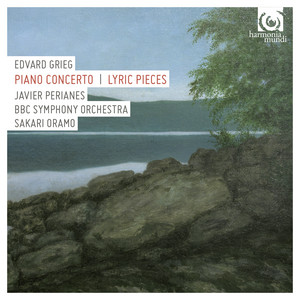 | Piano Concerto in A Minor, Op. 16: III. Allegro moderato molto e marcato | Edvard Grieg, Javier Perianes, BBC Symphony Orchestra, Sakari Oramo | F Major | 2 | 7B | 112 BPM | |
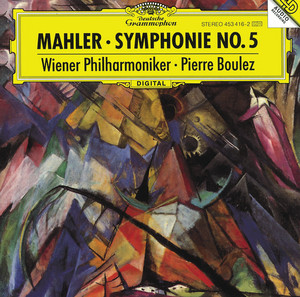 | Symphony No. 5: IV. Adagietto. Sehr langsam | Gustav Mahler, Wiener Philharmoniker, Pierre Boulez | F Major | 0 | 7B | 87 BPM | |
 | Le tombeau de Couperin: 3. Menuet (version for orchestra) | Maurice Ravel, フランス国立リヨン管弦楽団, レナード・スラットキン | A Major | 1 | 11B | 107 BPM | |
 | Rachmaninov: 10 Preludes, Op. 23: No. 5 in G Minor | Sergei Rachmaninoff, Nikolai Lugansky | G Minor | 1 | 6A | 113 BPM | |
 | Lieder ohne Worte (Songs without Words), Book 2, Op. 30: No. 7 in E-Flat Major, Op. 30, No. 1, MWV U103 | Felix Mendelssohn, Péter Nagy | E♭ Major | 0 | 5B | 65 BPM | |
 | Violin Concerto In D, Op.35, TH. 59: 2. Canzonetta (Andante) | Pyotr Ilyich Tchaikovsky, Janine Jansen, Mahler Chamber Orchestra, Daniel Harding | E♭ Major | 0 | 5B | 103 BPM | |
 | Le carnaval des animaux, R. 125: Le cygne | Camille Saint-Saëns, Mischa Maisky, Orpheus Chamber Orchestra | C Major | 0 | 8B | 83 BPM | |
 | Piano Concerto No. 2 in F Major, Op. 102: II. Andante | Dmitri Shostakovich, Boris Giltburg, Royal Liverpool Philharmonic Orchestra, Vasily Petrenko | C Minor | 0 | 5A | 80 BPM | |
 | Saint-Saëns: Piano Concerto No. 2 in G Minor, Op. 22: II. Allegro scherzando | Camille Saint-Saëns, Bertrand Chamayou, Emmanuel Krivine, Orchestre National De France | F♯ Minor | 0 | 11A | 84 BPM | |
 | Piano Quintet in C Minor: I. Andante | Alexander Borodin, Ilona Prunyi, New Budapest Quartet | C Minor | 1 | 5A | 68 BPM | |
 | Romance in F Minor, Op. 11, B. 38 (Arr. P. Breiner for Piano) | Antonín Dvořák, Peter Breiner | A♭ Major | 0 | 4B | 72 BPM | |
 | Dolly Suite, Op. 56: III. Le Jardin de Dolly | Gabriel Fauré, Katia Labèque, Marielle Labèque | D♭ Minor | 0 | 12A | 60 BPM | |
 | Consolation No. 3 in D-Flat Major, S. 172 | Franz Liszt, Lang Lang | D♭ Major | 0 | 3B | 74 BPM | |
 | Song Without Words In C Minor No.2 Opus 38, Book III | Felix Mendelssohn, Bertrand Chamayou | A♭ Major | 1 | 4B | 80 BPM | |
 | 4 Impromptus, Op. 90, D. 899: No. 3 in G-flat major | Franz Schubert, Khatia Buniatishvili | F♯ Major | 0 | 2B | 69 BPM | |
 | Recueil de chants, Op. 65: No. 6, Barcarolle | Charles-Valentin Alkan, Bruce Liu | G Minor | 0 | 6A | 70 BPM | |
 | 3 Romances, Op. 22: 1. Andante molto | Clara Schumann, Janine Jansen, Antonio Pappano | D♭ Major | 1 | 3B | 74 BPM |
- ISRC
- QZFYX2069457
- Label
- L-M Records/RCA Records