- BPM
- 102
- Key
- F Minor
- Camelot
- 4A
String Quartet No. 6 in F Minor, Op. 80, MWV R37: II. Allegro assai by Felix Mendelssohn, New Zealand String Quartet Song Details
"String Quartet No. 6 in F Minor, Op. 80, MWV R37: II. Allegro assai" by Felix Mendelssohn, New Zealand String Quartet had its release date on March 25, 2008. With this song being around four minutes long, at 4:28, the duration of this song is pretty average compared to other songs. This track is safe for children and doesn't appear to contain any foul language, since the "Explicit" tag was not present in this track. The track order of this song in Felix Mendelssohn, New Zealand String Quartet's "Mendelssohn, Felix: String Quartets, Vol. 1 - String Quartets Nos. 1, 4, 6" album is number 2 out of 12. On top of that, Hong Kong appears to be the country where this track was created. In terms of popularity, String Quartet No. 6 in F Minor, Op. 80, MWV R37: II. Allegro assai is currently unknown. In our opinion, the overall tone is not very danceable and projects negative sounds, such as being sad, depressed, or angry.
BPM and Tempo
We consider the tempo marking of String Quartet No. 6 in F Minor, Op. 80, MWV R37: II. Allegro assai by Felix Mendelssohn, New Zealand String Quartet to be Andante (at a walking pace) because the track has a tempo of 102 BPM, a half-time of 51BPM, and a double-time of 204 BPM. Based on that, the speed of the song's tempo is slow. The time signature for this track is 3/4.
Music Key
F Minor is the music key of this track. Because this track belongs in the F Minor key, the camelot key is 4A. So, the perfect camelot match for 4A would be either 4A or 3B. While, a low energy boost can consist of either 4B or 5A. For moderate energy boost, you would use 1A and a high energy boost can either be 6A or 11A. However, if you are looking for a low energy drop, finding a song with a camelot key of 3A would be a great choice. Where 7A would give you a moderate drop, and 2A or 9A would be a high energy drop. Lastly, 7B allows you to change the mood.
Want to find the BPM and music key for other songs? Check out our BPM and Key Finder page!
- Popularity
- 0%
- Loudness
- -17.497 dB
- Acousticness
- 98%
- Danceability
- 32%
- Energy
- 16%
- Instrumentalness
- 92%
- Liveness
- 13%
- Loudness
- 71%
- Speechiness
- 4%
- Valence
- 15%
Recommendations
| Track | Artist | Key | Energy | Camelot | BPM | ||
|---|---|---|---|---|---|---|---|
 | Piano Concerto No. 1 in C Major, Op. 11, J. 98: II. Adagio | Carl Maria von Weber, Benjamin Frith, RTE Sinfonietta, Proinnsias O'Duinn | A♭ Major | 0 | 4B | 95 BPM | |
 | Suite No. 3, P. 172: III. Siciliana: Andantino | Ottorino Respighi, RTÉ National Symphony Orchestra | C Minor | 0 | 5A | 93 BPM | |
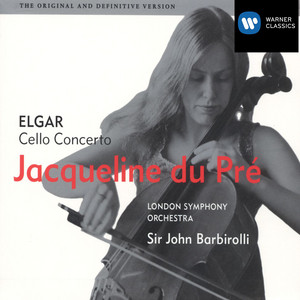 | Elgar: Cello Concerto in E Minor, Op. 85: I. Adagio - Moderato | Edward Elgar, Jacqueline du Pré, London Symphony Orchestra, Sir John Barbirolli | E Minor | 1 | 9A | 96 BPM | |
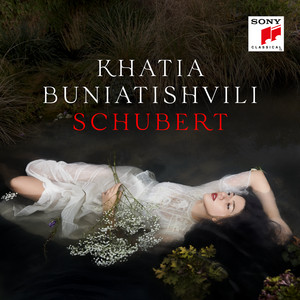 | Ständchen, S. 560 (Trans. from Schwanengesang No. 4, D. 957) | Franz Schubert, Franz Liszt, Khatia Buniatishvili | D Major | 0 | 10B | 67 BPM | |
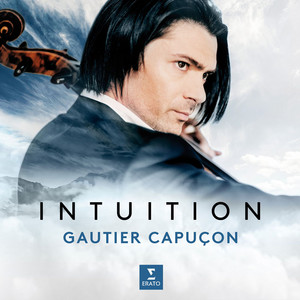 | Elgar / Orch. Walter: Salut d'amour, Op. 12 | Edward Elgar, Gautier Capuçon, Deborah Nemtanu, Douglas Boyd, Orchestre de chambre de Paris | E Major | 1 | 12B | 83 BPM | |
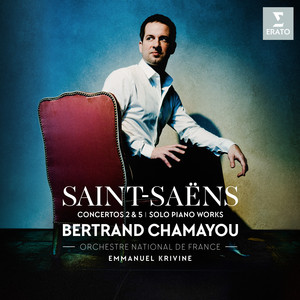 | Saint-Saëns: Piano Concerto No. 2 in G Minor, Op. 22: I. Andante sostenuto | Camille Saint-Saëns, Bertrand Chamayou, Emmanuel Krivine, Orchestre National De France | G Minor | 2 | 6A | 94 BPM | |
 | Schluss | Fanny Mendelssohn, Heather Schmidt | E Major | 1 | 12B | 87 BPM | |
 | Piano Quintet in C Minor: I. Andante | Alexander Borodin, Ilona Prunyi, New Budapest Quartet | C Minor | 1 | 5A | 68 BPM | |
 | Piano Sonata No. 9 in F Minor: I. Andante spiritoso | Baldassare Galuppi, Víkingur Ólafsson | F Minor | 0 | 4A | 73 BPM | |
 | Souvenir d'un lieu cher, Op. 42: Ib. Méditation (Orch. Glazunov) | Pyotr Ilyich Tchaikovsky, Daniel Lozakovich, National Philharmonic Orchestra of Russia, Vladimir Spivakov | B♭ Major | 2 | 6B | 99 BPM | |
 | Adagio in F, H.XVII No. 9 | Joseph Haydn, Alfred Brendel | F Major | 0 | 7B | 71 BPM | |
 | Lied opus 34 no.2, transcription Franz Liszt: Auf Flügeln Des Gesanges | Felix Mendelssohn, Bertrand Chamayou | A♭ Major | 0 | 4B | 71 BPM | |
 | Capriccio brillant, Op. 22: Andante | Felix Mendelssohn, Matthias Kirschnereit, Michael Sanderling, Frankfurt Radio Symphony Orchestra | B Major | 0 | 1B | 91 BPM | |
 | Violin Concerto No. 1 in G Minor, Op. 26: I. Allegro moderato | Max Bruch, Itzhak Perlman, Bernard Haitink, Concertgebouworkest | E♭ Major | 2 | 5B | 99 BPM | |
 | Poulenc: Concerto for Two Pianos in D Minor, FP 61: I. Allegro ma non troppo | Francis Poulenc, James Conlon, Rotterdam Philharmonic Orchestra | E♭ Major | 1 | 5B | 103 BPM | |
 | Nocturne No. 16 In F Major, H. 62: Nocturne No. 16 In F Major | Benjamin Frith, John Field | F Major | 0 | 7B | 71 BPM | |
 | 5 Pieces, Op. 75, "The Trees": No. 1 Nar ronnen blommar (When the Rowan Blossoms) | Jean Sibelius, Håvard Gimse | E♭ Major | 0 | 5B | 75 BPM | |
 | 4 Romantic Pieces, Op. 75, B. 150: I. Allegro moderato (Arr. Soltani For Solo Cello and Cello Ensemble) | Antonín Dvořák, Kian Soltani, Staatskapelle Berlin, Cellists | B♭ Major | 1 | 6B | 115 BPM | |
 | 13 Pieces for Piano, Op. 76: II. Etude | Jean Sibelius, Jian Wang, Göran Söllscher | G Minor | 0 | 6A | 124 BPM | |
 | 24 Preludes, Op. 11: No. 21 in B-Flat Major - Andante | Alexander Scriabin, Mao Fujita | F Major | 1 | 7B | 149 BPM | |
![Organ Sonata No. 4, BWV 528: II. Andante [Adagio] (Transcr. by August Stradal) by Johann Sebastian Bach, Víkingur Ólafsson](https://i.scdn.co/image/ab67616d00001e02369f6761d1cccba9a34f05cf) | Organ Sonata No. 4, BWV 528: II. Andante [Adagio] (Transcr. by August Stradal) | Johann Sebastian Bach, Víkingur Ólafsson | B Minor | 0 | 10A | 71 BPM | |
 | Dido and Aeneas, Z. 626 / Act III: "When I Am Laid in Earth" Dido's Lamento (Arr. by Mathieu Herzog for Cello and Strings) | Henry Purcell, Camille Thomas, Brussels Philharmonic, Mathieu Herzog | G Minor | 1 | 6A | 77 BPM | |
 | España, Op. 165: II. Tango | Isaac Albéniz, Daniel Barenboim | D Major | 0 | 10B | 66 BPM | |
 | Serenade for Strings in E Major, Op. 22, B. 52: I. Moderato | Antonín Dvořák, Prague Chamber Orchestra, Petr Skvor | E Major | 1 | 12B | 83 BPM | |
 | Danse macabre, Op. 40 | Camille Saint-Saëns, Royal Concertgebouw Orchestra, Charles Münch | D Major | 2 | 10B | 81 BPM |
- ISRC
- HKI190782002
- Label
- L-M Records/RCA Records