- BPM
- 140
- Key
- A Major
- Camelot
- 11B
Delius: Brigg Fair "An English Rhapsody": Interlude. Slow and Very Quietly by Frederick Delius, Sir Thomas Beecham, Royal Philharmonic Orchestra Song Details
"Delius: Brigg Fair "An English Rhapsody": Interlude. Slow and Very Quietly" by Frederick Delius, Sir Thomas Beecham, Royal Philharmonic Orchestra had its release date on February 7, 2011. The duration of This song is about 3 minutes long, at 3:06. Based on our data, This song appears to be safe for all ages and is not considered explicit. This track is about the average length of a typical track. There are a total of 88 in the song's album "Sir Thomas Beecham: The English Collection". In this album, this song's track order is #11. Furthermore, we believe that the track originated from United Kingdom. Based on our statistics, Delius: Brigg Fair "An English Rhapsody": Interlude. Slow and Very Quietly's popularity is unknown right now. In our opinion, the overall tone is not very danceable and projects negative sounds, such as being sad, depressed, or angry.
BPM and Tempo
With Delius: Brigg Fair "An English Rhapsody": Interlude. Slow and Very Quietly by Frederick Delius, Sir Thomas Beecham, Royal Philharmonic Orchestra having a BPM of 140 with a half-time of 70 BPM and a double-time of 280 BPM, we would consider this track to have a Allegro (fast, quick, and bright) tempo marking. Because of this, we believe that the song has an overall fast tempo. Looking at the BPM of this song, this song might go great with jogging or cycling. The time signature for this track is 1/4.
Music Key
A Major is the music key of this track. Or for those who are familiar with the camelot wheel, this song has a camelot key of 11B. So, the perfect camelot match for 11B would be either 11B or 12A. While, 12B can give you a low energy boost. For moderate energy boost, you would use 8B and a high energy boost can either be 1B or 6B. Though, if you want a low energy drop, you should looking for songs with either a camelot key of 11A or 10B will give you a low energy drop, 2B would be a moderate one, and 9B or 4B would be a high energy drop. Lastly, 8A allows you to change the mood.
Want to find the BPM and music key for other songs? Check out our BPM and Key Finder page!
- Popularity
- 0%
- Loudness
- -16.492 dB
- Acousticness
- 88%
- Danceability
- 16%
- Energy
- 12%
- Instrumentalness
- 92%
- Liveness
- 14%
- Loudness
- 73%
- Speechiness
- 4%
- Valence
- 4%
Recommendations
| Track | Artist | Key | Energy | Camelot | BPM | ||
|---|---|---|---|---|---|---|---|
 | Pavane for Dead Princess | Maurice Ravel, David Robertson, Orchestre National De Lyon, Irina Mejoueva | G Major | 1 | 9B | 77 BPM | |
 | Cello Sonata in D Major, Op. 17: II. Andante tranquillo | Luise Adolpha Le Beau, Steven Isserlis, Connie Shih | B Minor | 1 | 10A | 86 BPM | |
 | Petite suite, L. 65: I. En bateau (Orch. by Henri Busser) | Claude Debussy, Yoav Talmi, Orchestre Symphonique De Québec | B Minor | 0 | 10A | 75 BPM | |
 | Scottish Fantasy for Violin and Orchestra, Op. 46: I. Introduction: Grave, Adagio cantabile | Max Bruch, Joshua Bell, Academy of St. Martin in the Fields | E♭ Major | 2 | 5B | 60 BPM | |
 | Carnaval, Op. 9: No. 12, Chopin | Robert Schumann, Boris Giltburg | B♭ Minor | 0 | 3A | 92 BPM | |
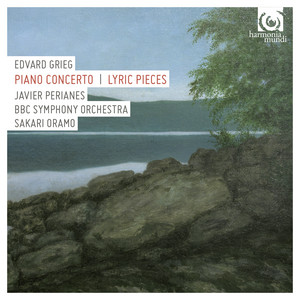 | Lyric Pieces, Book VI, Op. 57: No. 6, Hjemve. Andante | Edvard Grieg, Javier Perianes | E Minor | 0 | 9A | 166 BPM | |
 | 3 Spirituals for Orchestra: No. 2, Kum Ba Ya | Adolphus Hailstork, Virginia Symphony Orchestra, Joann Falletta | D Minor | 0 | 7A | 172 BPM | |
 | Le tombeau de Couperin: 3. Menuet (version for orchestra) | Maurice Ravel, フランス国立リヨン管弦楽団, レナード・スラットキン | A Major | 1 | 11B | 107 BPM | |
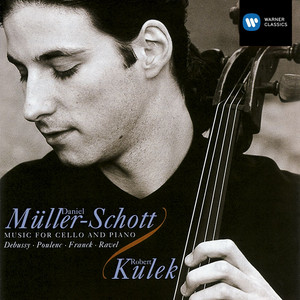 | Poulenc: Cello Sonata, FP 143: II. Cavatine | Francis Poulenc, Daniel Müller-Schott/Robert Kulek | F♯ Major | 0 | 2B | 77 BPM | |
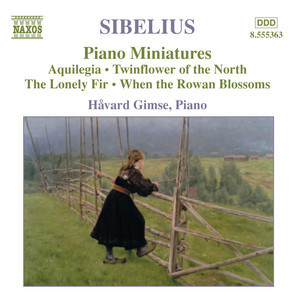 | 5 Pieces, Op. 75, "The Trees": No. 1 Nar ronnen blommar (When the Rowan Blossoms) | Jean Sibelius, Håvard Gimse | E♭ Major | 0 | 5B | 75 BPM | |
 | Suite No. 1, P. 109: I. Balletto Detto 'Il Conte Orlando': Allegretto Moderato | Ottorino Respighi, RTÉ National Symphony Orchestra | D Major | 0 | 10B | 127 BPM | |
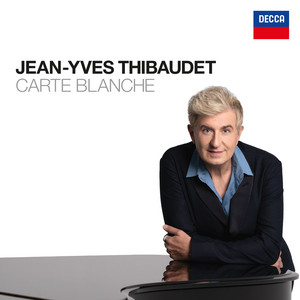 | Consolations, S. 172: No. 3 in D-Flat Major. Lento placido | Franz Liszt, Jean-Yves Thibaudet | D♭ Major | 0 | 3B | 134 BPM | |
 | Kol Nidrei - Adagio For Cello, Opus 47 | Max Bruch, Alisa Weilerstein, Staatskapelle Berlin, Daniel Barenboim | D Major | 1 | 10B | 81 BPM | |
 | 3 Liebesträume, S. 541/3: No. 3, O lieb, so lang du lieben kannst (Arr. for Harp by Nora von Marschall) | Franz Liszt, Nora von Marschall | B♭ Major | 0 | 6B | 85 BPM | |
 | Nocturne | Lili Boulanger, Juliette Hurel, Hélène Couvert | F Major | 0 | 7B | 62 BPM | |
 | Petite suite de concert, Op. 77: II. Demande et reponse | Samuel Coleridge-Taylor, Chicago Sinfonietta, Paul Freeman | G Major | 0 | 9B | 90 BPM | |
 | Henry V - Suite (arr. Mathieson): IV. Touch her soft lips and part | William Walton, Philharmonia Orchestra | C Major | 0 | 8B | 71 BPM | |
 | Violin Concerto, RT VII/6: II. Slower | Frederick Delius, Tasmin Little, Andrew Davis, BBC Symphony Orchestra, Sir Andrew Davis | A Minor | 0 | 8A | 86 BPM | |
 | Carmen Suite No. 1 (Arr. E. Guiraud): III. Intermezzo | Georges Bizet, Orquestra Simfònica de Barcelona i Nacional de Catalunya, Pablo González | E♭ Major | 0 | 5B | 81 BPM | |
 | Koanga / Act 2: La Calinda | Frederick Delius, Academy of St. Martin in the Fields, Sir Neville Marriner | D Major | 2 | 10B | 90 BPM | |
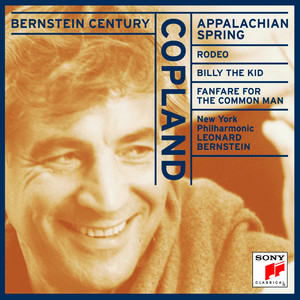 | Appalachian Spring: VIII. Coda. Moderato | Aaron Copland, Leonard Bernstein, New York Philharmonic | C Major | 0 | 8B | 106 BPM | |
 | Marche Caprice | Frederick Delius, Royal Scottish National Orchestra, David Lloyd-Jones | C Major | 1 | 8B | 124 BPM | |
 | Love's Labour's Lost, Op. 28a: II. Longaville's Sonnet | Gerald Finzi, Robert Plane, Royal Northern Sinfonia, Howard Griffiths | D Minor | 0 | 7A | 94 BPM | |
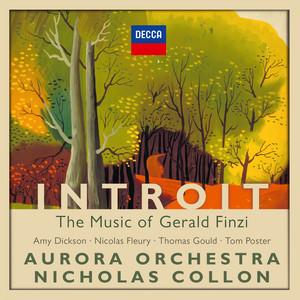 | Five Bagatelles, Op. 23 - Arr. Ashmore, Dickson: 4. Forlana | Gerald Finzi, Amy Dickson, Aurora Orchestra, Nicholas Collon | F♯ Major | 1 | 2B | 103 BPM | |
| Suite No. 3, P. 172: I. Italiana: Andantino | Ottorino Respighi, RTÉ National Symphony Orchestra | B♭ Major | 1 | 6B | 94 BPM |
- ISRC
- GBAYC1001636
- Label
- L-M Records/RCA Records