- BPM
- 89
- Key
- D Major
- Camelot
- 10B
Entry March of the Boyars by Johan Halvorsen, New London Orchestra, Ronald Corp Song Details
Johan Halvorsen, New London Orchestra, Ronald Corp's 'Entry March of the Boyars' had a release date set for January 1, 1998. With this song being about 5 minutes long, at This song is fairly a long song compared to the average song length. This song does not have an "Explicit" tag, making it safe for all ages. The song is number 15 out of 15 in European Light Music Classics by New London Orchestra, Leon Jessel, Ronald Corp, Franz Lehár, Gabriel Pierné, Johann Strauss II, Paul Lincke, Hugo Alfvén, Charles Gounod, Émile Waldteufel, Jonny Heykens, José Padilla, Ernesto Becucci, Joseph Hellmesberger I, Jaromír Weinberger, Oscar Fetras, Johan Halvorsen. Going off of the ISRC code of this track, we detected that the origin of this track is from United Kingdom. Entry March of the Boyars is unknown right now. In our opinion, the overall tone is not very danceable and projects negative sounds, such as being sad, depressed, or angry.
BPM and Tempo
The tempo marking of Entry March of the Boyars by Johan Halvorsen, New London Orchestra, Ronald Corp is Andante (at a walking pace), since this song has a tempo of 89 BPM. With that information, we can conclude that the song has a slow tempo. This song can go great with yoga or pilates. The time signature for this track is 4/4.
Music Key
This song is in the music key of D Major. This also means that this song has a camelot key of 10B. So, the perfect camelot match for 10B would be either 10B or 11A. While, 11B can give you a low energy boost. For moderate energy boost, you would use 7B and a high energy boost can either be 12B or 5B. Though, if you want a low energy drop, you should looking for songs with either a camelot key of 10A or 9B will give you a low energy drop, 1B would be a moderate one, and 8B or 3B would be a high energy drop. Lastly, 7A allows you to change the mood.
Want to find the BPM and music key for other songs? Check out our BPM and Key Finder page!
- Popularity
- 0%
- Loudness
- -19.828 dB
- Acousticness
- 97%
- Danceability
- 31%
- Energy
- 24%
- Instrumentalness
- 95%
- Liveness
- 9%
- Loudness
- 67%
- Speechiness
- 3%
- Valence
- 31%
Recommendations
| Track | Artist | Key | Energy | Camelot | BPM | ||
|---|---|---|---|---|---|---|---|
 | Danse Visionaire | Johan Halvorsen, Royal Philharmonic Orchestra | A Major | 0 | 11B | 80 BPM | |
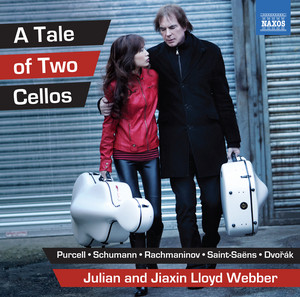 | The Gadfly Suite, Op. 97a: Prelude (arr. J .Lloyd Webber for 2 cellos and piano) | Dmitri Shostakovich, Julian Lloyd Webber, Jiaxin Lloyd Webber, John Lenehan | B Minor | 1 | 10A | 97 BPM | |
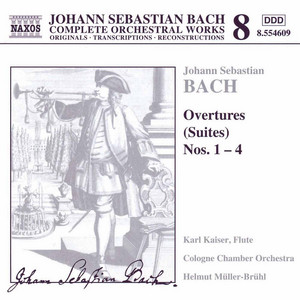 | Overture (Suite) No. 2 In B Minor, BWV 1067 : VII. Badinerie | Cologne Chamber Orchestra, Johann Sebastian Bach | B Minor | 4 | 10A | 119 BPM | |
 | J.S. Bach: J.S. Bach: Orchestral Suite No. 3 in D Major, BWV 1068: 2. Air | Johann Sebastian Bach, Orpheus Chamber Orchestra | D Major | 3 | 10B | 65 BPM | |
 | Adagio For Strings And Organ In G Minor | Remo Giazotto, Berliner Philharmoniker, Herbert von Karajan, David Bell, Leon Spierer | C Minor | 1 | 5A | 81 BPM | |
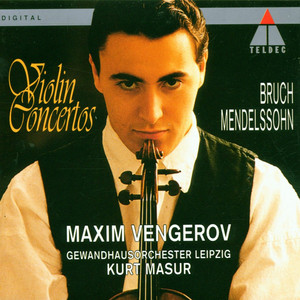 | Bruch: Violin Concerto No. 1 in G Minor, Op. 26: I. Prelude. Allegro moderato | Max Bruch, Maxim Vengerov, Kurt Masur, Gewandhausorchester | E♭ Major | 1 | 5B | 113 BPM | |
 | Raymonda, Act III: Variation 4 | Alexander Glazunov, Kivov Orchestra, Viktor Fedotov | D Minor | 1 | 7A | 103 BPM | |
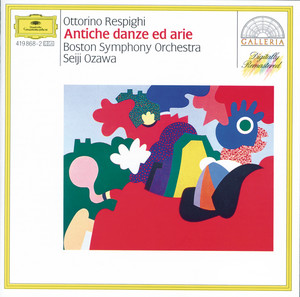 | Ancient Airs & Dances, Suite III, P. 172: IV. Passacaglia (Roncalli) | Ottorino Respighi, Boston Symphony Orchestra, Seiji Ozawa | G Minor | 3 | 6A | 116 BPM | |
 | Saint-Saëns: Le carnaval des animaux, R 125: XIII. Le cygne | Camille Saint-Saëns, Güher Pekinel, Éric Levionnais, Süher Pekinel | E♭ Major | 1 | 5B | 82 BPM | |
 | Paganini / Arr. Kreisler: Violin Concerto No. 2 in B Minor, Op. 7 "La campanella": III. Rondo "La campanella" | Niccolò Paganini, Julie Berthollet, Guillaume Vincent | B Minor | 2 | 10A | 142 BPM | |
 | Piano Trio No. 1 in D minor, Op. 32: 3. Elegia: Adagio | Anton Arensky, Beaux Arts Trio | D Major | 2 | 10B | 77 BPM | |
 | Liebesleid (Arr. For viola and piano) | Fritz Kreisler, Luigi Alberto Bianchi, Bruno Canino | A Major | 1 | 11B | 94 BPM | |
 | Fossegrimen, Op. 21: V. Fanitullen. Allegro con fuoco | Johan Halvorsen, Neeme Järvi, Bergen Philharmonic Orchestra, Ragnhild Hemsing | A Major | 0 | 11B | 101 BPM | |
 | 5 Pieces for 2 Violins & Piano (Arr. for 2 Violins & Piano by Lev Atovmyan): No. 1, Prelude. Moderato | Dmitri Shostakovich, Julia Fischer, Kirill Troussov, Henri Bonamy | G Major | 2 | 9B | 101 BPM | |
 | Romeo and Juliet, Op. 64 / Act 1: Dance Of The Knights | Sergei Prokofiev, The Cleveland Orchestra, Lorin Maazel | B♭ Major | 6 | 6B | 124 BPM | |
 | Vivaldi: The Four Seasons, Violin Concerto in G Minor, Op. 8 No. 2, RV 315 "Summer": III. Presto | Antonio Vivaldi, Itzhak Perlman, Israel Philharmonic Orchestra | G Minor | 4 | 6A | 136 BPM | |
 | Keyboard Sonata in D Minor, Kk. 1 | Domenico Scarlatti, Ivo Pogorelich | D Minor | 1 | 7A | 107 BPM | |
 | Czardas | Vittorio Monti, Lakatos | D Minor | 3 | 7A | 104 BPM | |
 | Hjertets melodier (Melodies of the Heart), Op. 5: No. 3. Jeg elsker dig (I Love but Thee) (arr. H. Kraggerud): I Love Only You, Op. 5, No. 3 | Henning Kraggerud, Edvard Grieg, Razumovsky Symphony Orchestra, Bjarte Engeset | A Minor | 0 | 8A | 86 BPM | |
 | Concerto For 4 Violins In B Minor, Op. 3, No. 10, RV 580 : I. Allegro | Antonio Vivaldi, Capella Istropolitana | B Minor | 3 | 10A | 107 BPM | |
 | Violin Concerto No. 1 in A minor, BWV 1041: I. (Allegro moderato) | Johann Sebastian Bach, Daniel Lozakovich, Chamber Orchestra of the Bavarian Radio, Radoslaw Szulc, Olga Watts | A Minor | 4 | 8A | 91 BPM | |
 | Wieniawski: Violin Concerto No. 2 in D Minor, Op. 22: II. Romance | Henryk Wieniawski, Itzhak Perlman, London Philharmonic Orchestra, Seiji Ozawa | B♭ Major | 1 | 6B | 97 BPM | |
 | Humoresques, Op. 101, B. 187: VII. Poco lento e grazioso | Antonín Dvořák, Tiffany Poon | B♭ Major | 0 | 6B | 66 BPM | |
 | Rhapsody on a Theme of Paganini, Op. 43: Variation No. 18. Andante cantabile (Transcr. for Piano Solo by Michael R. Loveridge) | Katya Kramer-Lapin | E Minor | 2 | 9A | 112 BPM | |
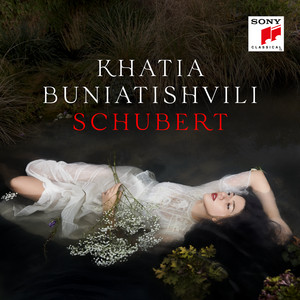 | Ständchen, S. 560 (Trans. from Schwanengesang No. 4, D. 957) | Franz Schubert, Franz Liszt, Khatia Buniatishvili | D Major | 0 | 10B | 67 BPM |
- ISRC
- GBAJY9799815
- Label
- L-M Records/RCA Records