- BPM
- 169
- Key
- E Major
- Camelot
- 12B
The Tempest, Op. 109: IV. Largo by Jean Sibelius, Santtu-Matias Rouvali, Gothenburg Symphony Orchestra Song Details
"The Tempest, Op. 109: IV. Largo" by Jean Sibelius, Santtu-Matias Rouvali, Gothenburg Symphony Orchestra had its release date on February 21, 2025. With This song being less than two minutes long, at 1:51, we are fairly confident that this song is not explicit and is safe for all ages. Based on the duration of this song, this song duration is much smaller than the average song duration. There are a total of 13 in the song's album "Sibelius: Symphonies Nos. 6 & 7, The Tempest". In this album, this song's track order is #9. Furthermore, we believe that the track originated from France. The popularity of The Tempest, Op. 109: IV. Largo is currently not that popular right now. In our opinion, the overall tone is not very danceable and projects negative sounds, such as being sad, depressed, or angry.
BPM and Tempo
With The Tempest, Op. 109: IV. Largo by Jean Sibelius, Santtu-Matias Rouvali, Gothenburg Symphony Orchestra having a BPM of 169 with a half-time of 84 BPM and a double-time of 338 BPM, we would consider this track to have a Vivace (lively and fast) tempo marking. Because of this, we believe that the song has an overall fast tempo. The time signature for this track is 5/4.
Music Key
This song is in the music key of E Major. Or for those who are familiar with the camelot wheel, this song has a camelot key of 12B. So, the perfect camelot match for 12B would be either 12B or 1A. While, 1B can give you a low energy boost. For moderate energy boost, you would use 9B and a high energy boost can either be 2B or 7B. Though, if you want a low energy drop, you should looking for songs with either a camelot key of 12A or 11B will give you a low energy drop, 3B would be a moderate one, and 10B or 5B would be a high energy drop. Lastly, 9A allows you to change the mood.
Want to find the BPM and music key for other songs? Check out our BPM and Key Finder page!
- Popularity
- 18%
- Loudness
- -21.443 dB
- Acousticness
- 83%
- Danceability
- 8%
- Energy
- 12%
- Instrumentalness
- 98%
- Liveness
- 15%
- Loudness
- 64%
- Speechiness
- 4%
- Valence
- 4%
Recommendations
| Track | Artist | Key | Energy | Camelot | BPM | ||
|---|---|---|---|---|---|---|---|
 | Montgomery Variations: I. The Decision – Andante deciso | Margaret Bonds, Philadelphia Orchestra, Yannick Nézet-Séguin | D Minor | 0 | 7A | 141 BPM | |
 | Andante Festivo | Jean Sibelius, Gothenburg Symphony Orchestra, Neeme Järvi | G Major | 1 | 9B | 86 BPM | |
 | Montgomery Variations: Montgomery Variations: I. Decision | Margaret Bonds, Kellen Gray, Royal Scottish National Orchestra | D Minor | 1 | 7A | 82 BPM | |
 | Pelléas et Mélisande Suite, Op. 80: III. Sicilienne | Gabriel Fauré, RTÉ National Symphony Orchestra, Jean-Luc Tingaud | E♭ Major | 0 | 5B | 94 BPM | |
 | Symphony No. 2 in D Major, Op. 73: III. Allegretto grazioso (quasi andantino) | Johannes Brahms, Royal Concertgebouw Orchestra, John Eliot Gardiner | D♭ Major | 2 | 3B | 95 BPM | |
 | Purcell: Dido and Aeneas, Z. 626, Act 3: Dido's Lament (Arr. Diluka for Piano) | Henry Purcell, Shani Diluka | D Minor | 0 | 7A | 134 BPM | |
| Symphony No. 3 in F Major, Op. 90: III. Poco allegretto | Johannes Brahms, Royal Concertgebouw Orchestra, John Eliot Gardiner | F Major | 0 | 7B | 173 BPM | |
 | Dvořák: In Folk Tone, Op. 73, B. 146: No. 1, Good Night, My Darling (Arr. Braun for Trumpet and Orchestra) | Antonín Dvořák, Lucienne Renaudin Vary, Sascha Goetzel, Orchestre de chambre de Paris | D Minor | 1 | 7A | 94 BPM | |
 | Musica serena | Pēteris Vasks, Munich Radio Orchestra, Ivan Repušić | A Minor | 0 | 8A | 65 BPM | |
 | Mendelssohn: Lieder ohne Worte, Book I, Op. 19b: No. 6 in G Minor, Venetian Gondola Song, MWV U78 (Orch. Shani) | Felix Mendelssohn, Lahav Shani, Rotterdam Philharmonic Orchestra | G Minor | 0 | 6A | 76 BPM | |
 | L'Arlésienne Suite No. 2: Farandole | Georges Bizet, Wiener Philharmoniker, Tugan Sokhiev | C Major | 1 | 8B | 89 BPM | |
 | Cello Sonata No. 2, Op. 58/MWV Q 32: III. Adagio | Felix Mendelssohn, Sol Gabetta, Bertrand Chamayou | G Major | 2 | 9B | 84 BPM | |
 | Night (Arr. for Cello & Piano by Tom Poster) | Florence Beatrice Price, Laura van der Heijden, Jâms Coleman | G Major | 0 | 9B | 86 BPM | |
 | Dolomites, pale mountains: I. Marmolada | Rachel Portman, LGT Young Soloists, Alexander Gilman | G Major | 0 | 9B | 86 BPM | |
 | Violin Concerto in D Major, Op. 35: I. Moderato nobile | Erich Wolfgang Korngold, Bomsori, Bamberger Symphoniker, Jakub Hrůša | D Major | 2 | 10B | 101 BPM | |
 | Serenade for String Orchestra in C Minor, Op. posth.: VI. Andante sostenuto | Max Bruch, George Hanson, Sinfonieorchester Wuppertal | E♭ Major | 0 | 5B | 87 BPM | |
 | A Midsummer Night's Dream, Op. 61: Scherzo (Arr. Rachmaninoff for Piano) | Felix Mendelssohn, Isata Kanneh-Mason | G Minor | 1 | 6A | 121 BPM | |
 | Anders Krisár: For Denise | Anders Krisár, Roland Pöntinen | D♭ Major | 0 | 3B | 68 BPM | |
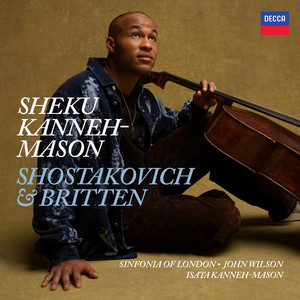 | Cello Sonata in C Major, Op. 65: II. Scherzo-Pizzicato. Allegretto | Benjamin Britten, Sheku Kanneh-Mason, Isata Kanneh-Mason | D Major | 1 | 10B | 143 BPM | |
 | 25 Préludes, Op.31: No. 8, La chanson de la folle au bord de la mer | Charles-Valentin Alkan, Igor Levit | A♭ Major | 0 | 4B | 67 BPM | |
 | Mélodie in Ab Major - arr. for orchestra | Louise Farrenc, Prague Metropolitan Orchestra, Shea Lolin | A♭ Major | 1 | 4B | 64 BPM | |
 | Piano Concerto: III. Allegro agitato | George Gershwin, Daniil Trifonov, Philadelphia Orchestra, Yannick Nézet-Séguin | C Minor | 2 | 5A | 140 BPM | |
 | Violin Concerto No. 1 in D Major, Op. 19: III. Moderato | Sergei Prokofiev, Janine Jansen, Oslo Philharmonic Orchestra, Klaus Mäkelä | G Minor | 2 | 6A | 73 BPM | |
 | Anemos | Olivia Belli, Chris Worsey | G Minor | 0 | 6A | 85 BPM | |
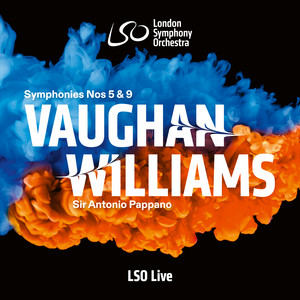 | Symphony No. 5 in D Major: II. Scherzo. Presto misterioso | Ralph Vaughan Williams, Antonio Pappano, London Symphony Orchestra | A Minor | 1 | 8A | 107 BPM |
- ISRC
- FR50X2413009
- Label
- L-M Records/RCA Records