- BPM
- 87
- Key
- G Minor
- Camelot
- 6A
Serenade-Valse by Ruggero Leoncavallo, Dario Müller Song Details
"Serenade-Valse" by Ruggero Leoncavallo, Dario Müller had its release date on January 1, 1998. With this song being around four minutes long, at 3:49, the duration of this song is pretty average compared to other songs. This track is safe for children and doesn't appear to contain any foul language, since the "Explicit" tag was not present in this track. The track order of this song in Ruggero Leoncavallo, Dario Müller's "Leoncavallo: Piano Works" album is number 2 out of 15. On top of that, Italy appears to be the country where this track was created. Serenade-Valse is not that popular right now. In our opinion, the overall tone is not very danceable and projects negative sounds, such as being sad, depressed, or angry.
BPM and Tempo
We consider the tempo marking of Serenade-Valse by Ruggero Leoncavallo, Dario Müller to be Andante (at a walking pace) because the track has a tempo of 87 BPM, a half-time of 44BPM, and a double-time of 174 BPM. Based on that, the speed of the song's tempo is slow. Activities such as, yoga or pilates, can go well with this song. The time signature for this track is 4/4.
Music Key
This song has a musical key of G Minor. Because this track belongs in the G Minor key, the camelot key is 6A. So, the perfect camelot match for 6A would be either 6A or 5B. While, a low energy boost can consist of either 6B or 7A. For moderate energy boost, you would use 3A and a high energy boost can either be 8A or 1A. However, if you are looking for a low energy drop, finding a song with a camelot key of 5A would be a great choice. Where 9A would give you a moderate drop, and 4A or 11A would be a high energy drop. Lastly, 9B allows you to change the mood.
Want to find the BPM and music key for other songs? Check out our BPM and Key Finder page!
- Popularity
- 1%
- Loudness
- -25.398 dB
- Acousticness
- 99%
- Danceability
- 28%
- Energy
- 5%
- Instrumentalness
- 90%
- Liveness
- 11%
- Loudness
- 58%
- Speechiness
- 4%
- Valence
- 12%
Recommendations
| Track | Artist | Key | Energy | Camelot | BPM | ||
|---|---|---|---|---|---|---|---|
 | Caro mio ben | Giuseppe Giordani, Ramón Vargas | G Major | 2 | 9B | 91 BPM | |
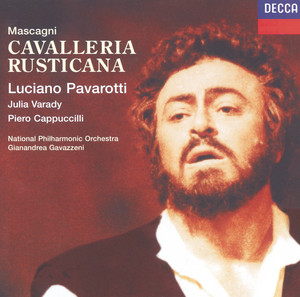 | Cavalleria rusticana: "Dite, mama Lucia" | Pietro Mascagni, Julia Varady, Ida Bormida, National Philharmonic Orchestra, Gianandrea Gavazzeni | F♯ Minor | 1 | 11A | 139 BPM | |
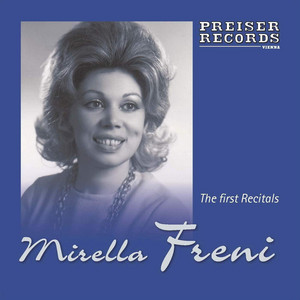 | Turandot: Tu, che di gel sei cinta | Mirella Freni, Vienna Volksoper Orchestra, Argeo Quadri | B Major | 2 | 1B | 87 BPM | |
 | Pagliacci / Prologue: Prelude | Ruggero Leoncavallo, Orchestra Del Teatro Alla Scala, Milano, Herbert von Karajan | G Major | 1 | 9B | 138 BPM | |
 | Rinaldo / Act 2: Lascia ch'io pianga | George Frideric Handel, Cecilia Bartoli, Academy of Ancient Music, Christopher Hogwood | E Major | 1 | 12B | 176 BPM | |
 | Vaga luna che inargenti | Vincenzo Bellini, Cecilia Bartoli, James Levine | A♭ Major | 0 | 4B | 101 BPM | |
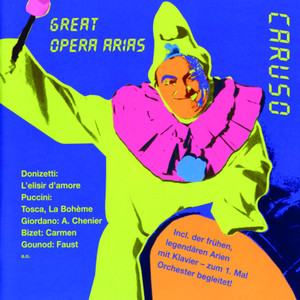 | Fedora: Amor ti vieta | Umberto Giordano, Enrico Caruso, Vienna Radio Symphony Orchestra, Gottfried Rabl | C Major | 2 | 8B | 99 BPM | |
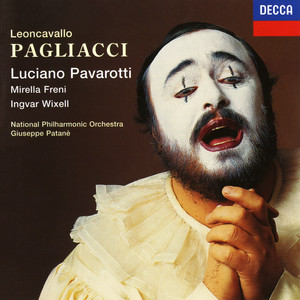 | Pagliacci / Prologue: Prelude..."Si può? Signore! Signori!" | Ruggero Leoncavallo, Ingvar Wixell, National Philharmonic Orchestra, Giuseppe Patanè | G Major | 2 | 9B | 79 BPM | |
 | Don Giovanni, K. 527, Act II Scene 10: Il mio tesoro intanto | Wolfgang Amadeus Mozart, Juan Diego Flórez, Riccardo Minasi | F Major | 3 | 7B | 112 BPM | |
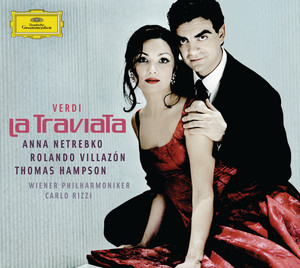 | La traviata / Act 1: "Un dì felice, eterea" | Giuseppe Verdi, Rolando Villazón, Anna Netrebko, Wiener Philharmoniker, Carlo Rizzi | F Major | 1 | 7B | 160 BPM | |
 | Luisa Miller / Act 2: Quando le sere al placido chiaror d'un ciel stellato | Giuseppe Verdi, Luciano Pavarotti, National Philharmonic Orchestra, Peter Maag | A♭ Major | 2 | 4B | 93 BPM | |
 | La bohème, Act II: Quando men vo – Fuori il danaro! | Giacomo Puccini, Elizabeth Harwood, Michel Sénéchal, Mirella Freni, Luciano Pavarotti, Nicolai Ghiaurov, Rolando Panerai, Gianni Maffeo, Schöneberger Sängerknaben, Chor der Deutschen Oper Berlin, Berliner Philharmoniker, Herbert von Karajan | A♭ Major | 3 | 4B | 182 BPM | |
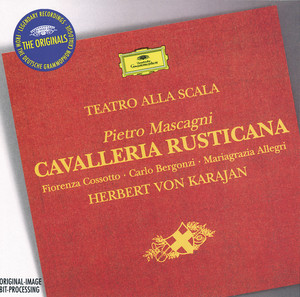 | Cavalleria rusticana: Brindisi. Viva il vino spumeggiante "Drinking Song" | Pietro Mascagni, Adriane Martino, Carlo Bergonzi, Orchestra Del Teatro Alla Scala, Milano, Herbert von Karajan, Coro Del Teatro Alla Scala Di Milano | A♭ Major | 3 | 4B | 126 BPM | |
 | Verdi: Rigoletto, Act 3 Scene 2: "La donna è mobile" (Duca) | Giuseppe Verdi, Franco Corelli, New Philharmonia Orchestra, Franco Ferraris | B Major | 2 | 1B | 63 BPM | |
 | Als die alte Mutter | Victoria de los Ángeles | D Major | 2 | 10B | 81 BPM | |
 | O sole mio | Edoardo Di Capua, Enrico Caruso, Vienna Radio Symphony Orchestra, Gottfried Rabl | G Major | 2 | 9B | 179 BPM | |
 | Carmen, Act I, No.2 : Scène et Choeur: Regardez donc cette petite qui semble vouloir nous parler (Moralès/Micaëla/Dragons) | Georges Bizet, Ludovic Tézier/Inva Mula/Choeur 'Les Elements'/Orchestre National du Capitole de Toulouse/Michel Plasson, Michel Plasson, Wolff, Orchestre National Du Capitole De Toulouse | B♭ Major | 1 | 6B | 89 BPM | |
| Il mio bel foco; Quella fiamma | Benedetto Marcello, Ramón Vargas | A Minor | 2 | 8A | 106 BPM | |
 | Carmen, WD 31 (Excerpts): Act I: L'amour est un oiseau rebelle (Habanera) | Georges Bizet, Herbert von Karajan, Wiener Philharmoniker | D Major | 0 | 10B | 127 BPM | |
 | Pagliacci / Act 1: "Vesti la giubba" - Live | Ruggero Leoncavallo, Luciano Pavarotti, Philadelphia Orchestra, Riccardo Muti | E Major | 2 | 12B | 81 BPM | |
| Cavalleria rusticana: "Regina coeli, laetare" | Pietro Mascagni, Orchestra Del Teatro Alla Scala, Milano, Herbert von Karajan, Coro Del Teatro Alla Scala Di Milano | D Major | 3 | 10B | 108 BPM | |
 | Finiculi, Finicula | Giuseppe Di Stefano | G Minor | 2 | 6A | 81 BPM | |
 | Werther: "Pourquoi me réveiller, ô souffle du printemps?" | Jules Massenet, Benjamin Bernheim, PKF – Prague Philharmonia, Emmanuel Villaume | F♯ Minor | 1 | 11A | 79 BPM | |
 | O del mio amato ben - Voice | Stefano Donaudy, Carlo Bergonzi, John Wustman | A Major | 1 | 11B | 60 BPM | |
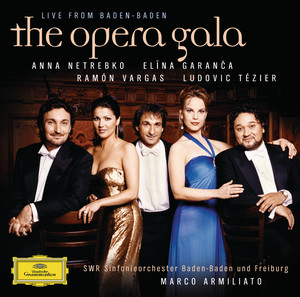 | Norma / Act I: Casta Diva | Vincenzo Bellini, Anna Netrebko, SWR Symphony Orchestra, Marco Armiliato | F Major | 1 | 7B | 85 BPM |
- ISRC
- ITN320910884
- Label
- L-M Records/RCA Records