- BPM
- 79
- Key
- F♯ Minor
- Camelot
- 11A
Francesca da Rimini, Act IV: Tutte bianche siete! (Francesca) by Riccardo Zandonai, Maria Caniglia, Orchestra Sinfonica Nazionale della RAI di Roma, Antonio Guarnieri Song Details
"Francesca da Rimini, Act IV: Tutte bianche siete! (Francesca)" by Riccardo Zandonai, Maria Caniglia, Orchestra Sinfonica Nazionale della RAI di Roma, Antonio Guarnieri had its release date on August 5, 2014. Since This song is still less than 10 minute long, it is still considered a pretty long duration song compared to the average song length. This song does not appear to be explicit due to the lack of the "E" tag. This song is part of Zandonai: Francesca da Rimini by Riccardo Zandonai, Antonio Guarnieri, Maria Caniglia, Orchestra Sinfonica Nazionale della RAI di Roma, Giacinto Prandelli, Carlo Tagliabue, Mario Carlin, Ornella Rovero, Mario Tommasini. The song's track number on the album is #10 out of 24 tracks. Based on our data, Italy was the country where this track was produced or recorded. Francesca da Rimini, Act IV: Tutte bianche siete! (Francesca) is unknown right now. In our opinion, the overall tone is not very danceable and projects negative sounds, such as being sad, depressed, or angry.
BPM and Tempo
Since Francesca da Rimini, Act IV: Tutte bianche siete! (Francesca) by Riccardo Zandonai, Maria Caniglia, Orchestra Sinfonica Nazionale della RAI di Roma, Antonio Guarnieri has a tempo of 79 beats per a minute, the tempo markings of this song would be Andante (at a walking pace). With Francesca da Rimini, Act IV: Tutte bianche siete! (Francesca) being at 79 BPM, the half-time would be 40 BPM with a double-time of 158 BPM.In addition, we consider the tempo speed to be pretty slow for this song. The time signature for this track is 4/4.
Music Key
This song has a musical key of F♯ Minor. Or for those who are familiar with the camelot wheel, this song has a camelot key of 11A. So, the perfect camelot match for 11A would be either 11A or 10B. While, a low energy boost can consist of either 11B or 12A. For moderate energy boost, you would use 8A and a high energy boost can either be 1A or 6A. However, if you are looking for a low energy drop, finding a song with a camelot key of 10A would be a great choice. Where 2A would give you a moderate drop, and 9A or 4A would be a high energy drop. Lastly, 2B allows you to change the mood.
Want to find the BPM and music key for other songs? Check out our BPM and Key Finder page!
- Popularity
- 0%
- Loudness
- -13.042 dB
- Acousticness
- 99%
- Danceability
- 19%
- Energy
- 29%
- Instrumentalness
- 32%
- Liveness
- 21%
- Loudness
- 78%
- Speechiness
- 4%
- Valence
- 9%
Recommendations
| Track | Artist | Key | Energy | Camelot | BPM | ||
|---|---|---|---|---|---|---|---|
 | Il barbiere di Siviglia (The Barber of Seville): Act I: Seguito dell' Introduzione: Ehi, Fiorello | Gioachino Rossini, Roberto Servile, Sonia Ganassi, Ramón Vargas, Angelo Romero, Franco de Grandis, Ingrid Kertesi, Kazmer Sarkany, Laszlo Orban, Ferenc Korpas, Hungarian Radio Chorus, Budapest Failoni Chamber Orchestra, Will Humburg | D Major | 2 | 10B | 139 BPM | |
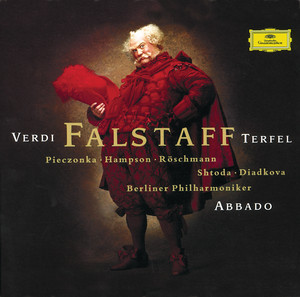 | Falstaff, Act II: E sogno o realtà? | Giuseppe Verdi, Thomas Hampson, Bryn Terfel, Berliner Philharmoniker, Claudio Abbado | C Major | 3 | 8B | 68 BPM | |
 | Puccini: Turandot, Act 2: "O Cina, che or sussulti" (Ping, Coro, Pong, Pang) | Giacomo Puccini, Antonio Pappano, Coro dell'Accademia Nazionale Di Santa Cecilia, Gregory Bonfatti, Mattia Olivieri, Siyabonga Maqungo, Orchestra dell'Accademia Nazionale di Santa Cecilia | G Minor | 1 | 6A | 117 BPM | |
 | Puccini: Turandot, Act 1: "Popolo di Pekino!" (Il mandarino, La Folla, Guardie, Liù) | Giacomo Puccini, Renata Scotto, Francesco Molinari-Pradelli, Orchestra Del Teatro Dell'Opera Di Roma | B♭ Major | 2 | 6B | 95 BPM | |
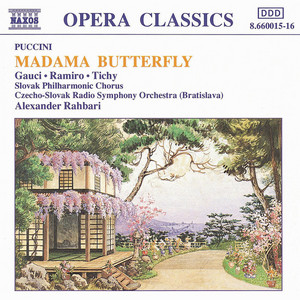 | Madama Butterfly, SC 74, Act I: Bimba dagli occhi pieni ci malia | Giacomo Puccini, Miriam Gauci, Yordy Ramiro, Slovak Radio Symphony Orchestra, Ali Rahbari | A Major | 1 | 11B | 84 BPM | |
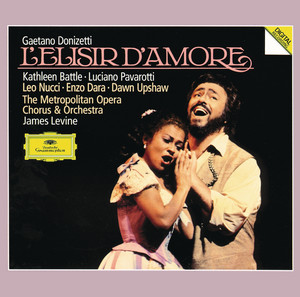 | L'elisir d'amore / Act II: "Saria possibile?" | Gaetano Donizetti, Metropolitan Opera Chorus, David Stivender, Dawn Upshaw, Metropolitan Opera Orchestra, James Levine | B Major | 0 | 1B | 119 BPM | |
 | Francesca da Rimini, Act II: Paolo! …Francesca! (Live) | Riccardo Zandonai, Renato Cioni, Orchestra del Teatro Lirico Giuseppe Verdi di Trieste, Coro del Teatro Lirico Giuseppe Verdi di Trieste, Leyla Gencer, Eno Mucchiutti, Claudio Giombi, Franco Capuana | D♭ Major | 5 | 3B | 87 BPM | |
 | Turandot / Act 1: La grazia, Principessa! - O divina bellezza (Coro / Calaf) | Giacomo Puccini, Plácido Domingo, Wiener Philharmoniker, Herbert von Karajan, Vienna State Opera Chorus | B Major | 2 | 1B | 82 BPM | |
 | The Dream of Gerontius, Op. 38, Part I: No. 9, Novissima hora est; and I fain would sleep (Gerontius) | Edward Elgar, Edward Gardner, London Philharmonic Orchestra, Allan Clayton | D Major | 2 | 10B | 86 BPM | |
 | Francesca da Rimini, Op. 4, Act III: Benvenuto, signore mio cognato | Riccardo Zandonai, Christina Vasileva, Martin Mühle, Philharmonisches Orchester Freiburg, Fabrice Bollon | D♭ Major | 2 | 3B | 77 BPM | |
![Cavalleria Rusticano: V. Romance and Scene. Voi lo sapete, O mamma (Santuzza) - Miseri noi [Lucia · Santuzza] by Pietro Mascagni, Filippo Arlia, Berliner Symphoniker, Irina Dolzhenko, Alessandra di Giorgio](https://i.scdn.co/image/ab67616d00001e02e9c5e4b106ecc8b913890e2b) | Cavalleria Rusticano: V. Romance and Scene. Voi lo sapete, O mamma (Santuzza) - Miseri noi [Lucia · Santuzza] | Pietro Mascagni, Filippo Arlia, Berliner Symphoniker, Irina Dolzhenko, Alessandra di Giorgio | E Major | 1 | 12B | 83 BPM | |
 | Rigoletto / Act 3: Maddalena? / Aspettate | Giuseppe Verdi, Elena Obraztsova, Plácido Domingo, Nicolai Ghiaurov, Wiener Philharmoniker, Carlo Maria Giulini | B Major | 0 | 1B | 92 BPM | |
| Francesca da Rimini, Act IV: O Biancofiore, piccola tu sei! (Live) | Riccardo Zandonai, Leyla Gencer, Orchestra del Teatro Lirico Giuseppe Verdi di Trieste, Silvana Alessio Martinelli, Franco Capuana | D♭ Minor | 2 | 12A | 176 BPM | |
 | Conchita: Pappagallesse, chiudete il becco! | Riccardo Zandonai, Lisa Houben, David Banos Marin, Camilla Antonini, Gabriela Aleo, Filippo Arlia, Orchestra Filarmonica della Calabria, Francesco Costa, Coro Lirico Siciliano | D♭ Major | 2 | 3B | 139 BPM | |
 | La traviata / Act 3: "Ah, non più!" - "Ah! Gran Dio! Morir sì giovine" | Giuseppe Verdi, Cheryl Studer, Luciano Pavarotti, Metropolitan Opera Orchestra, James Levine | G Major | 1 | 9B | 64 BPM | |
| Francesca da Rimini, Act I: Francesca, dove andrai? (Live) | Riccardo Zandonai, Orchestra del Teatro Lirico Giuseppe Verdi di Trieste, Anna Gasparini, Leyla Gencer, Franco Capuana | G Minor | 0 | 6A | 139 BPM | |
 | The Rake's Progress / Act 2 / Scene 3: "As I was saying, both brothers.." | Igor Stravinsky, Sarah Walker, Philip Langridge, London Sinfonietta, Riccardo Chailly | D Minor | 2 | 7A | 141 BPM | |
 | Carmen / Act 3: Introduction: "Ecoute, compagnon, écoute!" | Georges Bizet, Christine Barbaux, Jane Berbié, Agnes Baltsa, José Carreras, Gino Quilico, Heinz Zednik, Berliner Philharmoniker, Herbert von Karajan, Choeur de l'Opéra de Paris, Jean Laforge | C Minor | 0 | 5A | 99 BPM | |
 | Penella: Don Gil de Alcalá: "Bendita cruz" | Lisette Oropesa, Óliver Díaz, Orquesta Sinfonica de Madrid | D Major | 1 | 10B | 81 BPM | |
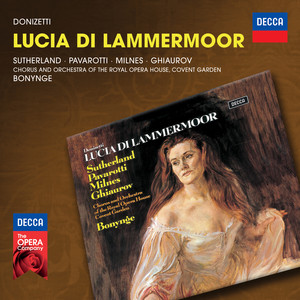 | Lucia di Lammermoor / Act 2: "Al ben de'tuoi qual vittima" | Gaetano Donizetti, Dame Joan Sutherland, Nicolai Ghiaurov, Orchestra of the Royal Opera House, Covent Garden, Richard Bonynge | A Major | 1 | 11B | 109 BPM | |
 | Primavera in val di sole, RZ 220: III. L'eco. Allegro deciso | Riccardo Zandonai, Stefano Guarino, Giancarlo Guarino | B♭ Major | 1 | 6B | 125 BPM | |
 | Ultima rosa | Riccardo Zandonai, Ida Fratta, Gianna Fratta | G Minor | 0 | 6A | 88 BPM | |
 | Cavalleria rusticana: A casa, a casa | Pietro Mascagni, Adriane Martino, Carlo Bergonzi, Orchestra Del Teatro Alla Scala, Milano, Herbert von Karajan, Coro Del Teatro Alla Scala Di Milano | B♭ Major | 3 | 6B | 74 BPM | |
 | Gounod: Faust, Act 2: Invocation. "Avant de quitter ces lieux" (Valentin) | Charles Gounod, Michel Plasson, Thomas Hampson, Orchestre Du Capitole De Toulouse | A Minor | 1 | 8A | 94 BPM | |
 | Tosca, Act I: Mario! Mario! Mario! | Giacomo Puccini, Eleonora Buratto, Jonathan Tetelman, Orchestra dell'Accademia Nazionale di Santa Cecilia, Daniel Harding | E♭ Minor | 3 | 2A | 135 BPM |
- ISRC
- ITCC51102443
- Label
- L-M Records/RCA Records