- BPM
- 168
- Key
- F Major
- Camelot
- 7B
Wagner: Der fliegende Holländer, WWV 63, Act 2 Scene 1: Introduktion by Richard Wagner, Theo Adam, Otto Klemperer, New Philharmonia Orchestra Song Details
Richard Wagner, Theo Adam, Otto Klemperer, New Philharmonia Orchestra's 'Wagner: Der fliegende Holländer, WWV 63, Act 2 Scene 1: Introduktion' had a release date set for 1968. The duration of This song is about two minutes long, specifically at 2:02. This song does not appear to have any foul language. Wagner: Der fliegende Holländer, WWV 63, Act 2 Scene 1: Introduktion's duration is considered a little bit shorter than the average duration of a typical track. This song is part of Wagner: Der Fliegende Holländer by Richard Wagner, Otto Klemperer. The song's track number on the album is #17 out of 48 tracks. Based on our data, United Kingdom was the country where this track was produced or recorded. The popularity of Wagner: Der fliegende Holländer, WWV 63, Act 2 Scene 1: Introduktion is currently not that popular right now. In our opinion, the overall tone is not very danceable and projects negative sounds, such as being sad, depressed, or angry.
BPM and Tempo
Since Wagner: Der fliegende Holländer, WWV 63, Act 2 Scene 1: Introduktion by Richard Wagner, Theo Adam, Otto Klemperer, New Philharmonia Orchestra has a tempo of 168 beats per a minute, the tempo markings of this song would be Vivace (lively and fast). With Wagner: Der fliegende Holländer, WWV 63, Act 2 Scene 1: Introduktion being at 168 BPM, the half-time would be 84 BPM with a double-time of 336 BPM.In addition, we consider the tempo speed to be pretty fast for this song. The time signature for this track is 1/4.
Music Key
This song has a musical key of F Major. Or for those who are familiar with the camelot wheel, this song has a camelot key of 7B. So, the perfect camelot match for 7B would be either 7B or 8A. While, 8B can give you a low energy boost. For moderate energy boost, you would use 4B and a high energy boost can either be 9B or 2B. Though, if you want a low energy drop, you should looking for songs with either a camelot key of 7A or 6B will give you a low energy drop, 10B would be a moderate one, and 5B or 12B would be a high energy drop. Lastly, 4A allows you to change the mood.
Want to find the BPM and music key for other songs? Check out our BPM and Key Finder page!
- Popularity
- 1%
- Loudness
- -17.256 dB
- Acousticness
- 98%
- Danceability
- 20%
- Energy
- 25%
- Instrumentalness
- 74%
- Liveness
- 60%
- Loudness
- 71%
- Speechiness
- 4%
- Valence
- 28%
Recommendations
| Track | Artist | Key | Energy | Camelot | BPM | ||
|---|---|---|---|---|---|---|---|
 | Transfigured Night, Op. 4: Molto rallentando | Arnold Schoenberg, Berliner Philharmoniker, Kirill Petrenko | F♯ Major | 1 | 2B | 96 BPM | |
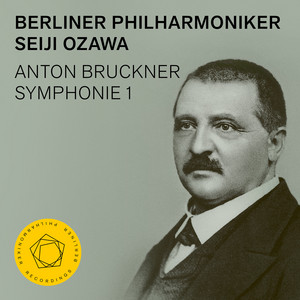 | Symphony No. 1 in C Minor, WAB 101 "Linz" (1866 Version): II. Adagio | Anton Bruckner, Berliner Philharmoniker, Seiji Ozawa | A♭ Major | 0 | 4B | 80 BPM | |
 | Symphony No. 4 in E-Flat Major, WAB 104 “Romantic” (1886 Version, Ed. Nowak): III. Scherzo. Bewegt - Trio. Nicht zu schnell. Keinesfalls schleppend | Anton Bruckner, Wiener Philharmoniker, Claudio Abbado | F♯ Major | 1 | 2B | 64 BPM | |
 | Symphony No. 2 "Resurrection": III. Scherzo. In ruhig fliessender Bewegung - Live | Gustav Mahler, Lucerne Festival Orchestra, Claudio Abbado | G Minor | 0 | 6A | 81 BPM | |
 | El profeta Amós | Juan Pablo Fernández Ramos | C Major | 0 | 8B | 80 BPM | |
 | Wagner: Tannhäuser: Overture (1861 Paris Version) | Richard Wagner, Herbert von Karajan, Berliner Philharmoniker | G Major | 1 | 9B | 69 BPM | |
 | Lasst mich allein, Op. 82 No. 1, B. 157/1 (Orch. Leopold) | Antonín Dvořák, Mahler Chamber Orchestra, Daniel Harding | A Major | 2 | 11B | 130 BPM | |
 | Chopin: Piano Concerto No. 1 in E Minor, Op. 11: I. Allegro maestoso, Pt. 2 | Frédéric Chopin, Martha Argerich, Charles Dutoit, Orchestre Symphonique de Montréal | E Minor | 1 | 9A | 88 BPM | |
 | Symphony No. 3 in E-Flat Major, Op. 97 "Rhenish": II. Scherzo. Sehr mäßig | Robert Schumann, Leonard Bernstein, New York Philharmonic | A Major | 5 | 11B | 83 BPM | |
 | Saint-Saëns: Symphony No. 1 in E-Flat Major, Op. 2: III. Adagio | Camille Saint-Saëns, Georges Prêtre, Wiener Symphoniker | E Major | 0 | 12B | 86 BPM | |
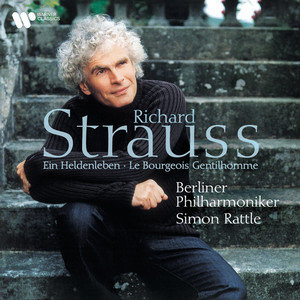 | Strauss, R: Ein Heldenleben, Op. 40: II. Des Helden Widersacher | Richard Strauss, Sir Simon Rattle, Berliner Philharmoniker, Guy Braunstein | E♭ Major | 0 | 5B | 83 BPM | |
 | Symphony No. 3 in E Flat Major, Op. 97 "Rhenish": I. Lebhaft | Robert Schumann, Staatskapelle Berlin, Daniel Barenboim | E Minor | 2 | 9A | 90 BPM | |
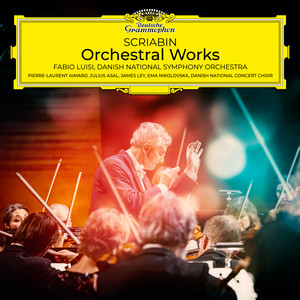 | Symphony No. 1 in E Major, Op. 26: I. Lento | Alexander Scriabin, Danish National Symphony Orchestra, Fabio Luisi | B♭ Minor | 2 | 3A | 86 BPM | |
 | Berlioz: Symphonie fantastique, Op. 14, H 48: V. Songe d'une nuit du sabbat. Larghetto - Allegro | Hector Berlioz, Sir Simon Rattle, Berliner Philharmoniker | A♭ Major | 2 | 4B | 80 BPM | |
 | Shostakovich: Concerto for Piano, Trumpet and String Orchestra No. 1 in C Minor, Op. 35: I. Allegretto | Dmitri Shostakovich, Elisabeth Leonskaja, Hugh Wolff, Saint Paul Chamber Orchestra | G Major | 0 | 9B | 116 BPM | |
 | Langsamer Satz | Anton Webern, Leonkoro Quartet | G Major | 1 | 9B | 134 BPM | |
 | Symphony No. 1 in C Minor, Op. 68: III. Un poco allegretto e grazioso | Johannes Brahms, Pittsburgh Symphony Orchestra, William Steinberg | A♭ Major | 2 | 4B | 85 BPM | |
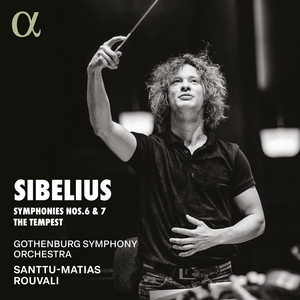 | Symphony No. 6 in D Major, Op. 104: IV. Allegro molto - Allegro assai - Doppio più lento | Jean Sibelius, Santtu-Matias Rouvali, Gothenburg Symphony Orchestra | G Major | 3 | 9B | 110 BPM | |
 | Schumann: Symphony No. 4 in D Minor, Op. 120: III. Scherzo. Lebhaft | Robert Schumann, Nikolaus Harnoncourt, Berliner Philharmoniker | B♭ Major | 1 | 6B | 83 BPM | |
 | Smetana: Má Vlast: No. 2, Vltava "Die Moldau", Pt. 9 | Bedřich Smetana, André Cluytens, Wiener Philharmoniker | A Major | 0 | 11B | 104 BPM | |
 | Giselle, Act I: No. 8a, Finale | Adolphe Adam, Wiener Philharmoniker, Herbert von Karajan | D Major | 0 | 10B | 135 BPM | |
 | Wagner: Tristan und Isolde: Prelude to Act 2 | Richard Wagner, Daniel Barenboim, Berliner Philharmoniker | C Minor | 0 | 5A | 64 BPM | |
 | Pictures at an Exhibition (Orch. Ravel): IV. Bydlo "The Oxcart" | Modest Mussorgsky, London Symphony Orchestra, Claudio Abbado | E Minor | 2 | 9A | 125 BPM | |
 | Schubert: Symphony No. 1 in D Major, D. 82: IV. Allegro vivace | Franz Schubert, Herbert von Karajan, Berliner Philharmoniker | G Major | 1 | 9B | 134 BPM | |
 | Restless Oceans | Anna Clyne, Baltimore Symphony Orchestra, Marin Alsop | G Major | 1 | 9B | 98 BPM |
- ISRC
- GBAYC0001189
- Label
- L-M Records/RCA Records