- BPM
- 109
- Key
- C Major
- Camelot
- 8B
String Quartet No.8 in C minor, Opus 110 - I. Largo by Dmitri Shostakovich, Brooklyn Rider Song Details
"String Quartet No.8 in C minor, Opus 110 - I. Largo" by Dmitri Shostakovich, Brooklyn Rider had its release date on May 23, 2025. With this song being about 5 minutes long, at This song is fairly a long song compared to the average song length. This song does not have an "Explicit" tag, making it safe for all ages. There are a total of 30 in the song's album "The Four Elements". In this album, this song's track order is #24. Furthermore, we believe that the track originated from United States. In terms of popularity, String Quartet No.8 in C minor, Opus 110 - I. Largo is currently not that popular. In our opinion, the overall tone is not very danceable and projects negative sounds, such as being sad, depressed, or angry.
BPM and Tempo
With String Quartet No.8 in C minor, Opus 110 - I. Largo by Dmitri Shostakovich, Brooklyn Rider having a BPM of 109 with a half-time of 54 BPM and a double-time of 218 BPM, we would consider this track to have a Moderato (at a moderate speed) tempo marking. Because of this, we believe that the song has an overall moderate tempo. The time signature for this track is 4/4.
Music Key
C Major is the music key of this track. Or for those who are familiar with the camelot wheel, this song has a camelot key of 8B. So, the perfect camelot match for 8B would be either 8B or 9A. While, 9B can give you a low energy boost. For moderate energy boost, you would use 5B and a high energy boost can either be 10B or 3B. Though, if you want a low energy drop, you should looking for songs with either a camelot key of 8A or 7B will give you a low energy drop, 11B would be a moderate one, and 6B or 1B would be a high energy drop. Lastly, 5A allows you to change the mood.
Want to find the BPM and music key for other songs? Check out our BPM and Key Finder page!
- Popularity
- 5%
- Loudness
- -20.489 dB
- Acousticness
- 92%
- Danceability
- 18%
- Energy
- 5%
- Instrumentalness
- 89%
- Liveness
- 12%
- Loudness
- 66%
- Speechiness
- 4%
- Valence
- 4%
Recommendations
| Track | Artist | Key | Energy | Camelot | BPM | ||
|---|---|---|---|---|---|---|---|
 | String Quartet No. 8 in C Minor, Op. 110: II. Allegro molto | Dmitri Shostakovich, Borodin Quartet | G Major | 5 | 9B | 126 BPM | |
 | Morgen, Op. 27 No. 4 (Arr. Reger for Piano) | Richard Strauss, Angela Hewitt | A Major | 2 | 11B | 143 BPM | |
 | Salyut, Ispaniya (Hail, Spain), Op. 44: Song of Rosita | Dmitri Shostakovich, Kamil Barczewski, Camerata Silesia, Polish National Radio Symphony Orchestra, Mark Fitz-Gerald | E♭ Major | 3 | 5B | 98 BPM | |
 | Variations on a Rococo Theme, Op. 33, TH 57: Var: VI. Andante | Pyotr Ilyich Tchaikovsky, Jean-Guihen Queyras, BBC Symphony Orchestra, Jiří Bělohlávek | D Major | 0 | 10B | 114 BPM | |
 | Cello Concerto No. 2 in D Minor, Op. 119: II. Allegro non troppo - Cadenza - Molto allegro | Camille Saint-Saëns, Gabriel Schwabe, Malmö Symphony Orchestra, Marc Soustrot | D Major | 1 | 10B | 92 BPM | |
 | Paganini: Cantabile in D Major, Op. 17 | Niccolò Paganini, Vilde Frang, Michail Lifits | A Major | 1 | 11B | 109 BPM | |
 | L'Arlésienne Suite No. 1, Op. 23bis, WD 40: II. Menuet | Georges Bizet, Orquestra Simfònica de Barcelona i Nacional de Catalunya, Pablo González | A♭ Major | 0 | 4B | 94 BPM | |
 | Piano Concerto No. 1 in C Minor, Op. 35: II. Lento | Dmitri Shostakovich, Ronald Brautigam, Peter Masseurs, Royal Concertgebouw Orchestra, Riccardo Chailly | C Major | 0 | 8B | 69 BPM | |
 | String Quartet No.2 in D Major | Alexander Borodin, Borodin Quartet | D Major | 1 | 10B | 174 BPM | |
 | Pelléas et Mélisande Suite, Op. 80: III. Sicilienne. Allegretto molto moderato | Gabriel Fauré, Berliner Philharmoniker, Daniel Barenboim | E♭ Major | 0 | 5B | 56 BPM | |
 | Violin Concerto No. 1 in A minor, BWV 1041: I. (Allegro moderato) | Johann Sebastian Bach, Daniel Lozakovich, Chamber Orchestra of the Bavarian Radio, Radoslaw Szulc, Olga Watts | A Minor | 4 | 8A | 91 BPM | |
 | Brahms Symphony No. 3 - 3rd Movement | John Keating/London Symphony Orchestra | C Minor | 1 | 5A | 116 BPM | |
![Spartacus, Act III: Adagio of Spartacus and Phrygia (arr. Y. Grigorovich) [1968 Bolshoi Version] by Aram Khachaturian, RIAS Kammerchor, Deutsches Symphonie-Orchester Berlin, Michail Jurowski](https://i.scdn.co/image/ab67616d00001e02c21d253eed4ccdd547b4b94d) | Spartacus, Act III: Adagio of Spartacus and Phrygia (arr. Y. Grigorovich) [1968 Bolshoi Version] | Aram Khachaturian, RIAS Kammerchor, Deutsches Symphonie-Orchester Berlin, Michail Jurowski | E Major | 2 | 12B | 123 BPM | |
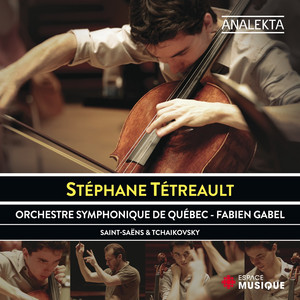 | Le Cygne | Camille Saint-Saëns, Stéphane Tétreault, Fabien Gabel, Orchestre Symphonique De Québec | G Major | 1 | 9B | 94 BPM | |
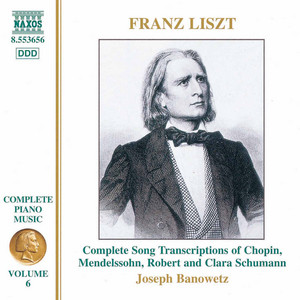 | Chopin - 6 Chants Polonais, S480/R145: No. 2. Fruhling(Wiosna, Spring) | Joseph Banowetz, Franz Liszt | G Major | 1 | 9B | 108 BPM | |
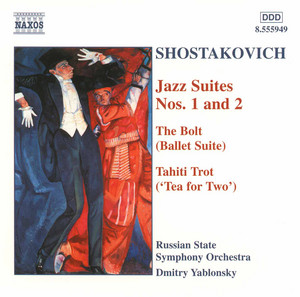 | Bolt, Op. 27a (Ballet Suite No. 5): III. The Drayman's Dance (Variations) | Dmitri Shostakovich, Russian State Symphony Orchestra, Dmitry Yablonsky | F Minor | 3 | 4A | 82 BPM | |
 | Prince Igor: Polovtsian Dances (Version for Chorus) | Alexander Borodin, Kiev Chamber Choir, Ukraine National Radio Symphony Orchestra, Theodore Kuchar | A Major | 2 | 11B | 110 BPM | |
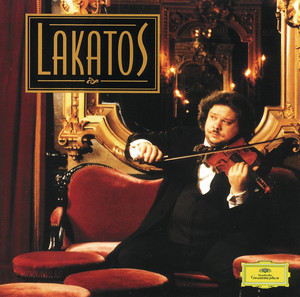 | Hungarian Dance No. 5 in G Minor, WoO 1 No. 5 (Arr. For Violin) | Johannes Brahms, Lakatos | G Minor | 3 | 6A | 93 BPM | |
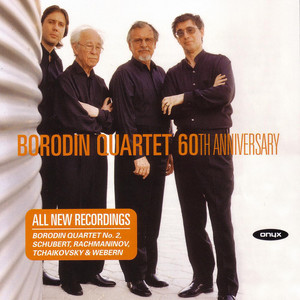 | Borodin - String Quartet No.2 in D major: Notturno: Andante | Alexander Borodin, Borodin Quartet | A Major | 2 | 11B | 74 BPM | |
 | Romeo & Juliet, Op. 64, Act I: No. 13, Dance of the Knights (Montagues & Capulets) | Sergei Prokofiev, Baltimore Symphony Orchestra, Marin Alsop | C Major | 1 | 8B | 101 BPM | |
 | Symphony No. 8 in C Minor, Op. 65: III. Allegro non troppo | Dmitri Shostakovich, Royal Liverpool Philharmonic Orchestra, Vasily Petrenko | F Major | 5 | 7B | 167 BPM | |
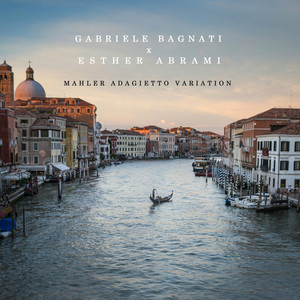 | Mahler Adagietto Variation (From Symphony No. 5 in C-Sharp Minor, Arr. for Violin and Piano by Jan-Peter Klöpfel) | Gustav Mahler, Gabriele Bagnati, Esther Abrami | F Major | 2 | 7B | 82 BPM | |
 | Piano Concerto "The World of Yesterday": II. Waltz Variations – | Stephen Hough, Hallé, Sir Mark Elder | D Major | 1 | 10B | 140 BPM | |
 | Gayane Suite No. 2: VI. Sabre Dance | Aram Khachaturian, St. Petersburg State Symphony Orchestra, Andre Anichanov | E♭ Major | 8 | 5B | 91 BPM | |
 | Morceaux de fantaisie, Op. 3: 5 Morceaux de fantasie, Op. 3: No. 2. Prelude in C-Sharp Minor | Sergei Rachmaninoff, Eldar Nebolsin | A Major | 1 | 11B | 91 BPM |
- ISRC
- USY252502297
- Label
- L-M Records/RCA Records