- BPM
- 141
- Key
- G Major
- Camelot
- 9B
Peter Grimes, Op.33 / Act 2: "What Is It?" by Benjamin Britten, Jean Watson, Raymond Nilsson, Geraint Evans, Owen Brannigan, Marion Studholme, Iris Kells, John Lanigan, Lauris Elms, James Pease, Chorus of the Royal Opera House, Covent Garden, Orchestra of the Royal Opera House, Covent Garden Song Details
Benjamin Britten, Jean Watson, Raymond Nilsson, Geraint Evans, Owen Brannigan, Marion Studholme, Iris Kells, John Lanigan, Lauris Elms, James Pease, Chorus of the Royal Opera House, Covent Garden, Orchestra of the Royal Opera House, Covent Garden's ' "Peter Grimes, Op.33 / Act 2: "What Is It?"" was released on its scheduled release date, January 1, 1959. With This song being less than two minutes long, at 1:02, we are fairly confident that this song is not explicit and is safe for all ages. Based on the duration of this song, this song duration is much smaller than the average song duration. The song is number 25 out of 45 in Britten: Peter Grimes by Benjamin Britten, Sir Peter Pears, Claire Watson, Orchestra of the Royal Opera House, Covent Garden. Based on our statistics, Peter Grimes, Op.33 / Act 2: "What Is It?"'s popularity is not that popular right now. The mood doesn't appear to be that danceable, but it still produces a high amount of positive energy.
BPM and Tempo
The tempo marking of Peter Grimes, Op.33 / Act 2: "What Is It?" by Benjamin Britten, Jean Watson, Raymond Nilsson, Geraint Evans, Owen Brannigan, Marion Studholme, Iris Kells, John Lanigan, Lauris Elms, James Pease, Chorus of the Royal Opera House, Covent Garden, Orchestra of the Royal Opera House, Covent Garden is Allegro (fast, quick, and bright), since this song has a tempo of 141 BPM. With that information, we can conclude that the song has a fast tempo. This song can go great with jogging or cycling. The time signature for this track is 4/4.
Music Key
G Major is the music key of this track. This also means that this song has a camelot key of 9B. So, the perfect camelot match for 9B would be either 9B or 10A. While, 10B can give you a low energy boost. For moderate energy boost, you would use 6B and a high energy boost can either be 11B or 4B. Though, if you want a low energy drop, you should looking for songs with either a camelot key of 9A or 8B will give you a low energy drop, 12B would be a moderate one, and 7B or 2B would be a high energy drop. Lastly, 6A allows you to change the mood.
Want to find the BPM and music key for other songs? Check out our BPM and Key Finder page!
- Popularity
- 4%
- Loudness
- -19.594 dB
- Acousticness
- 97%
- Danceability
- 38%
- Energy
- 24%
- Instrumentalness
- 0%
- Liveness
- 46%
- Loudness
- 67%
- Speechiness
- 5%
- Valence
- 69%
Recommendations
| Track | Artist | Key | Energy | Camelot | BPM | ||
|---|---|---|---|---|---|---|---|
 | A Sea Symphony: III. Scherzo - The Waves (Allegro brillante) | Ralph Vaughan Williams, Hallé, Sir Mark Elder | G Major | 2 | 9B | 169 BPM | |
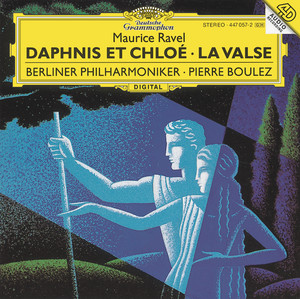 | Daphnis et Chloé, M. 57 / Troisième partie: Danse générale | Maurice Ravel, Berliner Philharmoniker, Pierre Boulez, Rundfunkchor Berlin | D♭ Minor | 4 | 12A | 173 BPM | |
 | Dona nobis pacem: Agnus Dei | Ralph Vaughan Williams, Christina Pier, Matthew Brook, The Bach Choir, Bournemouth Symphony Orchestra, David Hill | G Minor | 1 | 6A | 83 BPM | |
 | A Walk To The Paradise Garden | Frederick Delius, Barry Wordsworth, London Symphony Orchestra | E Major | 0 | 12B | 103 BPM | |
 | 2 Partsongs, Op. 26: No. 1, The Snow | Edward Elgar, Bavarian Radio Chorus, Radoslaw Szulc, Julita Smoleń, Max Hanft, Howard Arman | E Minor | 1 | 9A | 81 BPM | |
 | Pulcinella, K 034: II. Serenata | Igor Stravinsky, Josep Pons, Orquestra De Cambra Teatre Lliure | C Minor | 0 | 5A | 77 BPM | |
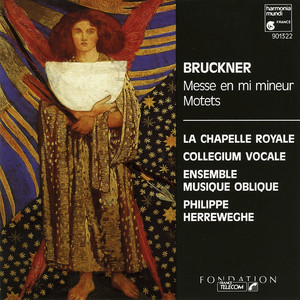 | Locus iste, WAB 23 | Anton Bruckner, Collegium Vocale Gent, Philippe Herreweghe | C Major | 0 | 8B | 66 BPM | |
 | The Holy Boy | John Ireland, Richard Hickox, London Symphony Orchestra | G Minor | 0 | 6A | 101 BPM | |
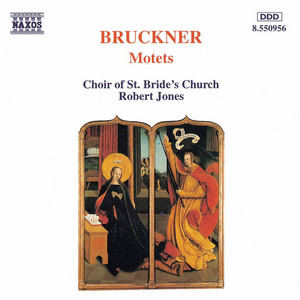 | Ave Maria, WAB 6 | Anton Bruckner, St. Bride's Church Choir, Fleet Street, Matthew Morley, Robert Jones | D Major | 0 | 10B | 133 BPM | |
 | Fauré: Requiem, Op. 48: VI. Libera me | Gabriel Fauré, Paavo Järvi, Orchestre de Paris | D Minor | 0 | 7A | 82 BPM | |
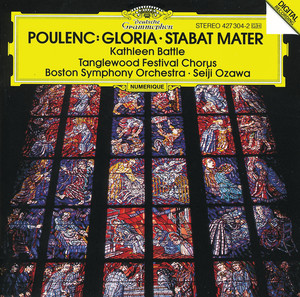 | Stabat Mater, FP 148: 11. Inflammatus et accensus | Francis Poulenc, Kathleen Battle, Boston Symphony Orchestra, Seiji Ozawa, Tanglewood Festival Chorus, John Oliver | A♭ Minor | 2 | 1A | 86 BPM | |
 | Britten: Soirées musicales, Op. 9: I. March | Benjamin Britten, English Chamber Orchestra, Alexander Gibson | F Major | 2 | 7B | 77 BPM | |
| Gloria, FP 144: 1. Gloria | Francis Poulenc, Kathleen Battle, Boston Symphony Orchestra, Seiji Ozawa, Tanglewood Festival Chorus, John Oliver | C Major | 3 | 8B | 109 BPM | |
 | The Tempest Suite No. 1, Op. 109, No. 2: I. The Oak Tree | Jean Sibelius, Lahti Symphony Orchestra, Okko Kamu | B♭ Major | 0 | 6B | 86 BPM | |
 | Requiem, Op. 9: I. Introït | Maurice Duruflé, Maîtrise de Saint-Christophe de Javel, Yves Castagnet, Henri Chalet | D Major | 0 | 10B | 67 BPM | |
 | Nocturnes, L. 91: III. Sirènes (Arr. for Choir and Orchestra by Denis Herlin) | Claude Debussy, Denis Herlin, Hallé, Sir Mark Elder | F♯ Major | 0 | 2B | 81 BPM | |
| Gloria, FP 144: 2. Laudamus te | Francis Poulenc, Kathleen Battle, Boston Symphony Orchestra, Seiji Ozawa, Tanglewood Festival Chorus, John Oliver | F Major | 2 | 7B | 139 BPM | |
 | Lyric Movement, H. 191 | Gustav Holst, Andriy Viytovych, English Sinfonia, Howard Griffiths | C Minor | 1 | 5A | 88 BPM | |
 | 2 Pieces for Small Orchestra: No. 2, Summer Night on the River | Frederick Delius, Royal Scottish National Orchestra, David Lloyd-Jones | A♭ Major | 2 | 4B | 125 BPM | |
 | Song for Orchestra, Op. 33 | Ruth Gipps, Rumon Gamba, BBC National Orchestra Of Wales | F♯ Minor | 0 | 11A | 64 BPM | |
 | A Midsummer Night's Dream / Act 1: "Over Hill, Over Dale" | Benjamin Britten, Choir Of Downside School, Purley, Wandsworth School Boys Choir, Richard Dakin, John Pryor, Ian Wodehouse, Gordon Clark, Stephen Terry, London Symphony Orchestra | G Major | 2 | 9B | 89 BPM | |
 | Empty Abyss | Orithia | A Minor | 0 | 8A | 76 BPM | |
| Fauré: Requiem, Op. 48: I. Introït et Kyrie | Gabriel Fauré, Paavo Järvi, Choeur de l'Orchestre de Paris, Orchestre de Paris | D Minor | 0 | 7A | 72 BPM | |
 | Irmelin Prelude | Frederick Delius, London Symphony Orchestra, Sir John Barbirolli | F♯ Major | 0 | 2B | 96 BPM | |
 | War Requiem, Op. 66: xxii. Libera Me - Libera me | Benjamin Britten, Gianandrea Noseda, Sabina Cvilak, London Symphony Chorus, London Symphony Orchestra | C Minor | 2 | 5A | 86 BPM |
- ISRC
- This song does not have an ISRC.
- Label
- L-M Records/RCA Records