- BPM
- 97
- Key
- E♭ Major
- Camelot
- 5B
Beethoven: String Quartet No. 16 in F Major, Op. 135: II. Vivace (Live at Konzerthaus, Wien, 1989) by Ludwig van Beethoven, Alban Berg Quartett Song Details
"Beethoven: String Quartet No. 16 in F Major, Op. 135: II. Vivace (Live at Konzerthaus, Wien, 1989)" by Ludwig van Beethoven, Alban Berg Quartett had its release date on January 1, 1993. The duration of This song is about 3 minutes long, at 3:20. Based on our data, This song appears to be safe for all ages and is not considered explicit. This track is about the average length of a typical track. The song is number 28 out of 36 in Beethoven: Complete String Quartets, Vol. 2 (Live at Vienna Konzerthaus, 1989) by Ludwig van Beethoven, Alban Berg Quartett. Going off of the ISRC code of this track, we detected that the origin of this track is from United Kingdom. In terms of popularity, Beethoven: String Quartet No. 16 in F Major, Op. 135: II. Vivace (Live at Konzerthaus, Wien, 1989) is currently unknown. In our opinion, the overall tone is not very danceable and projects negative sounds, such as being sad, depressed, or angry.
BPM and Tempo
The tempo marking of Beethoven: String Quartet No. 16 in F Major, Op. 135: II. Vivace (Live at Konzerthaus, Wien, 1989) by Ludwig van Beethoven, Alban Berg Quartett is Andante (at a walking pace), since this song has a tempo of 97 BPM. With that information, we can conclude that the song has a slow tempo. The time signature for this track is 3/4.
Music Key
This song is in the music key of E♭ Major. This also means that this song has a camelot key of 5B. So, the perfect camelot match for 5B would be either 5B or 6A. While, 6B can give you a low energy boost. For moderate energy boost, you would use 2B and a high energy boost can either be 7B or 12B. Though, if you want a low energy drop, you should looking for songs with either a camelot key of 5A or 4B will give you a low energy drop, 8B would be a moderate one, and 3B or 10B would be a high energy drop. Lastly, 2A allows you to change the mood.
Want to find the BPM and music key for other songs? Check out our BPM and Key Finder page!
- Popularity
- 0%
- Loudness
- -30.077 dB
- Acousticness
- 97%
- Danceability
- 13%
- Energy
- 7%
- Instrumentalness
- 64%
- Liveness
- 67%
- Loudness
- 50%
- Speechiness
- 5%
- Valence
- 4%
Recommendations
| Track | Artist | Key | Energy | Camelot | BPM | ||
|---|---|---|---|---|---|---|---|
 | Violin Concerto No. 1 in G minor, Op. 26: 1. Vorspiel (Allegro moderato) | Max Bruch, Julia Fischer, Tonhalle-Orchester Zürich, David Zinman | E♭ Major | 1 | 5B | 170 BPM | |
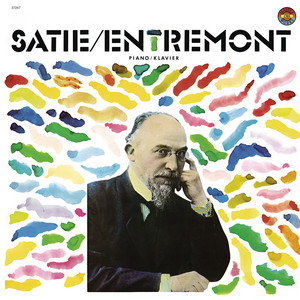 | Gymnopédie No. 3 | Erik Satie, Philippe Entremont | A Minor | 0 | 8A | 131 BPM | |
 | Lieder ohne Worte, Op. 19b: Lieder ohne Worte (Song without Words) No. 6 in G Minor, Op. 19, No. 6, "Venezianisches Gondellied" [Venetian Gondola Song] | Felix Mendelssohn, Péter Nagy | G Major | 0 | 9B | 101 BPM | |
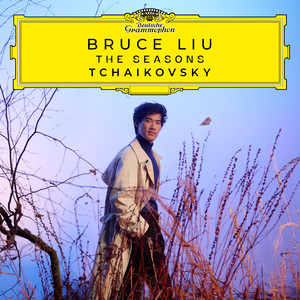 | The Seasons, Op. 37a: VI. June. Barcarolle | Pyotr Ilyich Tchaikovsky, Bruce Liu | G Minor | 0 | 6A | 76 BPM | |
 | Sonata No. 8 in C minor, Op. 13 "Pathetique": 3. Rondo: Allegro | Valentina Lisitsa | C Minor | 1 | 5A | 105 BPM | |
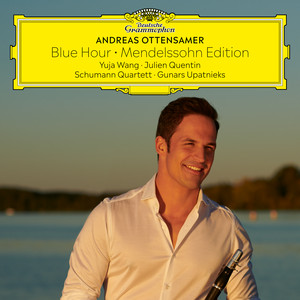 | Lieder ohne Worte I, Op. 19b: VI. Andante sostenuto "Venetian Gondola Song", MWV U78 (Arr. Ottensamer for Clarinet & Strings) | Felix Mendelssohn, Andreas Ottensamer, Schumann Quartett, Gunars Upatnieks | G Minor | 0 | 6A | 84 BPM | |
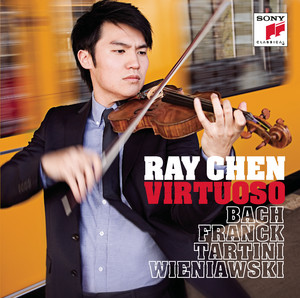 | Violin Sonata in G Minor, "Devil's Trill": III. Allegro assai | Giuseppe Tartini, Ray Chen, Noreen Polera | G Minor | 1 | 6A | 75 BPM | |
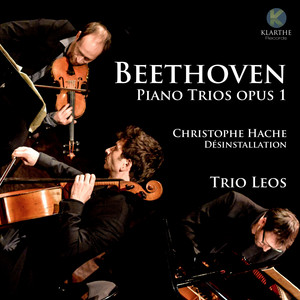 | Trio n°3, Op. 1: I. Allegro con brio | Ludwig van Beethoven, Trio Leos, Pablo Schatzman, Guillaume Lafeuille, Jean-Michel Dayez | C Minor | 0 | 5A | 165 BPM | |
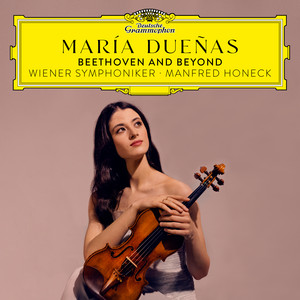 | 3 Old Viennese Dances: No. 2, Liebesleid (Transcr. for Violin and Orchestra) | Fritz Kreisler, María Dueñas, Wiener Symphoniker, Manfred Honeck | G Major | 0 | 9B | 103 BPM | |
 | Danse macabre in G Minor, Op. 40 | Camille Saint-Saëns, Slovak Radio Symphony Orchestra, Keith Clark | G Minor | 2 | 6A | 116 BPM | |
 | Les Contes d'Hoffmann / Act 4: Entr'acte (Barcarolle) | Jacques Offenbach, Staatskapelle Dresden, Silvio Varviso | D Major | 0 | 10B | 121 BPM | |
 | Humoresque No. 7 in G-flat Major, Op. 101 | Boston Symphony Orchestra, Yo-Yo Ma, Seiji Ozawa, Itzhak Perlman | F♯ Major | 1 | 2B | 83 BPM | |
 | Piano Concerto No. 2 in F Major, Op. 102: II. Andante | Dmitri Shostakovich, Boris Giltburg, Royal Liverpool Philharmonic Orchestra, Vasily Petrenko | C Minor | 0 | 5A | 80 BPM | |
 | Kinderszenen | Robert Schumann, Ivan Moravec | F Major | 0 | 7B | 131 BPM | |
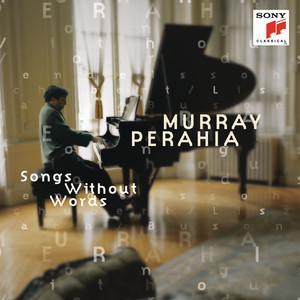 | Lieder ohne Worte, Op. 19, No. 1 | Felix Mendelssohn, Murray Perahia | E Major | 0 | 12B | 138 BPM | |
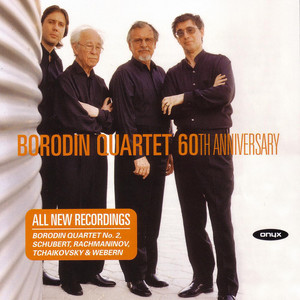 | Borodin - String Quartet No.2 in D major: Notturno: Andante | Alexander Borodin, Borodin Quartet | A Major | 2 | 11B | 74 BPM | |
 | Nocturne No. 10 In E Minor | Benjamin Frith, John Field | E Minor | 0 | 9A | 65 BPM | |
 | Rage Over A Lost Penny, Op. 129 | Valentina Lisitsa | G Major | 2 | 9B | 80 BPM | |
 | Thaïs: Méditation | Jules Massenet, Bomsori, NFM Wrocław Philharmonic, Giancarlo Guerrero | D Major | 0 | 10B | 84 BPM | |
 | String Quintet in E Major, G. 275: III. Minuetto - Trio | Luigi Boccherini, Cuarteto Casals, Eckart Runge | A Major | 0 | 11B | 127 BPM | |
| Trio n°3, Op. 1: II. Andante cantabile con variazoni | Ludwig van Beethoven, Trio Leos, Pablo Schatzman, Guillaume Lafeuille, Jean-Michel Dayez | E Minor | 4 | 9A | 93 BPM | |
 | Chopin: Piano Sonata No. 2 in B-Flat Minor, Op. 35 "Funeral March": III. Marche funèbre. Lento | Frédéric Chopin, Leif Ove Andsnes | D♭ Major | 0 | 3B | 66 BPM | |
 | 24 Preludes and Fugues, Op. 87: Fugue No. 7 in A Major | Dmitri Shostakovich, Igor Levit | A Major | 0 | 11B | 97 BPM | |
 | Die Fledermaus: Overture | Johann Strauss II, Bavarian State Orchestra, Carlos Kleiber | G Major | 1 | 9B | 100 BPM | |
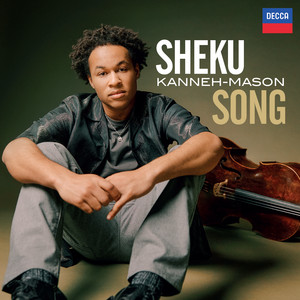 | Come, Sweet Death, BWV 478 (Arr. for 5 Cellos) | Sheku Kanneh-Mason, Hannah Roberts, Ben Davies, Desmond Neysmith, Max Ruisi | C Major | 0 | 8B | 122 BPM |
- ISRC
- GBAYC8903049
- Label
- L-M Records/RCA Records