- BPM
- 114
- Key
- F Major
- Camelot
- 7B
Strauss, R: Der Bürger als Edelmann Suite, Op. 60-IIIa: VII. Auftritt des Cleonte by Richard Strauss, Jeffrey Tate, English Chamber Orchestra Song Details
"Strauss, R: Der Bürger als Edelmann Suite, Op. 60-IIIa: VII. Auftritt des Cleonte" by Richard Strauss, Jeffrey Tate, English Chamber Orchestra had its release date on February 12, 2026. With this song being about 5 minutes long, at This song is fairly a long song compared to the average song length. This song does not have an "Explicit" tag, making it safe for all ages. There are a total of 11 in the song's album "Strauss: Der Bürger als Edelmann & Metamorphosen". In this album, this song's track order is #7. Furthermore, we believe that the track originated from United Kingdom. In terms of popularity, Strauss, R: Der Bürger als Edelmann Suite, Op. 60-IIIa: VII. Auftritt des Cleonte is currently not that popular. In our opinion, the overall tone is not very danceable and projects negative sounds, such as being sad, depressed, or angry.
BPM and Tempo
With Strauss, R: Der Bürger als Edelmann Suite, Op. 60-IIIa: VII. Auftritt des Cleonte by Richard Strauss, Jeffrey Tate, English Chamber Orchestra having a BPM of 114 with a half-time of 57 BPM and a double-time of 228 BPM, we would consider this track to have a Moderato (at a moderate speed) tempo marking. Because of this, we believe that the song has an overall moderate tempo. The time signature for this track is 4/4.
Music Key
This song has a musical key of F Major. Or for those who are familiar with the camelot wheel, this song has a camelot key of 7B. So, the perfect camelot match for 7B would be either 7B or 8A. While, 8B can give you a low energy boost. For moderate energy boost, you would use 4B and a high energy boost can either be 9B or 2B. Though, if you want a low energy drop, you should looking for songs with either a camelot key of 7A or 6B will give you a low energy drop, 10B would be a moderate one, and 5B or 12B would be a high energy drop. Lastly, 4A allows you to change the mood.
Want to find the BPM and music key for other songs? Check out our BPM and Key Finder page!
- Popularity
- 10%
- Loudness
- -27.314 dB
- Acousticness
- 96%
- Danceability
- 20%
- Energy
- 1%
- Instrumentalness
- 89%
- Liveness
- 8%
- Loudness
- 54%
- Speechiness
- 4%
- Valence
- 12%
Recommendations
| Track | Artist | Key | Energy | Camelot | BPM | ||
|---|---|---|---|---|---|---|---|
 | Nocturnes, CD 98: I. Nuages | Claude Debussy, Berliner Philharmoniker, Claudio Abbado | C Major | 0 | 8B | 83 BPM | |
 | Arabella, Op. 79, TrV 263: Das war sehr gut, Mandryka | Richard Strauss, Anne Schwanewilms, Gürzenich Orchester Köln, Markus Stenz | A♭ Minor | 1 | 1A | 82 BPM | |
 | Armida: Overture | Gioachino Rossini, Donato Renzetti, Orchestra Filarmonica Gioachino Rossini | D Major | 1 | 10B | 81 BPM | |
 | Piano Concerto No. 2 in F Major, Op. 102: II. Andante | Dmitri Shostakovich, Boris Giltburg, Royal Liverpool Philharmonic Orchestra, Vasily Petrenko | C Minor | 0 | 5A | 80 BPM | |
 | Elektra: Iv. Ich kann nicht sitzen… | Richard Strauss, Hugo von Hofmannsthal, Anita Soldh, Laila Andersson-palme, Royal Swedish Opera Orchestra, Siegfried Köhler | F♯ Major | 1 | 2B | 88 BPM | |
 | The Firebird (Original Version): No. 20, Lullaby | Igor Stravinsky, City Of Birmingham Symphony Orchestra, Andris Nelsons | E♭ Minor | 0 | 2A | 172 BPM | |
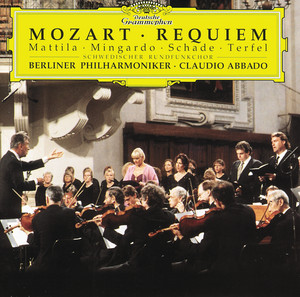 | Requiem, K. 626 (Ed. Beyer/Levin): IIIb. Tuba mirum - Live | Wolfgang Amadeus Mozart, Karita Mattila, Sara Mingardo, Michael Schade, Bryn Terfel, Berliner Philharmoniker, Claudio Abbado | B♭ Major | 1 | 6B | 86 BPM | |
 | Vier letzte Lieder: 1. Frühling | Richard Strauss, Renée Fleming, Munich Philharmonic Orchestra, Christian Thielemann | D Major | 0 | 10B | 98 BPM | |
 | Two Melodies, Op. 53, for string Orchestra: Det første møte (First Encounter). Lento | Edvard Grieg, WDR Sinfonieorchester Köln, Eivind Aadland | D Minor | 0 | 7A | 100 BPM | |
 | Symphony No. 7 in E Major, WAB 107 (Ed. Haas): III. Scherzo. Sehr schnell - Trio. Etwas langsamer | Anton Bruckner, Wiener Philharmoniker, Herbert von Karajan | F Major | 2 | 7B | 74 BPM | |
 | Brahms: Double Concerto for Violin and Cello in A Minor, Op. 102: II. Andante | Johannes Brahms, Itzhak Perlman, Bernard Haitink, Concertgebouworkest | D Major | 1 | 10B | 105 BPM | |
| Elektra: Xix. Elektra! Elektra! | Hugo von Hofmannsthal, Richard Strauss, Gunnar Lundberg, Laila Andersson-palme, Royal Swedish Opera Orchestra, Siegfried Köhler | D♭ Major | 5 | 3B | 118 BPM | |
 | Lyric Pieces, Book 5, Op. 54: Nocturne | Edvard Grieg, Alessio Bax | C Major | 0 | 8B | 72 BPM | |
 | Piano Concerto No. 2 in G Minor, Op. 22, R. 190: 1. Andante sostenuto | Camille Saint-Saëns, Pascal Rogé, Royal Philharmonic Orchestra, Charles Dutoit | G Minor | 1 | 6A | 86 BPM | |
 | Andante Festivo | Jean Sibelius, Gothenburg Symphony Orchestra, Neeme Järvi | G Major | 1 | 9B | 86 BPM | |
 | Carmen Suite No. 1 (Arr. E. Guiraud): III. Intermezzo | Georges Bizet, Orquestra Simfònica de Barcelona i Nacional de Catalunya, Pablo González | E♭ Major | 0 | 5B | 81 BPM | |
 | Mozart - Serenade K361 "Gran Partita" for 13 wind instruments: Adagio | Wolfgang Amadeus Mozart, London Winds, Michael Collins | G Major | 1 | 9B | 135 BPM | |
 | Symphony No. 3 in C Minor, Op. 78 "Organ": Allegro moderato | Camille Saint-Saëns, Eugene Ormandy, Philadelphia Orchestra | A♭ Major | 1 | 4B | 109 BPM | |
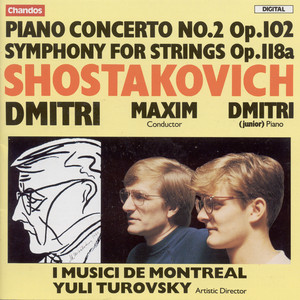 | Piano Concerto No. 2 in F Major, Op. 102: III. Allegro | Dmitri Shostakovich, I Musici de Montréal, Maxim Shostakovich | F Major | 3 | 7B | 164 BPM | |
 | Symphony No. 1 in D Major: III. Feierlich und gemessen, ohne zu schleppen - Live | Gustav Mahler, Berliner Philharmoniker, Claudio Abbado | G Minor | 0 | 6A | 56 BPM | |
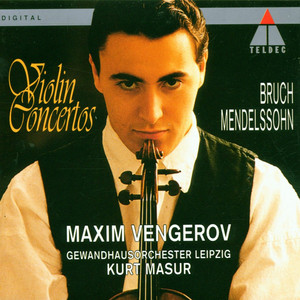 | Bruch: Violin Concerto No. 1 in G Minor, Op. 26: II. Adagio | Max Bruch, Maxim Vengerov, Kurt Masur, Gewandhausorchester | E♭ Major | 1 | 5B | 110 BPM | |
 | Symphonie fantastique, H. 48: IV. Marche au supplice | Hector Berlioz, Chicago Symphony Orchestra, Claudio Abbado | G Minor | 2 | 6A | 166 BPM | |
| Elektra: Ii. Allein! Weh, ganz allein | Hugo von Hofmannsthal, Richard Strauss, Laila Andersson-palme, Royal Swedish Opera Orchestra, Siegfried Köhler | D♭ Major | 5 | 3B | 118 BPM | |
 | String Quartet No. 2 in D Major: II. Scherzo: Allegro | Alexander Borodin, Budapest Haydn Quartet | F Major | 1 | 7B | 107 BPM | |
 | Alphorn, o. Op. | Richard Strauss, Christiane Karg, Malcolm Martineau, Felix Klieser | D Major | 3 | 10B | 78 BPM |
- ISRC
- GBAYC1105125
- Label
- L-M Records/RCA Records