- BPM
- 161
- Key
- G Major
- Camelot
- 9B
Offenbach: Pariser Leben, Akt II: Finale II "Endlich hat es sieben geschlagen - Mein Mann, der Oberst - Auf der Berliner Brück'" by Jacques Offenbach, Marco Bakker, Willy Mattes, Munich Radio Orchestra Song Details
Jacques Offenbach, Marco Bakker, Willy Mattes, Munich Radio Orchestra's ' "Offenbach: Pariser Leben, Akt II: Finale II "Endlich hat es sieben geschlagen - Mein Mann, der Oberst - Auf der Berliner Brück'"" was released on its scheduled release date, 1983. This song is about six minutes long, preciously at 5:45, making this song fairly long compared to other songs. There are a total of 41 in the song's album "Offenbach: Pariser Leben (Cologne Collection)". In this album, this song's track order is #20. Furthermore, we believe that the track originated from Germany. The popularity of Offenbach: Pariser Leben, Akt II: Finale II "Endlich hat es sieben geschlagen - Mein Mann, der Oberst - Auf der Berliner Brück'" is currently not that popular right now. Since there is more of a neutral sound being played, this makes the track somewhat danceable.
BPM and Tempo
With Offenbach: Pariser Leben, Akt II: Finale II "Endlich hat es sieben geschlagen - Mein Mann, der Oberst - Auf der Berliner Brück'" by Jacques Offenbach, Marco Bakker, Willy Mattes, Munich Radio Orchestra having a BPM of 161 with a half-time of 80 BPM and a double-time of 322 BPM, we would consider this track to have a Vivace (lively and fast) tempo marking. Because of this, we believe that the song has an overall fast tempo. The time signature for this track is 4/4.
Music Key
This song is in the music key of G Major. Or for those who are familiar with the camelot wheel, this song has a camelot key of 9B. So, the perfect camelot match for 9B would be either 9B or 10A. While, 10B can give you a low energy boost. For moderate energy boost, you would use 6B and a high energy boost can either be 11B or 4B. Though, if you want a low energy drop, you should looking for songs with either a camelot key of 9A or 8B will give you a low energy drop, 12B would be a moderate one, and 7B or 2B would be a high energy drop. Lastly, 6A allows you to change the mood.
Want to find the BPM and music key for other songs? Check out our BPM and Key Finder page!
- Popularity
- 1%
- Loudness
- -7.561 dB
- Acousticness
- 69%
- Danceability
- 42%
- Energy
- 58%
- Instrumentalness
- 0%
- Liveness
- 28%
- Loudness
- 87%
- Speechiness
- 23%
- Valence
- 43%
Recommendations
| Track | Artist | Key | Energy | Camelot | BPM | ||
|---|---|---|---|---|---|---|---|
 | Ruslan and Ludmila: Overture | Mikhail Glinka, The USSR Bolshoy Theatre Orchestra, Yevgeny Svetlanov | F Major | 3 | 7B | 81 BPM | |
 | Carmen, Opera Suite No. 1: V. Seguedille, Act 1 | London Festival Orchestra, Alfred Scholz | D Major | 0 | 10B | 92 BPM | |
 | Samson et Dalila: Bacchanale | Camille Saint-Saëns, Slovak Radio Symphony Orchestra, Stephen Gunzenhauser | A Minor | 1 | 8A | 109 BPM | |
 | Symphony No. 40 in G Minor, K. 550: I. Molto allegro | Wolfgang Amadeus Mozart, Mozarteum Orchestra Salzburg, Ivor Bolton | G Minor | 2 | 6A | 105 BPM | |
 | Offenbach: Orphée aux enfers, Act 1: Rondeau des métamorphoses. "Pour séduire Alcmène" (Minerve, Chœur, Diane, Cupidon, Vénus, Pluton) | Jacques Offenbach, Marc Minkowski, Chœur de l’Opéra de Lyon, Jean-Paul Fouchécourt, Jennifer Smith, Patricia Petibon, Virginie Pochon, Véronique Gens, Orchestre de Chambre de Grenoble, Orchestre de l'Opéra de Lyon | G Major | 2 | 9B | 111 BPM | |
 | Bizet: Carmen, WD 31, Act 4: "Les voici ! Voici le quadrille !" (Chœur) | Georges Bizet, Michel Plasson, La Lauzeta, Les Éléments, Orchestre National Du Capitole De Toulouse | D♭ Minor | 2 | 12A | 93 BPM | |
 | Shéhérazade, Op. 35: III. The Young Prince and the Young Princess | Nikolai Rimsky-Korsakov, Sergej Galaktionov, Gianandrea Noseda, Filarmonica Teatro Regio Torino | G Major | 0 | 9B | 103 BPM | |
 | Thaïs: Méditation | Jules Massenet, Bomsori, NFM Wrocław Philharmonic, Giancarlo Guerrero | D Major | 0 | 10B | 84 BPM | |
 | Polovetsian Dances from Prince Igor: Introduzione | Alexander Borodin, George Szell, The Cleveland Orchestra | A Major | 1 | 11B | 83 BPM | |
 | The Stars And Stripes Forever | Slovak Radio Symphony Orchestra, John Philip Sousa | D Major | 4 | 10B | 129 BPM | |
 | 24 Caprices for Violin, Op. 1, MS. 25: No. 24 in A Minor | Niccolò Paganini, Salvatore Accardo | A Minor | 1 | 8A | 167 BPM | |
 | Peer Gynt Suite No.1 op. 46 Morning (Allegro pastorale) | Academy of St. Martin in the Fields | E Major | 0 | 12B | 68 BPM | |
 | Viola d'amore Concerto in A Minor, RV 397: I. Vivace | Antonio Vivaldi, Rachel Barton Pine, Ars Antigua | A♭ Minor | 2 | 1A | 139 BPM | |
 | Gold Und Silber (Gold And Silver), Op. 79 | Slovak Radio Symphony Orchestra, Franz Lehár | C Major | 1 | 8B | 81 BPM | |
 | Verdi: Nabucco, Act 3: Chorus of the Hebrew Slaves. "Va pensiero, sull'ali dorate" | Giuseppe Verdi, Bernard Haitink, Chorus of the Royal Opera House, Covent Garden, Orchestra of the Royal Opera House, Covent Garden | D♭ Major | 0 | 3B | 75 BPM | |
 | Nocturne Op. 9, No. 2 in E-Flat Major | Joshua Bell | E♭ Major | 1 | 5B | 78 BPM | |
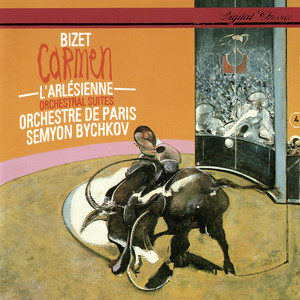 | Carmen Suite No.2: 5. Danse bohème | Georges Bizet, Orchestre de Paris, Semyon Bychkov | E Major | 1 | 12B | 142 BPM | |
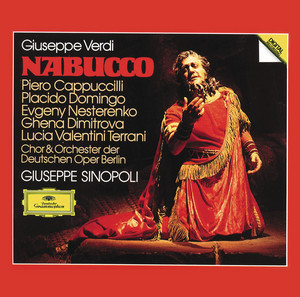 | Nabucco: Overture | Giuseppe Verdi, Orchester der Deutschen Oper Berlin, Giuseppe Sinopoli | C Major | 1 | 8B | 89 BPM | |
 | Die Walküre, Act III: Ride of the Valkyries | Richard Wagner, Budapest Symphony Orchestra, György Lehel | D♭ Major | 1 | 3B | 72 BPM | |
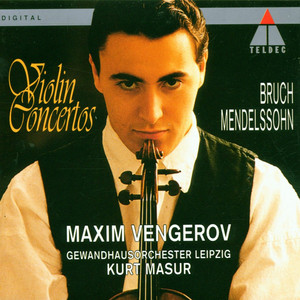 | Bruch : Violin Concerto No.1 in G minor Op.26 : III Finale - Allegro energico | Max Bruch, Maxim Vengerov, Kurt Masur, Gewandhausorchester Leipzig | G Major | 2 | 9B | 90 BPM | |
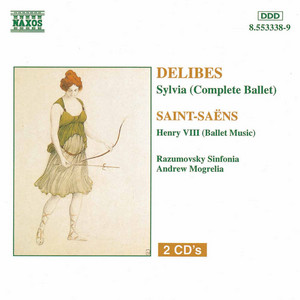 | Sylvia: Act I: Valse lente | Léo Delibes, Razumovsky Symphony Orchestra, Andrew Mogrelia | A♭ Major | 0 | 4B | 111 BPM | |
 | Peer Gynt Suite No. 1, Op. 46: I. Morning Mood | Edvard Grieg, Berliner Philharmoniker, Herbert von Karajan | E Major | 0 | 12B | 141 BPM | |
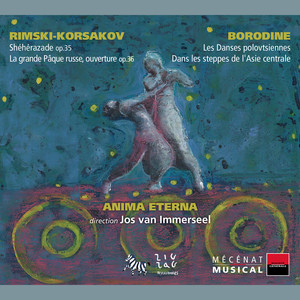 | Les danses polovtsiennes (Extraits de l'opéra Le Prince Igor): II. Danse des hommes | Alexander Borodin, Anima Eterna, Jos Van Immerseel | A Major | 0 | 11B | 87 BPM | |
| Peer Gynt Suite No.1 op. 46 In the Hall of the Mountain King (Alla marciia e molto marcato) | Academy of St. Martin in the Fields | E Minor | 2 | 9A | 132 BPM | |
| Orphée aux enfers, ACT 1, Deuxième tableau: l'Olympe: Entr'acte et choeur du sommeil (Choeur) | Jacques Offenbach, Choeurs de l'Opéra National de Lyon/Orchestre de l'Opéra National de Lyon/Orchestre de Chambre de Grenoble/Marc Minkowski, Marc Minkowski, Sébastien Rouland, Choeur & Orchestre De L'Opéra National De Lyon, Orchestre de Chambre de Grenoble, Orchestre De L'Opéra National De Lyon | G Major | 1 | 9B | 97 BPM |
- ISRC
- DEA611400115
- Label
- L-M Records/RCA Records