- BPM
- 110
- Key
- E♭ Major
- Camelot
- 5B
Maria (From "West Side Story") by Sergio Franchi Song Details
Sergio Franchi's ' "Maria (From "West Side Story")" was released on its scheduled release date, March 23, 1988. The duration of This song is about two minutes long, specifically at 2:13. This song does not appear to have any foul language. Maria (From "West Side Story")'s duration is considered a little bit shorter than the average duration of a typical track. There are a total of 14 in the song's album "This Is Sergio Franchi". In this album, this song's track order is #13. In terms of popularity, Maria (From "West Side Story") is currently not that popular. Based on the vibe, this track doesn't seem to be that danceable, however its valence properties can make this some somewhat danceable.
BPM and Tempo
With Maria (From "West Side Story") by Sergio Franchi having a BPM of 110 with a half-time of 55 BPM and a double-time of 220 BPM, we would consider this track to have a Moderato (at a moderate speed) tempo marking. Because of this, we believe that the song has an overall moderate tempo. The time signature for this track is 4/4.
Music Key
This song has a musical key of E♭ Major. Or for those who are familiar with the camelot wheel, this song has a camelot key of 5B. So, the perfect camelot match for 5B would be either 5B or 6A. While, 6B can give you a low energy boost. For moderate energy boost, you would use 2B and a high energy boost can either be 7B or 12B. Though, if you want a low energy drop, you should looking for songs with either a camelot key of 5A or 4B will give you a low energy drop, 8B would be a moderate one, and 3B or 10B would be a high energy drop. Lastly, 2A allows you to change the mood.
Want to find the BPM and music key for other songs? Check out our BPM and Key Finder page!
- Popularity
- 3%
- Loudness
- -13.798 dB
- Acousticness
- 98%
- Danceability
- 31%
- Energy
- 20%
- Instrumentalness
- 0%
- Liveness
- 13%
- Loudness
- 77%
- Speechiness
- 3%
- Valence
- 44%
Recommendations
| Track | Artist | Key | Energy | Camelot | BPM | ||
|---|---|---|---|---|---|---|---|
 | Hungarian Dance No.1 in G minor - Orchestrated by Brahms: Allegro molto | Johannes Brahms, Chicago Symphony Orchestra, Daniel Barenboim | G Minor | 2 | 6A | 65 BPM | |
 | Tahiti Trot | Vincent Youmans, Concertgebouworkest, Riccardo Chailly | A♭ Major | 1 | 4B | 85 BPM | |
 | Prince Igor: Polovtsian Dances (Remastered): No. 8, Dance of the Polovtsian Maidens | Alexander Borodin, Leonard Bernstein, New York Philharmonic | F Major | 2 | 7B | 99 BPM | |
 | La Mer, L.109: 2. Play of the Waves (Jeux de vagues) | Claude Debussy, Orchestre Symphonique de Montréal, Charles Dutoit | E Major | 1 | 12B | 113 BPM | |
 | Symphony No. 9: IVc. Molto adagio subito - Live | Gustav Mahler, Royal Concertgebouw Orchestra, Leonard Bernstein | D♭ Major | 1 | 3B | 82 BPM | |
 | Symphony No. 1, Op. 9: III. Andante tranquillo | Samuel Barber, Leonard Slatkin, St. Louis Symphony | B♭ Major | 3 | 6B | 93 BPM | |
 | Appalachian Spring: VI. Meno mosso | Aaron Copland, Leonard Bernstein, New York Philharmonic | A♭ Major | 0 | 4B | 143 BPM | |
 | Danse macabre in G Minor, Op. 40 | Camille Saint-Saëns, Slovak Radio Symphony Orchestra, Keith Clark | G Minor | 2 | 6A | 116 BPM | |
 | Glinka: Overture from Ruslan and Ludmilla | Mikhail Glinka, Budapest Philharmonic Orchestra, Rico Saccani | D Major | 3 | 10B | 76 BPM | |
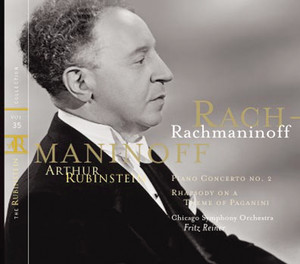 | Piano Concerto No. 2 in C Minor, Op. 18: I. Moderato | Sergei Rachmaninoff, Arthur Rubinstein, Fritz Reiner | C Minor | 1 | 5A | 71 BPM | |
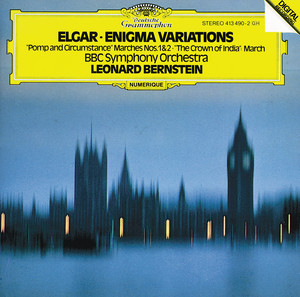 | Variations On An Original Theme, Op.36 "Enigma": 12. B.G.N. (Andante) | Edward Elgar, BBC Symphony Orchestra, Leonard Bernstein | B♭ Major | 0 | 6B | 82 BPM | |
 | The Planets, Op. 32: IV. Jupiter, the Bringer of Jollity | Gustav Holst, Leonard Bernstein, New York Philharmonic | C Minor | 3 | 5A | 60 BPM | |
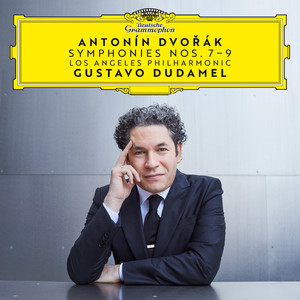 | Symphony No. 8 in G Major, Op. 88, B. 163: III. Allegretto grazioso - Molto vivace | Antonín Dvořák, Los Angeles Philharmonic, Gustavo Dudamel | C Major | 1 | 8B | 127 BPM | |
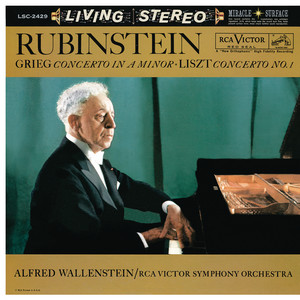 | Piano Concerto in A Minor, Op. 16: III. Allegro moderato molto e marcato - Remastered | Edvard Grieg, Arthur Rubinstein, Alfred Wallenstein, RCA Victor Symphony Orchestra | F Major | 1 | 7B | 119 BPM | |
 | Tristan und Isolde, WWV 90 / Act 3: Prelude - Live | Richard Wagner, Bavarian Radio Symphony Orchestra, Leonard Bernstein | G Major | 3 | 9B | 96 BPM | |
 | The Planets, Op. 32: 7. Neptune, the Mystic | Gustav Holst, Berliner Philharmoniker, Herbert von Karajan, RIAS Kammerchor | A♭ Minor | 0 | 1A | 58 BPM | |
 | Slava! | Leonard Bernstein, Dallas Wind Symphony, Frederick Fennell | C Minor | 3 | 5A | 146 BPM | |
| Piano Concerto in A Minor, Op. 16: I. Allegro molto moderato - Remastered | Edvard Grieg, Arthur Rubinstein, RCA Victor Symphony Orchestra, Alfred Wallenstein | A Minor | 1 | 8A | 82 BPM | |
 | The Love for Three Oranges Op. 33: Marche | Sergei Prokofiev, Kent Nagano, Orchestre De L'Opéra National De Lyon | A♭ Major | 4 | 4B | 128 BPM | |
 | Symphonie espagnole, Op. 21: I. Allegro non troppo | Édouard Lalo, Itzhak Perlman, Orchestre de Paris, Daniel Barenboim | D Minor | 1 | 7A | 75 BPM | |
 | Lady in the Dark - Symphonic Nocturne (arr. R.R. Bennett): I. My Ship: Andante misterioso | Kurt Weill, Robert Russell Bennett, Bournemouth Symphony Orchestra, Marin Alsop | C Major | 0 | 8B | 73 BPM | |
 | Don Quixote, Op. 35: XIV. Finale. The Death of Don Quixote. Sehr ruhig | Richard Strauss, Pierre Fournier, Giusto Cappone, Berliner Philharmoniker, Herbert von Karajan | E♭ Major | 3 | 5B | 102 BPM | |
 | Mass: No. 1, Antiphon. Kyrie eleison | Leonard Bernstein, Morgan State University Choir, Baltimore Symphony Orchestra, Marin Alsop | D♭ Major | 5 | 3B | 128 BPM | |
 | Cuban Overture | George Gershwin, Chicago Symphony Orchestra, James Levine | G Major | 4 | 9B | 98 BPM | |
 | Sarasate: Zigeunerweisen, Op. 20 | Pablo de Sarasate, Itzhak Perlman, Abbey Road Ensemble | C Minor | 1 | 5A | 83 BPM |
- ISRC
- This song does not have an ISRC.
- Label
- L-M Records/RCA Records