- BPM
- 86
- Key
- F Minor
- Camelot
- 4A
Brüderlein fein: Gut hab ich g'schlafen by Leo Fall, Anke Krabbe, Michael Roider, WDR Sinfonieorchester Köln, Axel Kober Song Details
Leo Fall, Anke Krabbe, Michael Roider, WDR Sinfonieorchester Köln, Axel Kober's ' "Brüderlein fein: Gut hab ich g'schlafen" was released on its scheduled release date, October 6, 2017. With This song being less than two minutes long, at 1:58, we are fairly confident that this song is not explicit and is safe for all ages. Based on the duration of this song, this song duration is much smaller than the average song duration. The song is number 15 out of 17 in Fall: Brüderlein fein by Leo Fall, Andrea Bonig, Michael Roider, Anke Krabbe, WDR Sinfonieorchester Köln, Axel Kober. Going off of the ISRC code of this track, we detected that the origin of this track is from Germany. Brüderlein fein: Gut hab ich g'schlafen is unknown right now. Even with the track produces more of a neutral energy, it is pretty danceable compared to others.
BPM and Tempo
The tempo marking of Brüderlein fein: Gut hab ich g'schlafen by Leo Fall, Anke Krabbe, Michael Roider, WDR Sinfonieorchester Köln, Axel Kober is Andante (at a walking pace), since this song has a tempo of 86 BPM. With that information, we can conclude that the song has a slow tempo. This song can go great with yoga or pilates. The time signature for this track is 4/4.
Music Key
This song is in the music key of F Minor. Because this track belongs in the F Minor key, the camelot key is 4A. So, the perfect camelot match for 4A would be either 4A or 3B. While, a low energy boost can consist of either 4B or 5A. For moderate energy boost, you would use 1A and a high energy boost can either be 6A or 11A. However, if you are looking for a low energy drop, finding a song with a camelot key of 3A would be a great choice. Where 7A would give you a moderate drop, and 2A or 9A would be a high energy drop. Lastly, 7B allows you to change the mood.
Want to find the BPM and music key for other songs? Check out our BPM and Key Finder page!
- Popularity
- 0%
- Loudness
- -27.542 dB
- Acousticness
- 43%
- Danceability
- 66%
- Energy
- 8%
- Instrumentalness
- 0%
- Liveness
- 31%
- Loudness
- 54%
- Speechiness
- 83%
- Valence
- 41%
Recommendations
| Track | Artist | Key | Energy | Camelot | BPM | ||
|---|---|---|---|---|---|---|---|
 | Weber: Der Freischütz, Op. 77, J. 277, Act 1 Scene 5: No. 4, Lied, "Hier im ird'schen Jammertal" (Kaspar, Max) | Carl Maria von Weber, Elisabeth Grümmer, Berliner Philharmoniker, Joseph Keilberth | E Minor | 0 | 9A | 89 BPM | |
 | Einzugsmarsch aus Der Zigeunerbaron | Menskes Chöre | B♭ Major | 6 | 6B | 113 BPM | |
 | Lohengrin, WWV 75 / Act 3: In fernem Land, unnahbar euren Schritten | Richard Wagner, James King, Karl Ridderbusch, Bavarian Radio Symphony Orchestra, Rafael Kubelík, Bavarian Radio Chorus, Heinz Mende | E♭ Major | 4 | 5B | 124 BPM | |
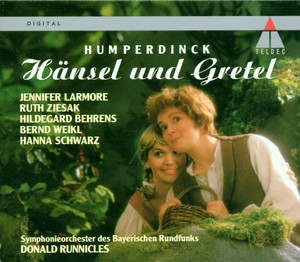 | Humperdinck : Hänsel und Gretel : Act 3 "Auf, wach auf, mein Jüngelchen" [The Nibblewitch, Gretel, Hänsel] | Engelbert Humperdinck, Donald Runnicles, Bavarian Radio Symphony Orchestra | E♭ Major | 1 | 5B | 96 BPM | |
 | Der Probekuss: In Saus und Braus | Carl Millöcker, Wiener Johann Strauss Orchester, Alfred Eschwe | F Major | 4 | 7B | 78 BPM | |
 | Im Salzkammergut da kann man gut | Wiener Operettenorchester, Chor | C Major | 5 | 8B | 76 BPM | |
 | Wagner: Tannhäuser, Act 2: "O Walther, der du also sangest" (Tannhäuser) | Richard Wagner, Daniel Barenboim, Chor der Deutschen Staatsoper Berlin, Jane Eaglen, Peter Seiffert, Staatskapelle Berlin | D Major | 4 | 10B | 128 BPM | |
 | Zwei Marchenaugen | Emmerich Kálmán, Maria Tiboldi, Marika Nemeth, Anna Zentai, Andrea Zsadon | N/A | N/A | N/A | 0 BPM | |
 | Otello - Fire of Rejoicing | Giuseppe Verdi, Chor der Deutschen Staatsoper Berlin, Staatskapelle Berlin, Otmar Suitner, Ernst Stoy | B♭ Major | 1 | 6B | 139 BPM | |
 | Wien bleibt Wien, Marsch | Johann Schrammel, Budapest Strauss Ensemble, Istvan Bogar | C Major | 2 | 8B | 93 BPM | |
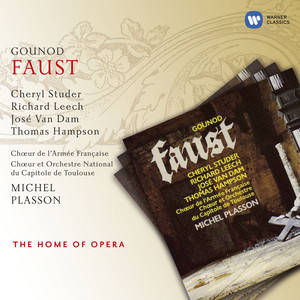 | Gounod: Faust, Act 2: Invocation. "Avant de quitter ces lieux" (Valentin) | Charles Gounod, Michel Plasson, Thomas Hampson, Orchestre Du Capitole De Toulouse | A Minor | 1 | 8A | 94 BPM | |
 | Die Rose von Stambul, Act I: Guten Morgen (Live) | Leo Fall, Kristiane Kaiser, Magdalena Hinterdobler, Eleonora Vacchi, Hanne Weber, Bavarian Radio Chorus, Munich Radio Orchestra, Ulf Schirmer | E Major | 5 | 12B | 70 BPM | |
 | Der fidele Bauer, Act I "Der Doktor": Introduction & Quartet | Leo Fall, Thomas Zisterer, Robert Maszl, Bad Ischl Lehar Festival Choir, Franz Lehár Orchester, Vinzenz Praxmarer | F Major | 1 | 7B | 123 BPM | |
 | Hino 13 - Confiemos em Deus | Orquestra Sacra Paulista | A♭ Major | 0 | 4B | 133 BPM | |
 | Donausagen, Op. 446 | Carl Michael Ziehrer, Robert Stolz | G Major | 3 | 9B | 88 BPM | |
| Gounod: Faust, Act 2: "Vin ou bière, bière ou vin" - "Jeune adepte du tonneau" (Chœur, Wagner) | Charles Gounod, Michel Plasson, Chœur de l'Armée française, Choeur Du Capitole De Toulouse, Marc Barrard, Orchestre Du Capitole De Toulouse | A Minor | 1 | 8A | 94 BPM | |
 | Bizet: Carmen, WD 31, Act 2: "Votre toast, je peux vous le rendre" - "Toréador, en garde !" (Escamillo, Carmen, Frasquita, Mercédès, Moralès, Zuniga) | Georges Bizet, Sir Simon Rattle, Andrè Schuen, Christian Van Horn, Christina Landshamer, Kostas Smoriginas, Magdalena Kožená, Rachel Frenkel, Berliner Philharmoniker | F Major | 2 | 7B | 111 BPM | |
 | Im weißen Rössl am Wolfgangsee | Ralph Benatzky, Rudolf Schock, Ingeborg Hallstein, Johannes Fehring | G Major | 4 | 9B | 79 BPM | |
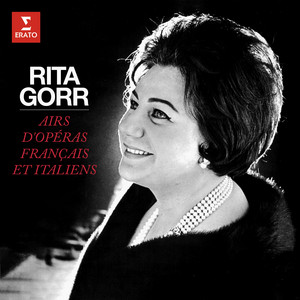 | Berlioz: Les Troyens, Op. 29, H 133, Act 5: Monologue. "Je vais mourir" (Didon) | Hector Berlioz, Philharmonia Orchestra, Rita Gorr, Lawrance Collingwood | C Major | 2 | 8B | 93 BPM | |
 | Fučík: Der alte Brummbär, Op. 210 | Julius Fučík, Václav Neumann, Jiří Formacek, Czech Philharmonic | F Major | 2 | 7B | 82 BPM | |
 | Il trovatore: Gitanilla | Giuseppe Verdi, Munich Radio Orchestra, Ivan Repušić | F Major | 1 | 7B | 116 BPM | |
 | Symphony No. 1, GMW 11: IIIb. A tempo. Ziemlich langsam | Gustav Mahler, Tonhalle-Orchester Zürich, Paavo Järvi | D Major | 4 | 10B | 87 BPM | |
 | Bauern-Polka | Johann Strauss Orchester | G Major | 3 | 9B | 99 BPM | |
 | Die Dollarprinzessin, Act I: Will meine Schülerin geruh'n ein Zeugnis mir zu geben nun? (Live) | Leo Fall, Magdalena Hinterdobler, Ralf Simon, Munich Radio Orchestra, Ulf Schirmer | F Major | 2 | 7B | 130 BPM | |
 | Verdi: Otello: Atto Primo: Fuoco di gioia! | Giuseppe Verdi, Antonio Pappano, Orchestra dell'Accademia Nazionale di Santa Cecilia, Coro dell'Accademia Nazionale Di Santa Cecilia | E Minor | 1 | 9A | 127 BPM |
- ISRC
- DEB201279615
- Label
- L-M Records/RCA Records