- BPM
- 75
- Key
- A♭ Major
- Camelot
- 4B
16 Walzer, Op. 39: No. 15, Walzer by Johannes Brahms, Filip Lundqvist Song Details
"16 Walzer, Op. 39: No. 15, Walzer" by Johannes Brahms, Filip Lundqvist had its release date on May 25, 2018. With This song being less than two minutes long, at 1:26, we are fairly confident that this song is not explicit and is safe for all ages. Based on the duration of this song, this song duration is much smaller than the average song duration. The song is number 13 out of 16 in Filip Lundqvist: Piano Impressions (Klassik zum Entspannen, Vol. 1) by Filip Lundqvist. Going off of the ISRC code of this track, we detected that the origin of this track is from Germany. 16 Walzer, Op. 39: No. 15, Walzer is not that popular right now. In our opinion, the overall tone is not very danceable and projects negative sounds, such as being sad, depressed, or angry.
BPM and Tempo
The tempo marking of 16 Walzer, Op. 39: No. 15, Walzer by Johannes Brahms, Filip Lundqvist is Adagio (slowly with great expression), since this song has a tempo of 75 BPM. With that information, we can conclude that the song has a slow tempo. The time signature for this track is 4/4.
Music Key
This song is in the music key of A♭ Major. This also means that this song has a camelot key of 4B. So, the perfect camelot match for 4B would be either 4B or 5A. While, 5B can give you a low energy boost. For moderate energy boost, you would use 1B and a high energy boost can either be 6B or 11B. Though, if you want a low energy drop, you should looking for songs with either a camelot key of 4A or 3B will give you a low energy drop, 7B would be a moderate one, and 2B or 9B would be a high energy drop. Lastly, 1A allows you to change the mood.
Want to find the BPM and music key for other songs? Check out our BPM and Key Finder page!
- Popularity
- 15%
- Loudness
- -20.137 dB
- Acousticness
- 99%
- Danceability
- 36%
- Energy
- 14%
- Instrumentalness
- 93%
- Liveness
- 11%
- Loudness
- 66%
- Speechiness
- 6%
- Valence
- 14%
Recommendations
| Track | Artist | Key | Energy | Camelot | BPM | ||
|---|---|---|---|---|---|---|---|
 | String Quintet in A major, Op. 11/5, G 275: Minuetto | The Smithsonian Chamber Players | A♭ Major | 0 | 4B | 184 BPM | |
 | Kopenhagener Eisenbahn-Dampf-Galopp | Hans Christian Lumbye, Wiener Philharmoniker, Yannick Nézet-Séguin | D Major | 3 | 10B | 89 BPM | |
 | Auf Flügeln des Gesanges (After Felix Mendelssohn), S.547 | Franz Liszt, Alexander Krichel | E♭ Major | 2 | 5B | 77 BPM | |
 | Polka italienne, TN ii/21 (Arr. V. Gryaznov for Piano) | Sergei Rachmaninoff, Vyacheslav Gryaznov | B♭ Minor | 2 | 3A | 107 BPM | |
 | Gai printemps | Mel Bonis, Trio Alouette | A Major | 1 | 11B | 64 BPM | |
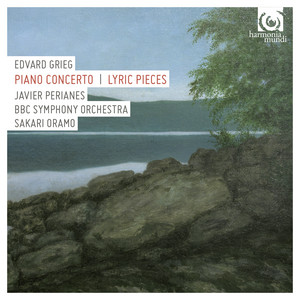 | Lyric Pieces, Book I, Op. 12: No. 1, Arietta | Edvard Grieg, Javier Perianes | G Minor | 0 | 6A | 65 BPM | |
 | Romance Without Words | Various Artists | D Minor | 3 | 7A | 102 BPM | |
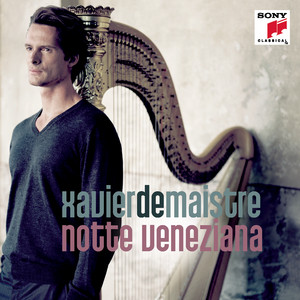 | Sonata in C Minor: I. Allegro vigoroso | Giovanni Battista Pescetti, Xavier De Maistre | F Minor | 2 | 4A | 150 BPM | |
 | ピアノコンチェルトop.21 (Adage1) | Miwa Hoshi | C Major | 3 | 8B | 118 BPM | |
 | Sylvia: Pizzicati | Léo Delibes, Daniel Barenboim, Wiener Philharmoniker | E♭ Major | 0 | 5B | 120 BPM | |
 | Der Karneval der Tiere, R. 125: IV. Der Schwan | Camille Saint-Saëns, Ferhan & Ferzan Önder, Raphaela Gromes, Berlin Radio Symphony Orchestra, Johannes Zurl | G Major | 0 | 9B | 129 BPM | |
 | Beethoven-Menuette In G Major | Winter Flowers | A Major | 1 | 11B | 64 BPM | |
 | Adagio No. 2, Ave Maria | Josu Gallastegui | C Major | 1 | 8B | 61 BPM | |
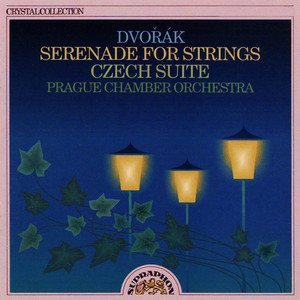 | Serenade for Strings in E Major, Op. 22, B. 52: II. Tempo di valse | Antonín Dvořák, Prague Chamber Orchestra, Petr Skvor | A Major | 1 | 11B | 0 BPM | |
 | 6 Album Leaves, Op. 2, JB 1:51: No. 2 in A Minor, Chanson. Moderato | Bedřich Smetana, Jitka Čechová | A Minor | 0 | 8A | 66 BPM | |
 | Album for the Young, Op. 68: Mignon | Robert Schumann, Alistair McGowan | E♭ Major | 1 | 5B | 201 BPM | |
 | Bach, JS / Transcr. Stokowski for Orchestra: Was mir behagt, BWV 208 "Jagdkantate": No. 9, Aria. "Schafe können sicher weiden" | Johann Sebastian Bach, Wolfgang Sawallisch, Philadelphia Orchestra | D Major | 3 | 10B | 127 BPM | |
 | スケーターズ・ワルツ 作品183(ショート・ヴァージョン) | ベルリン交響楽団、ゲルハルト・ベッカー(指揮), ゲルハルト・ベッカー(指揮) | B♭ Major | 2 | 6B | 185 BPM | |
 | Berliner Luft | Paul Lincke, Stockholm Philharmonic Palm Court Orchestra, Lars Almgren | D Major | 2 | 10B | 132 BPM | |
 | Die Perle von Iberien: Estudiantina Polka | Joseph Hellmesberger, Jr., Czech Philharmonic Chamber Orchestra, John Georgiadis | B♭ Major | 0 | 6B | 153 BPM | |
 | Arietta | Edvard Grieg, Christopher Ferreira | E♭ Major | 0 | 5B | 142 BPM | |
 | Aria (After Serenata Veneziana from Andromeda liberata, RV Anh. 117) | Antonio Vivaldi, Martin Stadtfeld | E Minor | 1 | 9A | 141 BPM | |
 | Walzer Nr.2 (Op.99a) | Dmitri Shostakovich, Kurorchester Bad Hall | G Major | 2 | 9B | 94 BPM | |
 | 12 Pieces, Op. 40: No. 2, Chanson triste | Pyotr Ilyich Tchaikovsky, Vadim Chaimovich | G Minor | 0 | 6A | 96 BPM | |
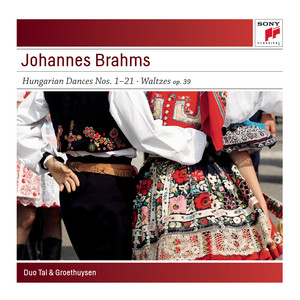 | 21 Hungarian Dances, WoO 1: No. 5 in F-Sharp Minor. Allegro | Johannes Brahms, Tal & Groethuysen | F♯ Major | 1 | 2B | 163 BPM |
- ISRC
- DEF161890113
- Label
- L-M Records/RCA Records