- BPM
- 134
- Key
- C Minor
- Camelot
- 5A
Commando March by Samuel Barber, Keystone Wind Ensemble, Jack Stamp Song Details
Samuel Barber, Keystone Wind Ensemble, Jack Stamp's 'Commando March' had a release date set for June 30, 2021. With this song being around four minutes long, at 3:30, the duration of this song is pretty average compared to other songs. This track is safe for children and doesn't appear to contain any foul language, since the "Explicit" tag was not present in this track. There are a total of 21 in the song's album "Pageant". In this album, this song's track order is #10. Based on our statistics, Commando March's popularity is unknown right now. Although the tone can be danceable to some, this track does projects more of a negative sound rather than a postive one.
BPM and Tempo
With Commando March by Samuel Barber, Keystone Wind Ensemble, Jack Stamp having a BPM of 134 with a half-time of 67 BPM and a double-time of 268 BPM, we would consider this track to have a Allegro (fast, quick, and bright) tempo marking. Because of this, we believe that the song has an overall fast tempo. Looking at the BPM of this song, this song might go great with walking. The time signature for this track is 4/4.
Music Key
This song has a musical key of C Minor. Which also means that the camelot key for this song is 5A. So, the perfect camelot match for 5A would be either 5A or 4B. While, a low energy boost can consist of either 5B or 6A. For moderate energy boost, you would use 2A and a high energy boost can either be 7A or 12A. However, if you are looking for a low energy drop, finding a song with a camelot key of 4A would be a great choice. Where 8A would give you a moderate drop, and 3A or 10A would be a high energy drop. Lastly, 8B allows you to change the mood.
Want to find the BPM and music key for other songs? Check out our BPM and Key Finder page!
- Popularity
- 0%
- Loudness
- -17.0 dB
- Acousticness
- 95%
- Danceability
- 48%
- Energy
- 34%
- Instrumentalness
- 93%
- Liveness
- 5%
- Loudness
- 72%
- Speechiness
- 6%
- Valence
- 38%
Recommendations
| Track | Artist | Key | Energy | Camelot | BPM | ||
|---|---|---|---|---|---|---|---|
 | Glassworks: Opening | Philip Glass, Víkingur Ólafsson | E♭ Major | 0 | 5B | 213 BPM | |
 | J.S. Bach: J.S. Bach: Orchestral Suite No. 3 in D Major, BWV 1068: 2. Air | Johann Sebastian Bach, Orpheus Chamber Orchestra | D Major | 3 | 10B | 65 BPM | |
 | Symphony No. 5 in C-Sharp Minor: IV. Adagietto. Sehr langsam | Gustav Mahler, Leonard Bernstein, New York Philharmonic | F Major | 1 | 7B | 86 BPM | |
 | Pärt: Spiegel im Spiegel (Excerpt) | Arvo Pärt, Tasmin Little, Martin Roscoe | F Major | 0 | 7B | 82 BPM | |
 | Prince Igor: Polovtsian Dances (Version for Chorus) | Alexander Borodin, Kiev Chamber Choir, Ukraine National Radio Symphony Orchestra, Theodore Kuchar | A Major | 2 | 11B | 110 BPM | |
 | momentary - choir version | Ólafur Arnalds, Voces8 | F♯ Minor | 1 | 11A | 67 BPM | |
 | Sospiri, Op. 70 | Edward Elgar, Academy of St. Martin in the Fields, Sir Neville Marriner | F Major | 1 | 7B | 177 BPM | |
 | Le roi s'amuse: Pavane | Léo Delibes, Slovak Philharmonic, Ondrej Lenard | B♭ Major | 0 | 6B | 91 BPM | |
 | Carnival of the Animals: The Swan - Arranged for Cello and Harp by Miriam Keogh | Camille Saint-Saëns, None, Sebastian Comberti, Miriam Keogh | G Major | 1 | 9B | 123 BPM | |
 | Nyman: The Heart Asks Pleasure First | Michael Nyman, Gautier Capuçon, Jerome Ducros, Adrien Perruchon, Orchestre de chambre de Paris | A Minor | 1 | 8A | 108 BPM | |
 | Fantasia on a Theme by Thomas Tallis | Ralph Vaughan Williams, Leonard Bernstein, New York Philharmonic | G Major | 1 | 9B | 80 BPM | |
 | Requiem, K. 626: IIIf. Lacrimosa | Wolfgang Amadeus Mozart, Wiener Singverein, Wiener Philharmoniker, Herbert von Karajan | D Minor | 2 | 7A | 78 BPM | |
 | Spartacus: Adagio of Spartacus and Phrygia | Aram Khachaturian, Wiener Philharmoniker | A♭ Major | 1 | 4B | 129 BPM | |
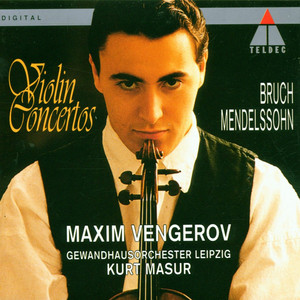 | Bruch: Violin Concerto No. 1 in G Minor, Op. 26: II. Adagio | Max Bruch, Maxim Vengerov, Kurt Masur, Gewandhausorchester | E♭ Major | 1 | 5B | 110 BPM | |
 | Vocalise, Op. 34, No. 14 | Sergei Rachmaninoff, Berliner Philharmoniker, Lorin Maazel | E Minor | 1 | 9A | 76 BPM | |
 | Liebestraum No. 3 in A-Flat Major, S. 541 / 3 | Franz Liszt, Lang Lang | A♭ Major | 0 | 4B | 137 BPM | |
 | Fauré: Pavane, Op. 50 (Instrumental Version) | Gabriel Fauré, Sir Neville Marriner, Academy of St. Martin in the Fields | F♯ Minor | 1 | 11A | 70 BPM | |
 | Tu mancavi a tormentarmi, crudelissima speranza (Arr. L. Stokowski) | Antonio Cesti, Brussels Philharmonic, Richard Egarr | E Major | 1 | 12B | 87 BPM | |
 | Serenade in B flat, K.361 "Gran partita": 3. Adagio | Wolfgang Amadeus Mozart, Academy of St. Martin in the Fields Wind Ensemble, Sir Neville Marriner | E♭ Major | 4 | 5B | 89 BPM | |
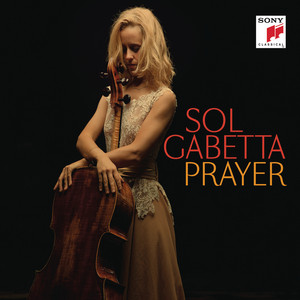 | Song of the Birds | Pablo Casals, Sol Gabetta, Amsterdam Sinfonietta | D Major | 1 | 10B | 68 BPM | |
 | Adagio in G Minor | Tomaso Albinoni, Chamber Orchestra of Miemo | G Minor | 3 | 6A | 90 BPM | |
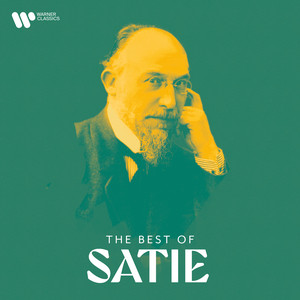 | Satie / Orch. Ducros: Gymnopédie No. 1 | Erik Satie, Gautier Capuçon, Jerome Ducros, Adrien Perruchon, Orchestre de chambre de Paris | G Minor | 0 | 6A | 170 BPM | |
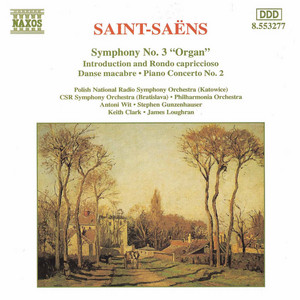 | Danse macabre in G Minor, Op. 40 | Camille Saint-Saëns, Slovak Radio Symphony Orchestra, Keith Clark | G Minor | 2 | 6A | 116 BPM | |
 | Albinoni / Giazotto: The Beatitudes (Adagio) | Remo Giazotto, Tomaso Albinoni, Edward Higginbottom, Choir of New College, Oxford, Capricorn | C Minor | 2 | 5A | 95 BPM | |
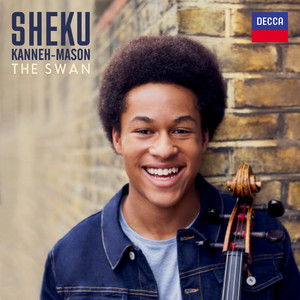 | Le Carnaval des Animaux, R. 125: 13. The Swan (Arr. Hodge for Cello, Harp & Ensemble) | Camille Saint-Saëns, Sheku Kanneh-Mason, Katherine Thomas, CBSO Cellos | G Major | 1 | 9B | 69 BPM |
- ISRC
- QMBZ92144921
- Label
- L-M Records/RCA Records