- BPM
- 132
- Key
- G Minor
- Camelot
- 6A
Francesca da Rimini, Op. 4, Act IV: Va, non piangere! by Riccardo Zandonai, Christina Vasileva, Benedicte Tauran, Philharmonisches Orchester Freiburg, Fabrice Bollon Song Details
"Francesca da Rimini, Op. 4, Act IV: Va, non piangere!" by Riccardo Zandonai, Christina Vasileva, Benedicte Tauran, Philharmonisches Orchester Freiburg, Fabrice Bollon had its release date on November 6, 2015. With This song being less than two minutes long, at 1:36, we are fairly confident that this song is not explicit and is safe for all ages. Based on the duration of this song, this song duration is much smaller than the average song duration. This song is part of Zandonai: Francesca da Rimini, Op. 4 by Riccardo Zandonai, Martin Mühle, Juan Orozco, Christina Vasileva, Philharmonisches Orchester Freiburg, Fabrice Bollon. The song's track number on the album is #26 out of 49 tracks. Based on our data, Germany was the country where this track was produced or recorded. Based on our statistics, Francesca da Rimini, Op. 4, Act IV: Va, non piangere!'s popularity is not that popular right now. In our opinion, the overall tone is not very danceable and projects negative sounds, such as being sad, depressed, or angry.
BPM and Tempo
Since Francesca da Rimini, Op. 4, Act IV: Va, non piangere! by Riccardo Zandonai, Christina Vasileva, Benedicte Tauran, Philharmonisches Orchester Freiburg, Fabrice Bollon has a tempo of 132 beats per a minute, the tempo markings of this song would be Allegro (fast, quick, and bright). With Francesca da Rimini, Op. 4, Act IV: Va, non piangere! being at 132 BPM, the half-time would be 66 BPM with a double-time of 264 BPM.In addition, we consider the tempo speed to be pretty fast for this song. This makes this song perfect for activities such as, walking. The time signature for this track is 4/4.
Music Key
This song has a musical key of G Minor. Which also means that the camelot key for this song is 6A. So, the perfect camelot match for 6A would be either 6A or 5B. While, a low energy boost can consist of either 6B or 7A. For moderate energy boost, you would use 3A and a high energy boost can either be 8A or 1A. However, if you are looking for a low energy drop, finding a song with a camelot key of 5A would be a great choice. Where 9A would give you a moderate drop, and 4A or 11A would be a high energy drop. Lastly, 9B allows you to change the mood.
Want to find the BPM and music key for other songs? Check out our BPM and Key Finder page!
- Popularity
- 1%
- Loudness
- -31.62 dB
- Acousticness
- 97%
- Danceability
- 18%
- Energy
- 1%
- Instrumentalness
- 0%
- Liveness
- 10%
- Loudness
- 47%
- Speechiness
- 5%
- Valence
- 4%
Recommendations
| Track | Artist | Key | Energy | Camelot | BPM | ||
|---|---|---|---|---|---|---|---|
 | Cavalleria rusticana: Duet. Ah! lo vedi – Turiddu, ascolta! | Pietro Mascagni, Fiorenza Cossotto, Carlo Bergonzi, Orchestra Del Teatro Alla Scala, Milano, Herbert von Karajan | F Minor | 3 | 4A | 133 BPM | |
 | Francesca da Rimini, Act II: Benvenuto, signore mio cognato (Live) | Riccardo Zandonai, Magda Olivero, Orchestra Del Teatro Alla Scala, Milano, Mario del Monaco, Gianandrea Gavazzeni | A Minor | 2 | 8A | 102 BPM | |
 | Bellini: I puritani: "E di morte lo stral non sarà lento" (Riccardo, Giorgio, Coro) | Vincenzo Bellini, Dresdner Philharmonie, Riccardo Frizza | D Major | 5 | 10B | 136 BPM | |
 | Simon Boccanegra, Prologue: L'altra magion vedete? | Giuseppe Verdi, José van Dam, Giovanni Foiani, Orchestra Del Teatro Alla Scala, Milano, Claudio Abbado, Coro Del Teatro Alla Scala Di Milano, Romano Gandolfi | D Major | 1 | 10B | 94 BPM | |
 | Ariane et Barbe-bleue, Act I: Prenez-les! - Penchez-vous! (the Nurse, Ariane) | Paul Dukas, Marilyn Schmiege, Roderick Kennedy, Jocelyne Taillon, Cynthia Buchan, Monique Baudoin, Mitsuko Shirai, Francine Laurent, Josef Otten, Jörg Pavelec, Franz Gerihsen, WDR Rundfunkchor Köln, WDR Sinfonieorchester Köln, Gary Bertini | F♯ Major | 4 | 2B | 91 BPM | |
 | I Puritani / Act 1: I rito augusto si compia senza me | Vincenzo Bellini, Gian Carlo Luccardi, Anita Caminada, Nicolai Ghiaurov, Luciano Pavarotti, London Symphony Orchestra, Richard Bonynge | C Major | 2 | 8B | 62 BPM | |
 | La fille du régiment / Act 1: Sacré nom d'une pipe! | Gaetano Donizetti, Spiro Malas, Dame Joan Sutherland, Orchestra of the Royal Opera House, Covent Garden, Richard Bonynge | G Major | 2 | 9B | 62 BPM | |
 | Wagner: Tristan und Isolde, Act 1: "Welcher Wahn! Welch' eitles Zürnen!" (Brangäne, Isolde) | Richard Wagner, Herbert von Karajan, Christa Ludwig, Helga Dernesch, Berliner Philharmoniker | C Major | 1 | 8B | 131 BPM | |
 | Gounod: Faust, Act 3: Couplets. "Faites-lui mes aveux" (Siebel) | Charles Gounod, Michel Plasson, Martine Mahé, Orchestre Du Capitole De Toulouse | A Minor | 1 | 8A | 94 BPM | |
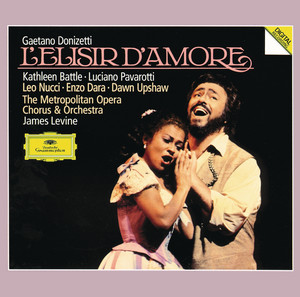 | L'elisir d'amore / Act II: "Saria possibile?" | Gaetano Donizetti, Metropolitan Opera Chorus, David Stivender, Dawn Upshaw, Metropolitan Opera Orchestra, James Levine | B Major | 0 | 1B | 119 BPM | |
 | Zwei Scenen für Singstimme und Orchester, Op. 199: No. 2, Die Hirtin | Joachim Raff, Therese Schleiden, Lena-Lisa Wüstendörfer, Marie-Claude Chappuis, Swiss Orchestra | A♭ Minor | 1 | 1A | 71 BPM | |
 | La alegría del batallón: "Aquí está quien lo tiene tó y no tiene ná" (Tajuña) | Jose Serrano, Orquesta Juvenil Sinfonía por el Perú, Guillermo García Calvo, Juan Diego Flórez | D Major | 1 | 10B | 75 BPM | |
 | Verdi: Otello: Atto Primo: Già nella notte densa | Giuseppe Verdi, Jonas Kaufmann, Antonio Pappano, Orchestra dell'Accademia Nazionale di Santa Cecilia | E Minor | 0 | 9A | 82 BPM | |
 | Don Pasquale - What an Interminable Coming and Going | Gaetano Donizetti, Chor der Deutschen Staatsoper Berlin, Staatskapelle Berlin, Otmar Suitner | B♭ Major | 1 | 6B | 139 BPM | |
 | Francesca da Rimini, Op. 4, Act II: Paolo! | Riccardo Zandonai, Martin Mühle, Christina Vasileva, Philharmonisches Orchester Freiburg, Fabrice Bollon | D Minor | 2 | 7A | 88 BPM | |
 | Ka | Baksman | G Minor | 3 | 6A | 81 BPM | |
 | Suor Angelica: Il principe Gualtiero vostro padre | Giacomo Puccini, Christa Ludwig, Dame Joan Sutherland, National Philharmonic Orchestra, Richard Bonynge | E Major | 1 | 12B | 98 BPM | |
 | Petite messe solennelle: Quoniam | Gioachino Rossini, Orchestre de chambre de Paris, Ottavio Dantone, Alexander Vinogradov | A Major | 2 | 11B | 124 BPM | |
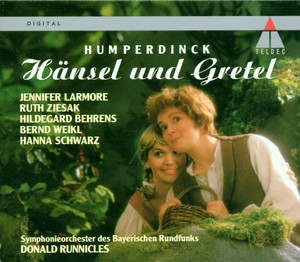 | Humperdinck : Hänsel und Gretel : Act 3 "Ich bin Rosine Leckermaul" [The Nibblewitch, Gretel, Hänsel] | Engelbert Humperdinck, Donald Runnicles, Bavarian Radio Symphony Orchestra | D Major | 2 | 10B | 75 BPM | |
 | Granados / Transcr. Bakish: 12 Tonadillas en estilo antiguo: No. 6, El mirar de la maja | Enrique Granados, Liat Cohen, Charles Castronovo | A Minor | 1 | 8A | 87 BPM | |
| Cavalleria rusticana: Tu qui, Santuzza? – Fior la giaggolo | Pietro Mascagni, Fiorenza Cossotto, Carlo Bergonzi, Orchestra Del Teatro Alla Scala, Milano, Herbert von Karajan | D♭ Major | 1 | 3B | 164 BPM | |
 | Puccini: Turandot, Act 2: "Gravi, enormi ed impotenti" (Coro) | Giacomo Puccini, Antonio Pappano, Coro dell'Accademia Nazionale Di Santa Cecilia, Orchestra dell'Accademia Nazionale di Santa Cecilia | A♭ Major | 2 | 4B | 123 BPM | |
 | La traviata / Act 3: "Ah, non più!" - "Ah! Gran Dio! Morir sì giovine" | Giuseppe Verdi, Cheryl Studer, Luciano Pavarotti, Metropolitan Opera Orchestra, James Levine | G Major | 1 | 9B | 64 BPM | |
 | Carmen / Act 1: Votre mère avec moi sortait de la chapelle | Georges Bizet, Katia Ricciarelli, José Carreras, Berliner Philharmoniker, Herbert von Karajan | B♭ Major | 0 | 6B | 129 BPM | |
| Carmen / Act 1: "Monsieur le brigadier?" / Duo:"Parle-moi de ma mère!" | Georges Bizet, Katia Ricciarelli, José Carreras, Jean Barney, Danièle Ajoret, Berliner Philharmoniker, Herbert von Karajan | C Minor | 0 | 5A | 81 BPM |
- ISRC
- DEB201396045
- Label
- L-M Records/RCA Records