- BPM
- 92
- Key
- D♭ Major
- Camelot
- 3B
Piano Concerto in A Minor, Op. 16: II. Adagio by Edvard Grieg, Reed Tetzloff, John Eliot Gardiner, Orchestre Philharmonique Du Luxembourg Song Details
"Piano Concerto in A Minor, Op. 16: II. Adagio" by Edvard Grieg, Reed Tetzloff, John Eliot Gardiner, Orchestre Philharmonique Du Luxembourg had its release date on October 3, 2025. This song is about six minutes long, preciously at 6:26, making this song fairly long compared to other songs. Because this song is the only song in Grieg: Piano Concerto in A Minor, Op. 16: II. Adagio and no other songs are present in the album, we classify this track as a single. On top of that, France appears to be the country where this track was created. In terms of popularity, Piano Concerto in A Minor, Op. 16: II. Adagio is currently unknown. In our opinion, the overall tone is not very danceable and projects negative sounds, such as being sad, depressed, or angry.
BPM and Tempo
We consider the tempo marking of Piano Concerto in A Minor, Op. 16: II. Adagio by Edvard Grieg, Reed Tetzloff, John Eliot Gardiner, Orchestre Philharmonique Du Luxembourg to be Andante (at a walking pace) because the track has a tempo of 92 BPM, a half-time of 46BPM, and a double-time of 184 BPM. Based on that, the speed of the song's tempo is slow. Activities such as, yoga or pilates, can go well with this song. The time signature for this track is 3/4.
Music Key
D♭ Major is the music key of this track. This also means that this song has a camelot key of 3B. So, the perfect camelot match for 3B would be either 3B or 4A. While, 4B can give you a low energy boost. For moderate energy boost, you would use 12B and a high energy boost can either be 5B or 10B. Though, if you want a low energy drop, you should looking for songs with either a camelot key of 3A or 2B will give you a low energy drop, 6B would be a moderate one, and 1B or 8B would be a high energy drop. Lastly, 12A allows you to change the mood.
Want to find the BPM and music key for other songs? Check out our BPM and Key Finder page!
- Popularity
- 0%
- Loudness
- -25.988 dB
- Acousticness
- 98%
- Danceability
- 19%
- Energy
- 2%
- Instrumentalness
- 88%
- Liveness
- 9%
- Loudness
- 57%
- Speechiness
- 4%
- Valence
- 4%
Recommendations
| Track | Artist | Key | Energy | Camelot | BPM | ||
|---|---|---|---|---|---|---|---|
 | Paderewski: Miscellanea, Op. 16: No. 4, Nocturne in B-Flat Major | Ignacy Jan Paderewski, Stephen Hough | B♭ Major | 0 | 6B | 73 BPM | |
 | Sonata in G Minor for Cello and Piano, Op. 19: III. Andante | Sergei Rachmaninoff, Pablo Ferrandez, Denis Kozhukhin | E♭ Major | 0 | 5B | 87 BPM | |
 | Adagio in E-Flat Major | Fanny Mendelssohn, Heather Schmidt | E♭ Minor | 0 | 2A | 90 BPM | |
 | Massenet: 10 Pièces de genre, Op. 10: No. 5, Mélodie "Élégie" | Jules Massenet, Shani Diluka | F Major | 2 | 7B | 123 BPM | |
 | Die stumme Serenade, Op. 36: No. 23, Ohne Dich (Transcr. Sonnenmoser for Violin & Piano) | Erich Wolfgang Korngold, Bomsori, Thomas Hoppe | D Major | 2 | 10B | 89 BPM | |
![Ave Maria, CG 89a (After Bach's BWV 846) [Version for Piano] by Charles Gounod, Warren Lee](https://i.scdn.co/image/ab67616d00001e027e58f9d02984ddde5efa3d04) | Ave Maria, CG 89a (After Bach's BWV 846) [Version for Piano] | Charles Gounod, Warren Lee | C Major | 0 | 8B | 135 BPM | |
 | Prokofiev: Violin Concerto No. 2 in G Minor, Op. 63: II. Andante assai | Sergei Prokofiev, Augustin Hadelich, Cristian Măcelaru, WDR Sinfonieorchester | A♭ Major | 1 | 4B | 150 BPM | |
 | 6 Ibsen Songs, Op. 25: No. 2, En svane (Arr. Lidström for Cello & Piano) | Edvard Grieg, Mats Lidström, Leif Kaner-Lidström | A♭ Minor | 1 | 1A | 75 BPM | |
 | Suite from "The Victorian Kitchen Garden": V. Summer. Flowing | Paul Reade, Michael Collins, Michael McHale | E♭ Major | 0 | 5B | 66 BPM | |
 | 10 Preludes, Op. 23: IV. Andante cantabile | Sergei Rachmaninoff, Mao Fujita | A Major | 3 | 11B | 80 BPM | |
 | Woodland Suite: III. Moon-Fairy | George Dyson, BBC Symphony Orchestra, Richard Hickox | A Major | 0 | 11B | 74 BPM | |
 | Glazunov: Meditation, Op. 32 | Alexander Glazunov, Chloë Hanslip, Paul Mann, London Symphony Orchestra | C Major | 2 | 8B | 108 BPM | |
 | Concerto for Violin and Orchestra (To the memory of my mother): III. Allegro, ma non troppo | Ina Boyle, Esther Abrami, Vienna Radio Symphony Orchestra, Irene Delgado-Jiménez | A Minor | 2 | 8A | 76 BPM | |
 | Fantaisie sur des motifs de l'opéra "Guillaume Tell" de Rossini (Arr. for 3 Cellos): III. Moderato - Allegro | Alexandre Batta, Gioachino Rossini, Sol Gabetta, Victor Julien-Laferrière, Luca Magariello | D Major | 5 | 10B | 76 BPM | |
 | Vaughan Williams: 6 Studies in English Folk-Song: No. 1, Adagio | David Parkhouse, Eileen Croxford | A Minor | 1 | 8A | 92 BPM | |
 | Piano Quintet in B Minor, Op. 74: II. Larghetto | Ferdinand Ries, Klavierquintett Wien | C Minor | 4 | 5A | 136 BPM | |
 | Piano Concerto in A Minor, Op. 7: II. Romanze. Andante non troppo con grazia – | Clara Schumann, Tasmanian Symphony Orchestra, Howard Shelley | F Major | 0 | 7B | 72 BPM | |
 | Some Things Never Change | Eunike Tanzil, Deutsches Symphonie-Orchester Berlin | D♭ Minor | 0 | 12A | 83 BPM | |
 | Caprice andalous, Op. 122 | Camille Saint-Saëns, María Dueñas, Deutsches Symphonie-Orchester Berlin, Mihhail Gerts | A Minor | 2 | 8A | 124 BPM | |
 | Nocturne No. 2 in C Minor, H. 25 | John Field, Alice Sara Ott | F Major | 0 | 7B | 67 BPM | |
 | 6 Klavierstücke, Op. 118: No. 2, Intermezzo in A Major | Johannes Brahms, Stephen Hough | F Major | 1 | 7B | 86 BPM | |
 | 3 Romances, Op. 11: No. 1 in E-Flat Minor | Clara Schumann, Jean-Pierre Armengaud | B Minor | 0 | 10A | 70 BPM | |
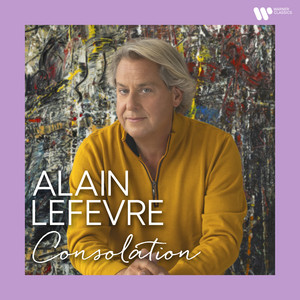 | Consolation | Alain Lefèvre | D Major | 1 | 10B | 169 BPM | |
 | Elgar: In Moonlight (Arr. Milone for Cello and Orchestra) | Edward Elgar, Natalie Clein, Royal Liverpool Philharmonic Orchestra, Vernon Handley | C Major | 0 | 8B | 103 BPM | |
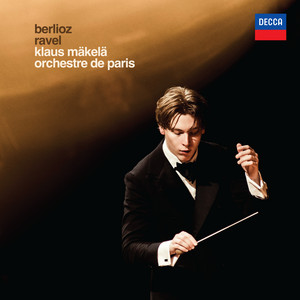 | Symphonie fantastique, H. 48: II. Un bal. Valse | Hector Berlioz, Orchestre de Paris, Klaus Mäkelä | A Major | 1 | 11B | 100 BPM |
- ISRC
- FROV62439805
- Label
- L-M Records/RCA Records