- BPM
- 98
- Key
- C Major
- Camelot
- 8B
3 Movements from Petrushka, K12: II. Chez Pétrouchka by Igor Stravinsky, Daniil Trifonov Song Details
"3 Movements from Petrushka, K12: II. Chez Pétrouchka" by Igor Stravinsky, Daniil Trifonov had its release date on November 6, 2020. With this song being about 5 minutes long, at This song is fairly a long song compared to the average song length. This song does not have an "Explicit" tag, making it safe for all ages. There are a total of 30 in the song's album "Silver Age". In this album, this song's track order is #22. Furthermore, we believe that the track originated from Germany. In terms of popularity, 3 Movements from Petrushka, K12: II. Chez Pétrouchka is currently not that popular. In our opinion, the overall tone is not very danceable and projects negative sounds, such as being sad, depressed, or angry.
BPM and Tempo
With 3 Movements from Petrushka, K12: II. Chez Pétrouchka by Igor Stravinsky, Daniil Trifonov having a BPM of 98 with a half-time of 49 BPM and a double-time of 196 BPM, we would consider this track to have a Andante (at a walking pace) tempo marking. Because of this, we believe that the song has an overall slow tempo. The time signature for this track is 3/4.
Music Key
This song is in the music key of C Major. Or for those who are familiar with the camelot wheel, this song has a camelot key of 8B. So, the perfect camelot match for 8B would be either 8B or 9A. While, 9B can give you a low energy boost. For moderate energy boost, you would use 5B and a high energy boost can either be 10B or 3B. Though, if you want a low energy drop, you should looking for songs with either a camelot key of 8A or 7B will give you a low energy drop, 11B would be a moderate one, and 6B or 1B would be a high energy drop. Lastly, 5A allows you to change the mood.
Want to find the BPM and music key for other songs? Check out our BPM and Key Finder page!
- Popularity
- 2%
- Loudness
- -20.251 dB
- Acousticness
- 98%
- Danceability
- 36%
- Energy
- 17%
- Instrumentalness
- 89%
- Liveness
- 10%
- Loudness
- 66%
- Speechiness
- 4%
- Valence
- 4%
Recommendations
| Track | Artist | Key | Energy | Camelot | BPM | ||
|---|---|---|---|---|---|---|---|
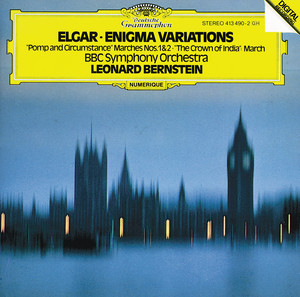 | Variations On An Original Theme, Op.36 "Enigma": 13. Romanza *** (Moderato) | Edward Elgar, BBC Symphony Orchestra, Leonard Bernstein | A♭ Major | 0 | 4B | 87 BPM | |
 | Symphony No. 6 in B Minor, Op. 74 "Pathétique": IV. Finale. Adagio lamentoso - Andante | Pyotr Ilyich Tchaikovsky, Gianandrea Noseda, London Symphony Orchestra | E Minor | 1 | 9A | 106 BPM | |
 | Symphony No. 8 in C Minor, WAB 108: II. Scherzo: Allegro moderato - Trio. Langsam | Anton Bruckner, Wiener Philharmoniker, Pierre Boulez | D♭ Major | 1 | 3B | 125 BPM | |
 | Schoenberg: Verklärte Nacht, Op. 4: I. Grave (1943 Version) | Arnold Schoenberg, Daniel Barenboim, Chicago Symphony Orchestra | D Minor | 1 | 7A | 174 BPM | |
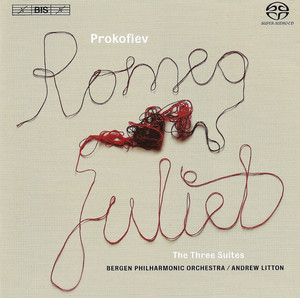 | VII. Death of Tybalt | Sergei Prokofiev, Bergen Philharmonic Orchestra, Andrew Litton | D Major | 1 | 10B | 104 BPM | |
 | Gayane Suite No. 3: V. Solo - Love Duet | Aram Khachaturian, St. Petersburg State Symphony Orchestra, Andre Anichanov | D Major | 3 | 10B | 175 BPM | |
 | Quatuor pour la fin du Temps: IV. Intermède | Olivier Messiaen, Martin Fröst | F♯ Major | 2 | 2B | 96 BPM | |
 | Mathis der Maler Symphony: II. Grablegung | Paul Hindemith, Berliner Philharmoniker, Claudio Abbado | A♭ Minor | 0 | 1A | 87 BPM | |
 | Transfigured Night, Op. 4 (Version for String Orchestra): Pesante - Grave | Arnold Schoenberg, Berliner Philharmoniker, Kirill Petrenko | E Major | 0 | 12B | 73 BPM | |
 | Mavra (arr. S. Dushkin): Mavra: Russian Maiden's Song, "Parasha's Aria" (arr. S. Dushkin for violin and piano) | Samuel Dushkin, Igor Stravinsky, Livia Sohn, Benjamin Loeb | G Minor | 0 | 6A | 140 BPM | |
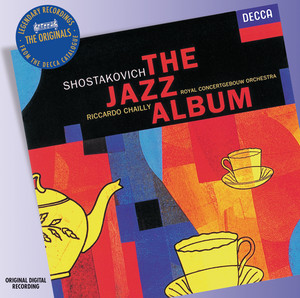 | Piano Concerto No. 1 in C Minor, Op. 35: IV. Allegro con brio | Dmitri Shostakovich, Ronald Brautigam, Peter Masseurs, Royal Concertgebouw Orchestra, Riccardo Chailly | A♭ Major | 4 | 4B | 82 BPM | |
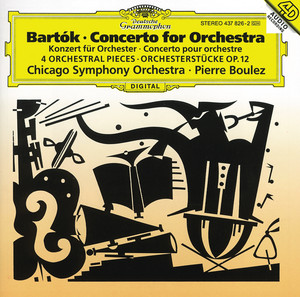 | Concerto for Orchestra, Sz. 116: III. Elegia (Andante, non troppo) | Béla Bartók, Chicago Symphony Orchestra, Pierre Boulez | D Major | 1 | 10B | 73 BPM | |
 | Pictures at an Exhibition (Orch. Ravel): I. Gnomus | Modest Mussorgsky, Wiener Philharmoniker, Gustavo Dudamel | E Major | 1 | 12B | 60 BPM | |
 | Symphony No. 7 in E Major, WAB 107 (Ed. Haas): III. Scherzo. Sehr schnell - Trio. Etwas langsamer | Anton Bruckner, Wiener Philharmoniker, Herbert von Karajan | F Major | 2 | 7B | 74 BPM | |
 | Symphony No. 8 in G Minor, Op. 88, B. 163: III. Allegretto grazioso - Molto vivace | Antonín Dvořák, London Symphony Orchestra, Sir Colin Davis | G Major | 1 | 9B | 130 BPM | |
 | Symphony No. 3 in C Minor, Op. 78 "Organ": Allegro moderato | Camille Saint-Saëns, Eugene Ormandy, Philadelphia Orchestra | A♭ Major | 1 | 4B | 109 BPM | |
 | Overture to "A Midsummer Night's Dream", Op. 21: Allegro di molto | Felix Mendelssohn, London Symphony Orchestra, John Eliot Gardiner | E Major | 1 | 12B | 137 BPM | |
 | Also sprach Zarathustra, Op. 30: III. Von der großen Sehnsucht | Richard Strauss, Berliner Philharmoniker, Herbert von Karajan | E Minor | 1 | 9A | 106 BPM | |
 | Piano Concerto No. 2 in F Major, Op. 102: I. Allegro | Dmitri Shostakovich, Boris Giltburg, Royal Liverpool Philharmonic Orchestra, Vasily Petrenko | B♭ Major | 3 | 6B | 144 BPM | |
 | Symphonie fantastique, Op. 14: Marche au supplice (Allegro non troppo) | Hector Berlioz, Swedish Radio Symphony Orchestra, Daniel Harding | B♭ Major | 2 | 6B | 147 BPM | |
| The Crown of India, Op. 66: March of the Mogul Emperors | Edward Elgar, BBC Symphony Orchestra, Leonard Bernstein | B Minor | 4 | 10A | 90 BPM | |
 | The Rite of Spring: Part Two: The Sacrifice: Sacrificial Dance (The Chosen One) | Igor Stravinsky, Teodor Currentzis, musicAeterna | D Minor | 5 | 7A | 136 BPM | |
 | Daphnis et Chloé, M. 57, Pt. 3: XIa-b. Pantomime. Daphnis et Chloé miment l'aventure de Pan et de Syrinx | Maurice Ravel, Berliner Philharmoniker, Pierre Boulez | F♯ Minor | 0 | 11A | 169 BPM | |
 | The Tempest Suite No. 1, Op. 109, No. 2: I. The Oak Tree | Jean Sibelius, Lahti Symphony Orchestra, Okko Kamu | B♭ Major | 0 | 6B | 86 BPM | |
 | Cantus arcticus, Op. 61, "Concerto for Birds and Orchestra": II. Melankolia (Melancholy) | Einojuhani Rautavaara, Royal Scottish National Orchestra, Hannu Lintu | E Minor | 0 | 9A | 78 BPM |
- ISRC
- DEN961904432
- Label
- L-M Records/RCA Records