- BPM
- 84
- Key
- A Minor
- Camelot
- 8A
A Village Romeo and Juliet (1992 Digital Remaster): SCENE 2 - Six years later. Outside Marti's house by Frederick Delius, Denis Dowling, Frederick Sharp, Margaret Ritchie, René Soames, Dorothy Bond, Marjorie Avis, Gwladys Garside, Lloyd Strauss-Smith, Marion Davies, Donald Munro, Lorely Dyer, Gordon Clinton, Philip Hattey, Royal Philharmonic Orchestra, Sir Thomas Beecham Song Details
"A Village Romeo and Juliet (1992 Digital Remaster): SCENE 2 - Six years later. Outside Marti's house" by Frederick Delius, Denis Dowling, Frederick Sharp, Margaret Ritchie, René Soames, Dorothy Bond, Marjorie Avis, Gwladys Garside, Lloyd Strauss-Smith, Marion Davies, Donald Munro, Lorely Dyer, Gordon Clinton, Philip Hattey, Royal Philharmonic Orchestra, Sir Thomas Beecham had its release date on February 7, 2011. Since This song is still less than 10 minute long, it is still considered a pretty long duration song compared to the average song length. This song does not appear to be explicit due to the lack of the "E" tag. There are a total of 88 in the song's album "Sir Thomas Beecham: The English Collection". In this album, this song's track order is #2. Furthermore, we believe that the track originated from United Kingdom. A Village Romeo and Juliet (1992 Digital Remaster): SCENE 2 - Six years later. Outside Marti's house is unknown right now. In our opinion, the overall tone is not very danceable and projects negative sounds, such as being sad, depressed, or angry.
BPM and Tempo
With A Village Romeo and Juliet (1992 Digital Remaster): SCENE 2 - Six years later. Outside Marti's house by Frederick Delius, Denis Dowling, Frederick Sharp, Margaret Ritchie, René Soames, Dorothy Bond, Marjorie Avis, Gwladys Garside, Lloyd Strauss-Smith, Marion Davies, Donald Munro, Lorely Dyer, Gordon Clinton, Philip Hattey, Royal Philharmonic Orchestra, Sir Thomas Beecham having a BPM of 84 with a half-time of 42 BPM and a double-time of 168 BPM, we would consider this track to have a Andante (at a walking pace) tempo marking. Because of this, we believe that the song has an overall slow tempo. The time signature for this track is 4/4.
Music Key
A Minor is the music key of this track. Which also means that the camelot key for this song is 8A. So, the perfect camelot match for 8A would be either 8A or 7B. While, a low energy boost can consist of either 8B or 9A. For moderate energy boost, you would use 5A and a high energy boost can either be 10A or 3A. However, if you are looking for a low energy drop, finding a song with a camelot key of 7A would be a great choice. Where 11A would give you a moderate drop, and 6A or 1A would be a high energy drop. Lastly, 11B allows you to change the mood.
Want to find the BPM and music key for other songs? Check out our BPM and Key Finder page!
- Popularity
- 0%
- Loudness
- -12.517 dB
- Acousticness
- 94%
- Danceability
- 31%
- Energy
- 50%
- Instrumentalness
- 91%
- Liveness
- 13%
- Loudness
- 79%
- Speechiness
- 6%
- Valence
- 17%
Recommendations
| Track | Artist | Key | Energy | Camelot | BPM | ||
|---|---|---|---|---|---|---|---|
 | Suite: Graceful Dance | Ernest Tomlinson, Royal Northern Sinfonia, David Lloyd-Jones | D Major | 3 | 10B | 133 BPM | |
 | Symphony No. 5 In C Sharp Minor: 4. Adagietto (Sehr langsam) | Gustav Mahler, Gyeonggi Philharmonic Orchestra, Shi-Yeon Sung | F Major | 0 | 7B | 82 BPM | |
 | Pavane for Dead Princess | Maurice Ravel, David Robertson, Orchestre National De Lyon, Irina Mejoueva | G Major | 1 | 9B | 77 BPM | |
 | Myrthen, Op. 25 - Version for Cello and Piano: XXIV. Du bist wie eine Blume | Robert Schumann, Kian Soltani, Aaron Pilsan | F Major | 0 | 7B | 116 BPM | |
 | Album Leaf for Kateřina Kolářová in B Major, JB 1:20 | Bedřich Smetana, Jitka Čechová | B Major | 0 | 1B | 70 BPM | |
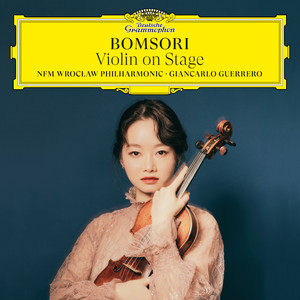 | Thaïs: Méditation | Jules Massenet, Bomsori, NFM Wrocław Philharmonic, Giancarlo Guerrero | D Major | 0 | 10B | 84 BPM | |
 | Widmung, Op. 25 No. 1 (Arr. Franz Liszt) | Robert Schumann, Martin James Bartlett | A♭ Major | 0 | 4B | 74 BPM | |
 | Carnaval, Op. 9: XII. Chopin | Robert Schumann, Daniil Trifonov | E Major | 0 | 12B | 68 BPM | |
 | Elegy (In Memoriam Stephen Lawrence) | Philip Herbert, Chineke! Orchestra, Anthony Parnther | C Major | 0 | 8B | 100 BPM | |
 | Romance, Op. 22: No. 1, Andante Molto | Clara Schumann, Carl Schwarz | D♭ Major | 0 | 3B | 136 BPM | |
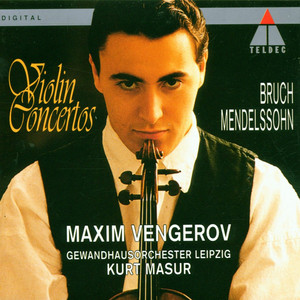 | Bruch : Violin Concerto No.1 in G minor Op.26 : III Finale - Allegro energico | Max Bruch, Maxim Vengerov, Kurt Masur, Gewandhausorchester Leipzig | G Major | 2 | 9B | 90 BPM | |
 | Preghiera (Arr. by Fritz Kreisler from Piano Concerto No. 2 in C Minor, Op. 18, 2nd Movement) | Sergei Rachmaninoff, Gidon Kremer, Daniil Trifonov | C Major | 1 | 8B | 104 BPM | |
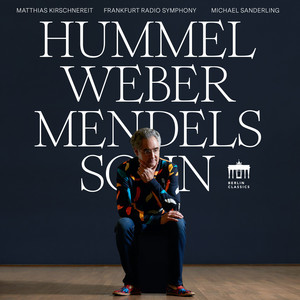 | Capriccio brillant, Op. 22: Andante | Felix Mendelssohn, Matthias Kirschnereit, Michael Sanderling, Frankfurt Radio Symphony Orchestra | B Major | 0 | 1B | 91 BPM | |
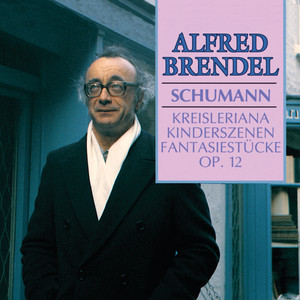 | Kinderszenen, Op. 15: VII. Träumerei | Robert Schumann, Alfred Brendel | F Major | 0 | 7B | 135 BPM | |
 | Concerto No. 2 for Piano and Orchestra, Op. 102: II. Andante - 2017 Remastered Version | Dmitri Shostakovich, Leonard Bernstein, New York Philharmonic | F Major | 1 | 7B | 172 BPM | |
 | Polovetsian Dances from Prince Igor: Introduzione | Alexander Borodin, George Szell, The Cleveland Orchestra | A Major | 1 | 11B | 83 BPM | |
 | Romeo and Juliette, Op. 64 (Arr. for Viola and Piano by Vadim Borisovsky, Orchestration for Viola and String Orchestra by François Vallières): Introduction | Sergei Prokofiev, Elvira Misbakhova, I Musici de Montréal, Jean-François Rivest | D Major | 1 | 10B | 99 BPM | |
 | 2 Aquarelles: No. 1, Lento, ma non troppo | Frederick Delius, English Chamber Orchestra, Julian Lloyd Webber | B♭ Major | 1 | 6B | 119 BPM | |
| 2 Aquarelles: Lento, ma non troppo | Frederick Delius, Royal Northern Sinfonia, David Lloyd-Jones | F Major | 0 | 7B | 71 BPM | |
 | Scheherazade: Calm - the triumph of Scheherazade | Nikolai Rimsky-Korsakov, Lars Hjalmar Joakim | E Minor | 0 | 9A | 68 BPM | |
| Scheherazade: The Young Prince | Nikolai Rimsky-Korsakov, Lars Hjalmar Joakim | G Major | 1 | 9B | 91 BPM | |
 | The Seasons, Op. 67: XIV. Petit Adagio | Alexander Glazunov, Neeme Järvi, Royal Scottish National Orchestra | A Major | 1 | 11B | 87 BPM | |
 | Suite No. 3, Op. 19 No. 1: I. Prelude. Adagio | Kurt Atterberg, Henning Kraggerud, Dalasinfoniettan, Bjarte Engeset | D♭ Minor | 2 | 12A | 126 BPM | |
 | Bruch: Scottish Fantasy, Op. 46: I. (b) Adagio cantabile | Max Bruch, Itzhak Perlman, Jesús López-Cobos, New Philharmonia Orchestra | E♭ Minor | 0 | 2A | 59 BPM | |
 | Orpheo ed Euridice, Wq. 30, Act II: Dance of the Blessed Spirits | Christoph Willibald Gluck, Eugene Ormandy, Philadelphia Orchestra | D Minor | 1 | 7A | 67 BPM |
- ISRC
- GBAYC9201788
- Label
- L-M Records/RCA Records