- BPM
- 182
- Key
- G Major
- Camelot
- 9B
Etudes: II. Ronds de jambe by Knudåge Riisager, Gennady Rozhdestvensky, Danish National Symphony Orchestra Song Details
Knudåge Riisager, Gennady Rozhdestvensky, Danish National Symphony Orchestra's ' "Etudes: II. Ronds de jambe" was released on its scheduled release date, February 1, 1996. With This song being less than two minutes long, at 1:52, we are fairly confident that this song is not explicit and is safe for all ages. Based on the duration of this song, this song duration is much smaller than the average song duration. There are a total of 22 in the song's album "Riisager: Etudes". In this album, this song's track order is #3. Furthermore, we believe that the track originated from United Kingdom. The popularity of Etudes: II. Ronds de jambe is currently not that popular right now. Based on the vibe, this track doesn't seem to be that danceable, however its valence properties can make this some somewhat danceable.
BPM and Tempo
With Etudes: II. Ronds de jambe by Knudåge Riisager, Gennady Rozhdestvensky, Danish National Symphony Orchestra having a BPM of 182 with a half-time of 91 BPM and a double-time of 364 BPM, we would consider this track to have a Presto (very, very fast) tempo marking. Because of this, we believe that the song has an overall fast tempo. The time signature for this track is 3/4.
Music Key
This song is in the music key of G Major. Or for those who are familiar with the camelot wheel, this song has a camelot key of 9B. So, the perfect camelot match for 9B would be either 9B or 10A. While, 10B can give you a low energy boost. For moderate energy boost, you would use 6B and a high energy boost can either be 11B or 4B. Though, if you want a low energy drop, you should looking for songs with either a camelot key of 9A or 8B will give you a low energy drop, 12B would be a moderate one, and 7B or 2B would be a high energy drop. Lastly, 6A allows you to change the mood.
Want to find the BPM and music key for other songs? Check out our BPM and Key Finder page!
- Popularity
- 12%
- Loudness
- -24.883 dB
- Acousticness
- 89%
- Danceability
- 35%
- Energy
- 10%
- Instrumentalness
- 28%
- Liveness
- 11%
- Loudness
- 59%
- Speechiness
- 5%
- Valence
- 47%
Recommendations
| Track | Artist | Key | Energy | Camelot | BPM | ||
|---|---|---|---|---|---|---|---|
 | La Bayadère / Act 1: No. 26 Tempo di valse brillante | Ludwig Minkus, English Chamber Orchestra, Richard Bonynge | D Major | 3 | 10B | 102 BPM | |
 | Khachaturian: Suite No. 1 from Spartacus: III. Variation of Aegina - Bacchanalia | Aram Khachaturian, Alexander Lazarev, The Bolshoi Symphony Orchestra | E♭ Minor | 2 | 2A | 129 BPM | |
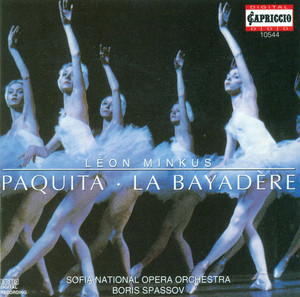 | La bayadère: Andantino | Ludwig Minkus, Anna Takova-Baynova, Valentina Raicheva, Sofia National Opera Orchestra, Boris Spassov | A Major | 2 | 11B | 140 BPM | |
 | Champagner Polka, Op. 211 | Johann Strauss II, Symphony Orchestra Baden Baden, Klaus Arp | E♭ Major | 2 | 5B | 111 BPM | |
 | L'Arlésienne Suite, No. 2: IV. Farandole | Georges Bizet, Jean Martinon | D Major | 7 | 10B | 77 BPM | |
 | No. 11 Harlekin: Allegro | Josef Bayer, Slovak Radio Symphony Orchestra, Andrew Mogrelia | D Major | 2 | 10B | 112 BPM | |
 | The Gold and Silver Waltz | The Manhattan Pops | C Major | 3 | 8B | 95 BPM | |
 | Hérold & Lanchbery: La fille mal gardée, Act 1: No. 16c, Pas de deux de Fanny Elssler. Adage | Ferdinand Hérold, John Lanchbery, Royal Liverpool Philharmonic Orchestra, Barry Wordsworth | E♭ Major | 0 | 5B | 142 BPM | |
 | Nachtveilchen (Polka Mazur), Op. 170 | Polish State Philharmonic Orchestra, Katowice, Johann Strauss II | C Major | 0 | 8B | 113 BPM | |
 | Exeter-Polka, Op. 249 | Johann Strauss I, Slovak Sinfonietta, Zilina, Christian Pollack | D Major | 1 | 10B | 94 BPM | |
| La Bayadère / Act 2: No. 29 (Andante) | Ludwig Minkus, English Chamber Orchestra, Richard Bonynge | D Major | 0 | 10B | 68 BPM | |
| Khachaturian : Gayaneh Suite No.1 : II Dance of the Young Maidens | Aram Khachaturian, Alexander Lazarev, The Bolshoi Symphony Orchestra | E Minor | 1 | 9A | 114 BPM | |
 | Giselle, Peasant pas de deux, Act I: Coda (Arr. March) | Friedrich Burgmüller, Sofia National Opera Orchestra, Boris Spassov | B♭ Major | 3 | 6B | 137 BPM | |
 | Don Quichotte, Acte I : Variation : Basilio. Variation : Kitri. | Orchestre de l'Opéra de Sofia | B Minor | 2 | 10A | 130 BPM | |
 | Etudes: IV. Adagio | Knudåge Riisager, Gennady Rozhdestvensky, Danish National Symphony Orchestra | A♭ Major | 0 | 4B | 78 BPM | |
![Spartacus, Act I: Scene and Dance with Crotala (arr. Y. Grigorovich) [1968 Bolshoi Version] by Aram Khachaturian, RIAS Kammerchor, Deutsches Symphonie-Orchester Berlin, Michail Jurowski](https://i.scdn.co/image/ab67616d00001e02c21d253eed4ccdd547b4b94d) | Spartacus, Act I: Scene and Dance with Crotala (arr. Y. Grigorovich) [1968 Bolshoi Version] | Aram Khachaturian, RIAS Kammerchor, Deutsches Symphonie-Orchester Berlin, Michail Jurowski | G Major | 1 | 9B | 80 BPM | |
 | La Sylphide: Act I: Overture | Herman Severin Løvenskiold, Kim Sjøgren, Royal Danish Orchestra, David Garforth | E Major | 1 | 12B | 132 BPM | |
 | L’Arlésienne Suite No. 2: III. Minuet | Georges Bizet, Marc Soustrot, Aarhus Symphony Orchestra | E♭ Major | 0 | 5B | 79 BPM | |
 | Faust, CG 4, Ballet Music: VI. Variations du miroir. Allegretto | Charles Gounod, Berliner Philharmoniker, Herbert von Karajan | E Major | 1 | 12B | 90 BPM | |
 | Coppélia, Tableau 1: Prélude - Mazurka | Léo Delibes, Orchestra Victoria, Barry Wordsworth | E♭ Major | 2 | 5B | 142 BPM | |
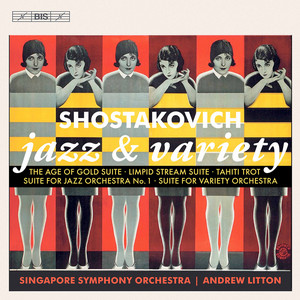 | VI. Waltz No. 1 | Dmitri Shostakovich, Singapore Symphony Orchestra, Andrew Litton | A♭ Major | 1 | 4B | 70 BPM | |
 | Carmen Ballet: Dance | Arthur Fiedler | D Minor | 4 | 7A | 120 BPM | |
 | Raymonda, Act I: Valse fantastique | Alexander Glazunov, Kivov Orchestra, Viktor Fedotov | F Major | 1 | 7B | 180 BPM | |
 | Eugene Onegin - Waltz | Symphony Orchestra of the Russian State TV & Radio Centre | A♭ Major | 1 | 4B | 118 BPM | |
 | Piefke und Pufke-Polka, Op. 235 | Johann Strauss I, Slovak Sinfonietta, Zilina, Christian Pollack | B♭ Major | 2 | 6B | 87 BPM |
- ISRC
- GBLWD9601503
- Label
- L-M Records/RCA Records