- BPM
- 99
- Key
- F Minor
- Camelot
- 4A
Pièces de Clavecin in G minor: 15. La Bergère Annette by Jean-Henri d'Anglebert, Christophe Rousset Song Details
Jean-Henri d'Anglebert, Christophe Rousset's ' "Pièces de Clavecin in G minor: 15. La Bergère Annette" was released on its scheduled release date, August 21, 2000. With This song being less than a minute long, we are pretty confident that this song does not contain any foul language. That being said, this song is pretty short compared to other songs. The song is number 47 out of 65 in D'Anglebert: Pièces de Clavecin by Jean-Henri d'Anglebert, Christophe Rousset. Going off of the ISRC code of this track, we detected that the origin of this track is from United Kingdom. In terms of popularity, Pièces de Clavecin in G minor: 15. La Bergère Annette is currently unknown. Based on the vibe, this track doesn't seem to be that danceable, however its valence properties can make this some somewhat danceable.
BPM and Tempo
The tempo marking of Pièces de Clavecin in G minor: 15. La Bergère Annette by Jean-Henri d'Anglebert, Christophe Rousset is Andante (at a walking pace), since this song has a tempo of 99 BPM. With that information, we can conclude that the song has a slow tempo. The time signature for this track is 4/4.
Music Key
This song is in the music key of F Minor. Because this track belongs in the F Minor key, the camelot key is 4A. So, the perfect camelot match for 4A would be either 4A or 3B. While, a low energy boost can consist of either 4B or 5A. For moderate energy boost, you would use 1A and a high energy boost can either be 6A or 11A. However, if you are looking for a low energy drop, finding a song with a camelot key of 3A would be a great choice. Where 7A would give you a moderate drop, and 2A or 9A would be a high energy drop. Lastly, 7B allows you to change the mood.
Want to find the BPM and music key for other songs? Check out our BPM and Key Finder page!
- Popularity
- 0%
- Loudness
- -19.514 dB
- Acousticness
- 87%
- Danceability
- 36%
- Energy
- 28%
- Instrumentalness
- 0%
- Liveness
- 12%
- Loudness
- 67%
- Speechiness
- 3%
- Valence
- 48%
Recommendations
| Track | Artist | Key | Energy | Camelot | BPM | ||
|---|---|---|---|---|---|---|---|
 | Concerto in B-Flat Major, Op.7, No.3: II. Organo (Adagio e Fuga) ad libitum | George Frideric Handel, Academy of Ancient Music, Richard Egarr | E Major | 0 | 12B | 62 BPM | |
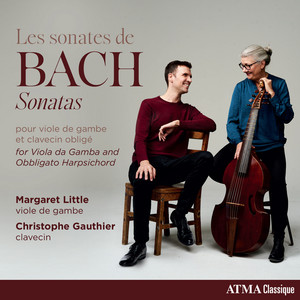 | Suite No.1: La Couperin - Arr. Jean-Baptiste-Antoine Forqueray, for solo harpsichord | Antoine Forqueray, Margaret Little, Christophe Gauthier | D♭ Minor | 2 | 12A | 94 BPM | |
 | 6 Sonates en symphonies, Op. 3, Sonata No. 1: II. Aria. Gratioso e poco piano | Jean-Joseph Cassanéa De Mondonville, Les Musiciens du Louvre, Marc Minkowski | F♯ Major | 0 | 2B | 111 BPM | |
 | Purcell: Dido and Aeneas, Z. 626, Act III: The Witches's Dance | Henry Purcell, Jupiter, Thomas Dunford | F♯ Major | 1 | 2B | 77 BPM | |
 | Trio Sonata in G Major, Op. 2 No. 12. Ciacona | Arcangelo Corelli, Simon Standage, Micaela Comberti, Anthony Pleeth, Trevor Pinnock | A Major | 3 | 11B | 68 BPM | |
 | Concerto in E minor for oboe, strings and basso continuo: IiI. Largo | Han De Vries, Bob van Asperen, Alma Musica Amsterdam | E♭ Minor | 1 | 2A | 86 BPM | |
 | Concerto Armonico No. 6 in E-Flat Major: Vivace | Unico Wilhelm van Wassenaer, Aradia Ensemble, Kevin Mallon | A Major | 2 | 11B | 126 BPM | |
 | Sinfonie a cinque per due violini, alto, tenore, violoncello e basso, Op. 2. Sonata a cinque in C Major, No. 2: IV. Allegro | Tomaso Albinoni, Ensemble 415, Chiara Banchini | A♭ Major | 3 | 4B | 132 BPM | |
![Aria IV: [Siciliana] by Georg Philipp Telemann, La Stagione Frankfurt, Michael Schneider](https://i.scdn.co/image/ab67616d00001e02120149ee16e231fc5b607010) | Aria IV: [Siciliana] | Georg Philipp Telemann, La Stagione Frankfurt, Michael Schneider | E♭ Minor | 1 | 2A | 76 BPM | |
 | Marais: Pièces en trio: Suite No. 5 en mi mineur: V. Sarabande en rondeau | Marin Marais, Ensemble Amalia | C Major | 3 | 8B | 70 BPM | |
 | Lambert: Mes jours s'en vont finir | Michel Lambert, Jean Rondeau, Marc Mauillon, Thomas Dunford, Myriam Rignol | F♯ Minor | 1 | 11A | 84 BPM | |
| Forqueray, A: Pièces de viole, Suite No. 5 en ut mineur: VI. La Sylva. Très tendrement | Antoine Forqueray, Jean Rondeau, Thomas Dunford | B Minor | 1 | 10A | 83 BPM | |
 | Sonata II in G Minor, HWV 387, Op. 2 No. 2: III. Largo | George Frideric Handel, Academy of Ancient Music, Richard Egarr | F♯ Minor | 2 | 11A | 92 BPM | |
 | Suite No. 3 in D Minor: VI. Sarabande. Grave | Jean-Henri d'Anglebert, Francesco Cera | G Minor | 4 | 6A | 86 BPM | |
 | Concerto a 7 in G Major - 2 Oboes, 2 Violins, 2 Violas & B.C., Seibel 214: Vivace (1) | Johann David Heinichen, Il Fondamento, Paul Dombrecht | F♯ Major | 3 | 2B | 122 BPM | |
 | Telemann: Concerto for Recorder and Bassoon in F Major, TWV 52:F1: III. Grave | Georg Philipp Telemann, Nikolaus Harnoncourt, Frans Brüggen, Otto Fleischmann, Concentus Musicus Wien | D Major | 0 | 10B | 127 BPM | |
 | Van Wassenaer: Concerto Armonico No. 2 in B-Flat Major: III. Adagio affettuoso | Unico Wilhelm van Wassenaer, Amsterdam Baroque Orchestra, Ton Koopman | G Minor | 3 | 6A | 78 BPM | |
 | Overture No. 6 in B-Flat Major: II. Largo | Francesco Maria Veracini, L'Arte dell' Arco, Federico Guglielmo | F♯ Major | 0 | 2B | 96 BPM | |
 | Concerto in D Minor; Op. 6 No. 5: III. Moderato | Charles Avison, Café Zimmermann | D♭ Minor | 0 | 12A | 102 BPM | |
 | Concerto for 2 Oboes and Bassoon in C Minor, FWV L:C2: III. Allegro | Johann Friedrich Fasch, Marcel Ponseele, Taka Kitazato, Alain De Rijckere, Il Gardellino | B Minor | 2 | 10A | 96 BPM | |
 | Sinfonia a quattro: I. Allegro assai | František Tůma, Czech Ensemble Baroque, Roman Válek | B Major | 2 | 1B | 83 BPM | |
 | Viola da Gamba Suite in D Major: IX. Tempo di minuet | Carl Friedrich Abel, Paolo Pandolfo | F♯ Major | 1 | 2B | 117 BPM | |
| Concerto for 2 Oboes and Bassoon in C Minor, FWV L:C2: I. Allegro | Johann Friedrich Fasch, Marcel Ponseele, Taka Kitazato, Alain De Rijckere, Il Gardellino | D♭ Major | 1 | 3B | 136 BPM | |
 | Sonata in A Major, No. 6: I. Grave | Arcangelo Corelli, Lucy van Dael, Bob van Asperen | E♭ Major | 1 | 5B | 137 BPM | |
| Sonata in A Major, No. 6: V. Allegro | Arcangelo Corelli, Lucy van Dael, Bob van Asperen | A♭ Major | 2 | 4B | 71 BPM |
- ISRC
- GBBBB9608515
- Label
- L-M Records/RCA Records