- BPM
- 70
- Key
- B♭ Minor
- Camelot
- 3A
Adagio for Strings, Op. 11 by Samuel Barber, Adam Mickiewicz University Academic Choir, Jacek Sykulski Song Details
"Adagio for Strings, Op. 11" by Samuel Barber, Adam Mickiewicz University Academic Choir, Jacek Sykulski had its release date on August 1, 2014. This song is about six minutes long, preciously at 6:14, making this song fairly long compared to other songs. There are a total of 11 in the song's album "Tribute to U.S.A". In this album, this song's track order is #4. Furthermore, we believe that the track originated from Poland. Adagio for Strings, Op. 11 is not that popular right now. In our opinion, the overall tone is not very danceable and projects negative sounds, such as being sad, depressed, or angry.
BPM and Tempo
With Adagio for Strings, Op. 11 by Samuel Barber, Adam Mickiewicz University Academic Choir, Jacek Sykulski having a BPM of 70 with a half-time of 35 BPM and a double-time of 140 BPM, we would consider this track to have a Adagio (slowly with great expression) tempo marking. Because of this, we believe that the song has an overall slow tempo. The time signature for this track is 4/4.
Music Key
This song has a musical key of B♭ Minor. Which also means that the camelot key for this song is 3A. So, the perfect camelot match for 3A would be either 3A or 2B. While, a low energy boost can consist of either 3B or 4A. For moderate energy boost, you would use 12A and a high energy boost can either be 5A or 10A. However, if you are looking for a low energy drop, finding a song with a camelot key of 2A would be a great choice. Where 6A would give you a moderate drop, and 1A or 8A would be a high energy drop. Lastly, 6B allows you to change the mood.
Want to find the BPM and music key for other songs? Check out our BPM and Key Finder page!
- Popularity
- 1%
- Loudness
- -20.757 dB
- Acousticness
- 98%
- Danceability
- 14%
- Energy
- 9%
- Instrumentalness
- 98%
- Liveness
- 11%
- Loudness
- 65%
- Speechiness
- 4%
- Valence
- 3%
Recommendations
| Track | Artist | Key | Energy | Camelot | BPM | ||
|---|---|---|---|---|---|---|---|
 | The Godfather: V. Love Theme | Nino Rota, Riccardo Muti, Massimo Colombo, Filarmonica della Scala, Milan La Scala Philharmonic Orchestra | D♭ Major | 1 | 3B | 88 BPM | |
 | Scottish Fantasy for Violin and Orchestra, Op. 46: I. Introduction: Grave, Adagio cantabile | Max Bruch, Joshua Bell, Academy of St. Martin in the Fields | E♭ Major | 2 | 5B | 60 BPM | |
 | Capriol Suite: 5. Pied-en- l'air | Peter Warlock, Academy of St. Martin in the Fields, Nicholas Kraemer, Sir Neville Marriner | G Major | 1 | 9B | 113 BPM | |
 | Prelude in E Minor, BWV 855/I (Arr. Siloti in B Minor) | Johann Sebastian Bach, Víkingur Ólafsson | B Minor | 1 | 10A | 134 BPM | |
 | Finlandia, Op. 26 | Jean Sibelius, Berliner Philharmoniker, Herbert von Karajan | A♭ Major | 3 | 4B | 67 BPM | |
 | Song of the Birds | Pablo Casals, Sol Gabetta, Amsterdam Sinfonietta | D Major | 1 | 10B | 68 BPM | |
 | Suite from "The Hours" - Movement I | Philip Glass, Michael Riesman, Anne Manson, Manitoba Chamber Orchestra | F Minor | 4 | 4A | 155 BPM | |
 | Albinoni: Adagio in G Minor | Remo Giazotto, Tomaso Albinoni, Sir Neville Marriner, Iona Brown, Academy of St. Martin in the Fields | C Minor | 1 | 5A | 88 BPM | |
 | Concierto de Aranjuez: II. Adagio | Joaquín Rodrigo, John Williams, Louis Frémaux, Philharmonia Orchestra | B Minor | 1 | 10A | 111 BPM | |
 | Debussy / Arr. Roelens: Suite bergamasque, CD 82, L. 75: III. Clair de lune | Claude Debussy, David Oistrakh, Vladimir Yampolsky | D♭ Major | 0 | 3B | 93 BPM | |
 | Gymnopédie No. 3 | Erik Satie, Philippe Entremont | A Minor | 0 | 8A | 131 BPM | |
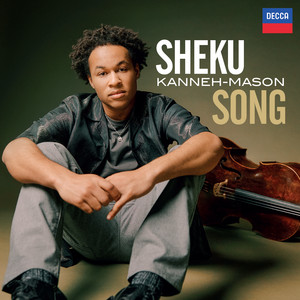 | Come, Sweet Death, BWV 478 (Arr. for 5 Cellos) | Sheku Kanneh-Mason, Hannah Roberts, Ben Davies, Desmond Neysmith, Max Ruisi | C Major | 0 | 8B | 122 BPM | |
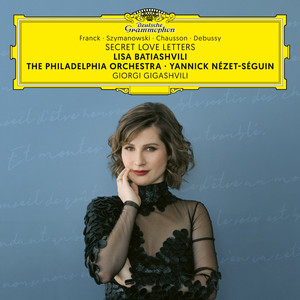 | Beau soir, L. 6 (L. 84) (Arr. Heifetz for Violin and Piano) | Claude Debussy, Lisa Batiashvili, Yannick Nézet-Séguin | F Minor | 1 | 4A | 79 BPM | |
 | Handel / Orch. Hale: Keyboard Suite No. 4 in D Minor, HWV 437: III. Sarabande | George Frideric Handel, Alexander Briger, Academy of St. Martin in the Fields | D Minor | 0 | 7A | 116 BPM | |
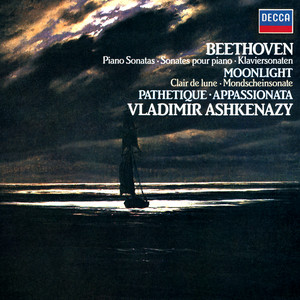 | Piano Sonata No. 14 in C-Sharp Minor, Op. 27 No. 2 "Moonlight": 1. Adagio sostenuto | Ludwig van Beethoven, Vladimir Ashkenazy | D♭ Minor | 0 | 12A | 75 BPM | |
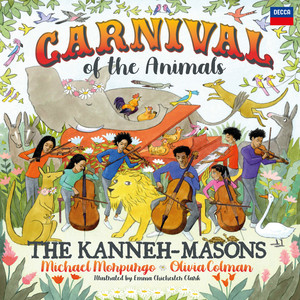 | Carnival of the Animals: The Swan | Camille Saint-Saëns, Isata Kanneh-Mason, Jeneba Kanneh-Mason, Sheku Kanneh-Mason | G Major | 1 | 9B | 65 BPM | |
 | Satie: 6 Gnossiennes: No. 1, Lent | Erik Satie, Anne Queffélec | F Minor | 0 | 4A | 70 BPM | |
 | Adagio for Strings, Op. 11a | London Philharmonic Orchestra | B♭ Minor | 2 | 3A | 78 BPM | |
![Etudes symphoniques (Symphonic Etudes), Op. 13, Adagio and Allegro brillante: Variation 11 [arr. P.I. Tchaikovsky for orchestra] by Robert Schumann, Seattle Symphony Orchestra, Gerard Schwarz](https://i.scdn.co/image/ab67616d00001e029057c124b554163ef1edd618) | Etudes symphoniques (Symphonic Etudes), Op. 13, Adagio and Allegro brillante: Variation 11 [arr. P.I. Tchaikovsky for orchestra] | Robert Schumann, Seattle Symphony Orchestra, Gerard Schwarz | A Minor | 0 | 8A | 104 BPM | |
 | La passante du Sans-Souci | Georges Delerue, Renaud Capuçon, Les Siècles, Duncan Ward | A Minor | 1 | 8A | 77 BPM | |
 | Recomposed By Max Richter: Vivaldi, The Four Seasons: Winter 2 | Max Richter, Daniel Hope, Konzerthaus Kammerorchester Berlin, Andre de Ridder | A♭ Major | 1 | 4B | 141 BPM | |
 | Sicilienne, Op. 78 | Gabriel Fauré, Harriet Krijgh, Kamilla Isanbaeva | G Minor | 1 | 6A | 123 BPM | |
 | Adagio from Violin Sonata in G Minor, Op. 5 No. 5 (Arr. Leopold Stokowski) | Arcangelo Corelli, Matthias Bamert, BBC Philharmonic | G Minor | 0 | 6A | 175 BPM | |
 | Piano Concerto in A minor, Op. 16: II. Adagio - Live | Edvard Grieg, Alice Sara Ott, Symphonieorchester des Bayerischen Rundfunks, Esa-Pekka Salonen | D Major | 2 | 10B | 121 BPM | |
 | The Poet Acts | Philip Glass | G Minor | 0 | 6A | 84 BPM |
- ISRC
- PLA160239504
- Label
- L-M Records/RCA Records