- BPM
- 184
- Key
- B Minor
- Camelot
- 10A
Prince Igor: Polovtsian Dances: e. Moderato alla breve by Alexander Borodin, Berliner Philharmoniker, Herbert von Karajan Song Details
Alexander Borodin, Berliner Philharmoniker, Herbert von Karajan's 'Prince Igor: Polovtsian Dances: e. Moderato alla breve' had a release date set for January 1, 1972. With This song being less than two minutes long, at 1:24, we are fairly confident that this song is not explicit and is safe for all ages. Based on the duration of this song, this song duration is much smaller than the average song duration. The track order of this song in Herbert von Karajan, Berliner Philharmoniker's "Herbert von Karajan - Invitation to the Dance" album is number 13 out of 17. On top of that, Germany appears to be the country where this track was created. The popularity of Prince Igor: Polovtsian Dances: e. Moderato alla breve is currently below average in popularity right now. In our opinion, the overall tone is not very danceable and projects negative sounds, such as being sad, depressed, or angry.
BPM and Tempo
We consider the tempo marking of Prince Igor: Polovtsian Dances: e. Moderato alla breve by Alexander Borodin, Berliner Philharmoniker, Herbert von Karajan to be Presto (very, very fast) because the track has a tempo of 184 BPM, a half-time of 92BPM, and a double-time of 368 BPM. Based on that, the speed of the song's tempo is fast. The time signature for this track is 4/4.
Music Key
B Minor is the music key of this track. This also means that this song has a camelot key of 10A. So, the perfect camelot match for 10A would be either 10A or 9B. While, a low energy boost can consist of either 10B or 11A. For moderate energy boost, you would use 7A and a high energy boost can either be 12A or 5A. However, if you are looking for a low energy drop, finding a song with a camelot key of 9A would be a great choice. Where 1A would give you a moderate drop, and 8A or 3A would be a high energy drop. Lastly, 1B allows you to change the mood.
Want to find the BPM and music key for other songs? Check out our BPM and Key Finder page!
- Popularity
- 21%
- Loudness
- -20.425 dB
- Acousticness
- 96%
- Danceability
- 8%
- Energy
- 27%
- Instrumentalness
- 92%
- Liveness
- 12%
- Loudness
- 66%
- Speechiness
- 4%
- Valence
- 30%
Recommendations
| Track | Artist | Key | Energy | Camelot | BPM | ||
|---|---|---|---|---|---|---|---|
 | Symphony No. 7 in E Major, WAB 107 (Ed. Haas): I. Allegro moderato | Anton Bruckner, Wiener Philharmoniker, Herbert von Karajan | B Major | 1 | 1B | 87 BPM | |
 | Symphonie fantastique, H. 48: II. Un bal. Valse | Hector Berlioz, Berliner Philharmoniker, Herbert von Karajan | A Major | 1 | 11B | 176 BPM | |
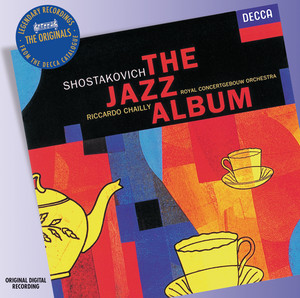 | Jazz Suite No. 2: II. Lyric Waltz | Dmitri Shostakovich, Royal Concertgebouw Orchestra, Riccardo Chailly | C Minor | 1 | 5A | 84 BPM | |
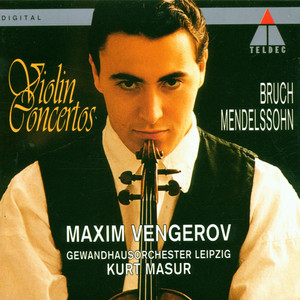 | Mendelssohn: Violin Concerto in E Minor, Op. 64, MWV O14: II. Andante | Felix Mendelssohn, Maxim Vengerov, Kurt Masur, Gewandhausorchester | C Major | 1 | 8B | 96 BPM | |
 | Suite No. 3, P. 172: I. Italiana: Andantino | Ottorino Respighi, RTÉ National Symphony Orchestra | B♭ Major | 1 | 6B | 94 BPM | |
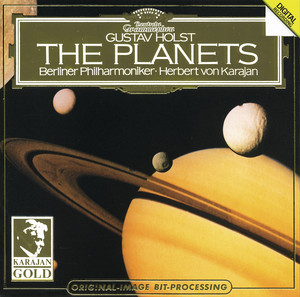 | The Planets, Op. 32: 3. Mercury, the Winged Messenger | Gustav Holst, Berliner Philharmoniker, Herbert von Karajan | A Major | 1 | 11B | 108 BPM | |
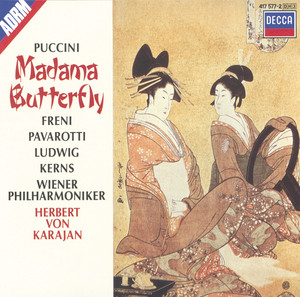 | Madama Butterfly, Act III: Intermezzo – Oh eh! Oh eh! | Giacomo Puccini, Wiener Philharmoniker, Herbert von Karajan | F Major | 1 | 7B | 81 BPM | |
 | Brook Green Suite: II. Air | Gustav Holst, English Sinfonia, Howard Griffiths | E♭ Major | 0 | 5B | 128 BPM | |
 | Egmont, Op. 84: Overture | Ludwig van Beethoven, Berliner Philharmoniker, Herbert von Karajan | F Minor | 2 | 4A | 135 BPM | |
 | Suite pastorale: I. Idylle | Emmanuel Chabrier, Wiener Philharmoniker, John Eliot Gardiner | F Major | 0 | 7B | 105 BPM | |
 | Unter Donner und Blitz, Polka, Op. 324 | Johann Strauss II, Berliner Philharmoniker, Herbert von Karajan | G Major | 6 | 9B | 85 BPM | |
 | Boléro, M. 81 | Maurice Ravel, Berliner Philharmoniker, Pierre Boulez | C Major | 1 | 8B | 136 BPM | |
 | Symphony No. 4 In D Minor, Op. 120: 3. Scherzo | Robert Schumann, Wiener Philharmoniker, Herbert von Karajan | F♯ Major | 0 | 2B | 95 BPM | |
 | Morgenblätter Waltz, Op. 279 | Johann Strauss II, Berliner Philharmoniker, Herbert von Karajan | C Major | 2 | 8B | 96 BPM | |
 | Serenata notturna in D Major, K. 239: III. Rondeau (Allegretto - Adagio - Allegro) | Wolfgang Amadeus Mozart, Thomas Brandis, Emil Maas, Neithart Resa, Rainer Zepperitz, Berliner Philharmoniker, Herbert von Karajan | F♯ Minor | 7 | 11A | 132 BPM | |
 | Rossini: The Barber of Seville: Overture | Gioachino Rossini, Herbert von Karajan, Philharmonia Orchestra | E Major | 1 | 12B | 90 BPM | |
 | Pelléas et Mélisande, CD 93, Suite (Arr. Leinsdorf): II. Act II. Opening - Interlude 3 - Interlude 4 | Claude Debussy, Berliner Philharmoniker, Claudio Abbado | B♭ Minor | 0 | 3A | 111 BPM | |
 | Overture "A Midsummer Night's Dream", Op. 21 | Felix Mendelssohn, Boston Symphony Orchestra, Seiji Ozawa | E Major | 1 | 12B | 139 BPM | |
 | Elegy, Op. 58 | Edward Elgar, English Northern Philharmonia, David Lloyd-Jones | F Minor | 0 | 4A | 84 BPM | |
 | Piano Concerto No. 2 in F Major, Op. 102: III. Allegro | Dmitri Shostakovich, I Musici de Montréal, Maxim Shostakovich | F Major | 3 | 7B | 164 BPM | |
 | Scheherazade: The voice of Scheherazade | Nikolai Rimsky-Korsakov, Lars Hjalmar Joakim | G Major | 1 | 9B | 132 BPM | |
 | Orpheus In The Underworld (Orphée aux enfers): Overture | Jacques Offenbach, Berliner Philharmoniker, Herbert von Karajan | G Major | 1 | 9B | 82 BPM | |
| Jazz Suite No. 1: I. Waltz | Dmitri Shostakovich, Royal Concertgebouw Orchestra, Riccardo Chailly | C Minor | 0 | 5A | 171 BPM | |
 | Prince Igor, Act II: Polovtsian Dances, Dance IV | Alexander Borodin, Choir of Mariinsky Theatre, Saint Petersburg, Paavo Järvi, Orchestre Philharmonique de Radio France | G Major | 3 | 9B | 105 BPM | |
 | Symphony No. 5: IV. Adagietto. Sehr langsam | Gustav Mahler, Berliner Philharmoniker, Claudio Abbado | F Major | 0 | 7B | 91 BPM |
- ISRC
- DEF057001347
- Label
- L-M Records/RCA Records