- BPM
- 85
- Key
- D Minor
- Camelot
- 7A
English Folk Song Suite: 1. March: Seventeen come Sunday by Ralph Vaughan Williams, Academy of St. Martin in the Fields, Sir Neville Marriner Song Details
"English Folk Song Suite: 1. March: Seventeen come Sunday" by Ralph Vaughan Williams, Academy of St. Martin in the Fields, Sir Neville Marriner had its release date on August 9, 2023. The duration of This song is about 3 minutes long, at 3:20. Based on our data, This song appears to be safe for all ages and is not considered explicit. This track is about the average length of a typical track. The song is number 26 out of 36 in Best of Ralph Vaughan Williams by Ralph Vaughan Williams, Bryn Terfel. Going off of the ISRC code of this track, we detected that the origin of this track is from United Kingdom. English Folk Song Suite: 1. March: Seventeen come Sunday is unknown right now. In our opinion, the overall tone is not very danceable and projects negative sounds, such as being sad, depressed, or angry.
BPM and Tempo
The tempo marking of English Folk Song Suite: 1. March: Seventeen come Sunday by Ralph Vaughan Williams, Academy of St. Martin in the Fields, Sir Neville Marriner is Andante (at a walking pace), since this song has a tempo of 85 BPM. With that information, we can conclude that the song has a slow tempo. This song can go great with yoga or pilates. The time signature for this track is 4/4.
Music Key
This song has a musical key of D Minor. Because this track belongs in the D Minor key, the camelot key is 7A. So, the perfect camelot match for 7A would be either 7A or 6B. While, a low energy boost can consist of either 7B or 8A. For moderate energy boost, you would use 4A and a high energy boost can either be 9A or 2A. However, if you are looking for a low energy drop, finding a song with a camelot key of 6A would be a great choice. Where 10A would give you a moderate drop, and 5A or 12A would be a high energy drop. Lastly, 10B allows you to change the mood.
Want to find the BPM and music key for other songs? Check out our BPM and Key Finder page!
- Popularity
- 0%
- Loudness
- -26.17 dB
- Acousticness
- 96%
- Danceability
- 9%
- Energy
- 2%
- Instrumentalness
- 84%
- Liveness
- 8%
- Loudness
- 56%
- Speechiness
- 4%
- Valence
- 3%
Recommendations
| Track | Artist | Key | Energy | Camelot | BPM | ||
|---|---|---|---|---|---|---|---|
 | 49th Parallel Suite: Prelude | RTE Concert Orchestra, Ralph Vaughan Williams | G Major | 1 | 9B | 87 BPM | |
 | A Shropshire Lad | George Butterworth, London Philharmonic Orchestra, Sir Adrian Boult | F Minor | 1 | 4A | 88 BPM | |
 | Prelude: Allegro - Meno mosso - Alla breve (Allegro) - Adagio - | Ottorino Respighi, Seattle Symphony Orchestra, Gerard Schwarz | D Major | 1 | 10B | 74 BPM | |
 | Who is Sylvia?, Op.18, No.2 - Instrumental | Gerald Finzi, Nicolas Fleury, Aurora Orchestra, Nicholas Collon | E♭ Major | 1 | 5B | 138 BPM | |
 | Fauré: Pavane, Op. 50 | Gabriel Fauré, New Philharmonia Orchestra/Sir David Willcocks/Gareth Morris, Gareth Morris, Sir David Willcocks, New Philharmonia Orchestra | F♯ Minor | 0 | 11A | 130 BPM | |
 | Rhapsody Under A High Sky | Archibald James Potter, RTE Sinfonietta, Proinnsias O'Duinn | C Major | 1 | 8B | 106 BPM | |
| Introit, Op. 6 | Gerald Finzi, Thomas Gould, Aurora Orchestra, Nicholas Collon | F Major | 1 | 7B | 96 BPM | |
 | English Folk Song Suite: 3. March: Folk Songs from Somerset | Ralph Vaughan Williams, Academy of St. Martin in the Fields, Sir Neville Marriner | B♭ Major | 3 | 6B | 119 BPM | |
 | St. Paul's Suite, Op. 29 No. 2, H 118: 4. Finale (The Dargasson): Allegro | Gustav Holst, Saint Paul Chamber Orchestra, Christopher Hogwood | E♭ Minor | 1 | 2A | 100 BPM | |
 | An Irish Symphony: In the Antrim Hills | Hamilton Harty, RTÉ National Symphony Orchestra, Proinnsias O'Duinn | F Major | 0 | 7B | 79 BPM | |
 | Ravel: Ma mère l'Oye, M. 60: V. Le jardin féerique | Maurice Ravel, Rotterdam Philharmonic Orchestra/Yannick Nézet-Séguin, Yannick Nézet-Séguin, Rotterdam Philharmonic Orchestra | C Major | 0 | 8B | 89 BPM | |
 | Sailing By | Ronald Binge, Slovak Radio Symphony Orchestra, Ernest Tomlinson | F Major | 0 | 7B | 80 BPM | |
 | Sibelius : Symphony No.5 in E flat major Op.82 : II Andante mosso, quasi allegretto | Jean Sibelius, Sakari Oramo, City Of Birmingham Symphony Orchestra | G Major | 0 | 9B | 142 BPM | |
 | Pelleas et Melisande Suite, Op. 80: III. Sicilienne | Gabriel Fauré, RTE Sinfonietta, John Georgiadis | D Minor | 0 | 7A | 70 BPM | |
 | Finlandia, Op. 26 | Jean Sibelius, Thomas Søndergård, BBC National Orchestra Of Wales | A♭ Major | 2 | 4B | 70 BPM | |
 | Symphony No.3 In C Minor, Op.78 "Organ Symphony": 1b. Poco adagio | Camille Saint-Saëns, Simon Preston, Berliner Philharmoniker, James Levine | D♭ Major | 0 | 3B | 80 BPM | |
 | Crown Imperial: A Coronation March | William Walton, BBC Concert Orchestra, Barry Wordsworth | C Major | 4 | 8B | 121 BPM | |
 | Five Variants of "Dives and Lazarus" | Ralph Vaughan Williams, Iona Brown, Kenneth Heath, Skaila Kanga, Academy of St. Martin in the Fields, Sir Neville Marriner | B Minor | 1 | 10A | 87 BPM | |
 | The Ashokan Farewell | Jay Ungar, Nil, Captain John Perkins, The Band Of H.M. Royal Marines, Plymouth | D Major | 0 | 10B | 88 BPM | |
 | Fanfare for the Common Man | Aaron Copland, Leonard Bernstein, New York Philharmonic | B♭ Major | 2 | 6B | 113 BPM | |
 | A Moorside Suite, H. 173: Nocturne | Gustav Holst, Royal Northern Sinfonia, David Lloyd-Jones | B Minor | 0 | 10A | 80 BPM | |
 | Serenade in D Major: II. Scherzo. Allegro vivace | Dame Ethel Smyth, Odaline de la Martinez, BBC Philharmonic | G Major | 1 | 9B | 148 BPM | |
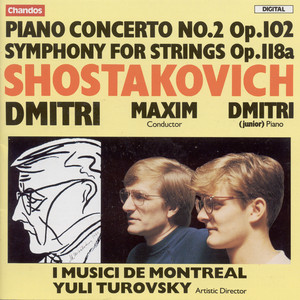 | Piano Concerto No. 2 in F Major, Op. 102: II. Andante | Dmitri Shostakovich, I Musici de Montréal, Maxim Shostakovich | C Minor | 0 | 5A | 177 BPM | |
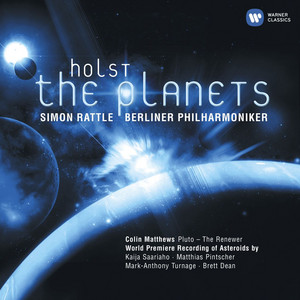 | The Planets - Suite for large orchestra, Op.32: I. Mars, the Bringer of War (Allegro) | Sir Simon Rattle, Berliner Philharmoniker | C Major | 3 | 8B | 153 BPM | |
 | Orpheo ed Euridice, Wq. 30, Act II: Dance of the Blessed Spirits | Christoph Willibald Gluck, Eugene Ormandy, Philadelphia Orchestra | D Minor | 1 | 7A | 67 BPM |
- ISRC
- GBF078010471
- Label
- L-M Records/RCA Records