- BPM
- 121
- Key
- D Major
- Camelot
- 10B
Introduction and Rondo Capriccioso, Op. 28: Più allegro by Camille Saint-Saëns, William Steinberg, Jascha Heifetz Song Details
On 1971, the song "Introduction and Rondo Capriccioso, Op. 28: Più allegro" was released by Camille Saint-Saëns, William Steinberg, Jascha Heifetz. With This song being less than a minute long, we are pretty confident that this song does not contain any foul language. That being said, this song is pretty short compared to other songs. The track order of this song in Jascha Heifetz's "Heifetz: Showpieces" album is number 10 out of 13. Based on our statistics, Introduction and Rondo Capriccioso, Op. 28: Più allegro's popularity is not that popular right now. The overall mood can be danceable to some, especially with it's high amount of postive energy.
BPM and Tempo
We consider the tempo marking of Introduction and Rondo Capriccioso, Op. 28: Più allegro by Camille Saint-Saëns, William Steinberg, Jascha Heifetz to be Allegro (fast, quick, and bright) because the track has a tempo of 121 BPM, a half-time of 60BPM, and a double-time of 242 BPM. Based on that, the speed of the song's tempo is fast. Activities such as, walking, can go well with this song. The time signature for this track is 4/4.
Music Key
D Major is the music key of this track. This also means that this song has a camelot key of 10B. So, the perfect camelot match for 10B would be either 10B or 11A. While, 11B can give you a low energy boost. For moderate energy boost, you would use 7B and a high energy boost can either be 12B or 5B. Though, if you want a low energy drop, you should looking for songs with either a camelot key of 10A or 9B will give you a low energy drop, 1B would be a moderate one, and 8B or 3B would be a high energy drop. Lastly, 7A allows you to change the mood.
Want to find the BPM and music key for other songs? Check out our BPM and Key Finder page!
- Popularity
- 12%
- Loudness
- -20.558 dB
- Acousticness
- 70%
- Danceability
- 57%
- Energy
- 37%
- Instrumentalness
- 77%
- Liveness
- 38%
- Loudness
- 66%
- Speechiness
- 4%
- Valence
- 80%
Recommendations
| Track | Artist | Key | Energy | Camelot | BPM | ||
|---|---|---|---|---|---|---|---|
 | Symphony No. 5: IV. Adagietto. Sehr langsam | Gustav Mahler, Berliner Philharmoniker, Claudio Abbado | F Major | 0 | 7B | 91 BPM | |
 | 3 Romances sans paroles, Op. 17: No. 3 in A-Flat Major. Andante moderato | Gabriel Fauré, Kun-Woo Paik | A♭ Major | 0 | 4B | 65 BPM | |
 | Liebesleid (Love's Sorrow) | Fritz Kreisler, Sergei Rachmaninoff, RueiBin Chen | A Major | 2 | 11B | 98 BPM | |
 | Saint-Saëns: Le carnaval des animaux, R 125: VII. Aquarium | Camille Saint-Saëns, Gennady Rozhdestvensky, Alain Meunier, Amy Flammer, Didier Benetti, Jean Dupouy, Jeanne-Marie Conquier, Philippe Pierlot, Viktoria Postnikova | A Minor | 1 | 8A | 134 BPM | |
 | Romeo and Juliet, Op. 64: No. 13 Dance of the Knights | Sergei Prokofiev, Orchestra of the Royal Opera House, Covent Garden, Mark Ermler | C Major | 1 | 8B | 73 BPM | |
 | Carnival of the Animals, R. 125: Introduction and Royal March of the Lion | Camille Saint-Saëns, Philippe Entremont, Gaby Casadesus, Yo-Yo Ma, Michel Cerruti, Michel Cals, Régis Pasquier, Yan Pascal Tortelier, Gabin Lauridon, Gerard Causse, Alain Marion, Michel Arrignon | G Major | 2 | 9B | 90 BPM | |
 | Morgen, Op. 27 No. 4 (Arr. Reger for Piano) | Richard Strauss, Angela Hewitt | A Major | 2 | 11B | 143 BPM | |
 | Bruch : Violin Concerto No.1 in G minor Op.26 : III Finale - Allegro energico | Max Bruch, Maxim Vengerov, Kurt Masur, Gewandhausorchester Leipzig | G Major | 2 | 9B | 90 BPM | |
 | Zigeunerweisen, Op. 20: II. Lento | Pablo de Sarasate, Jascha Heifetz, William Steinberg, RCA Victor Symphony Orchestra | C Minor | 1 | 5A | 101 BPM | |
 | Children's Album No. 1 "Pictures of Childhood": No. 1, Andantino | Aram Khachaturian, Charlene Farrugia | A♭ Major | 0 | 4B | 84 BPM | |
 | Paganini: 24 Caprices, Op. 1: No. 24 in A Minor | Niccolò Paganini, Itzhak Perlman | A Minor | 1 | 8A | 111 BPM | |
 | The Lark | Mikhail Glinka, Evgeny Kissin | B♭ Minor | 0 | 3A | 96 BPM | |
 | Les Contes d'Hoffmann / Act 4: Entr'acte (Barcarolle) | Jacques Offenbach, Staatskapelle Dresden, Silvio Varviso | D Major | 0 | 10B | 121 BPM | |
 | Suite bergamasque, L. 75: III. Clair de lune | Claude Debussy, Alice Sara Ott | D♭ Major | 0 | 3B | 132 BPM | |
 | Symphony No. 5 In C Sharp Minor: 4. Adagietto (Sehr langsam) | Gustav Mahler, Gyeonggi Philharmonic Orchestra, Shi-Yeon Sung | F Major | 0 | 7B | 82 BPM | |
 | Barber: Adagio for Strings, Op. 11 | Samuel Barber, Philadelphia Orchestra, Eugene Ormandy | B♭ Minor | 1 | 3A | 80 BPM | |
 | Touch Her Soft Lips and Part (From "Henry V") | William Walton, John Rutter, Aurora Orchestra | D Major | 2 | 10B | 108 BPM | |
 | Erik Satie: Gymnopédie No. 1 | Pyotr Godunov, Nokaru | C Major | 2 | 8B | 118 BPM | |
 | Serenade for Strings in E Major, Op. 22, B. 52: I. Moderato | Antonín Dvořák, Prague Chamber Orchestra, Petr Skvor | E Major | 1 | 12B | 83 BPM | |
 | Scarborough Fair (Arr. Parkin for Cello and Guitar) | Traditional, Sheku Kanneh-Mason, Plínio Fernandes | D Major | 0 | 10B | 117 BPM | |
 | Sonata No. 42 in D Minor (Arr. Ólafsson) | Domenico Cimarosa, Víkingur Ólafsson | D Minor | 0 | 7A | 61 BPM | |
 | Introduction and Rondo capriccioso in A Minor | Camille Saint-Saëns, Dong-Suk Kang, Polish National Radio Symphony Orchestra, Antoni Wit | A Minor | 1 | 8A | 91 BPM | |
 | Romance, Op. 22: No. 1, Andante Molto | Clara Schumann, Carl Schwarz | C Major | 2 | 8B | 118 BPM | |
 | Khachaturian: Spartacus (Highlights from the Ballet): Adagio of Spartacus and Phrygia | Aram Khachaturian, London Symphony Orchestra | A♭ Major | 1 | 4B | 88 BPM | |
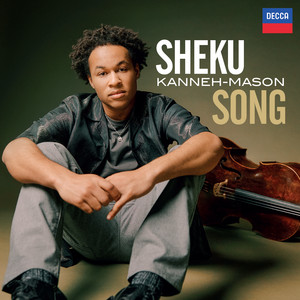 | Myfanwy (Arr. Kanneh-Mason for Solo Cello) | Sheku Kanneh-Mason | C Major | 0 | 8B | 122 BPM |
- ISRC
- This song does not have an ISRC.
- Label
- L-M Records/RCA Records