- BPM
- 103
- Key
- B♭ Minor
- Camelot
- 3A
Ragtime (Version for Solo Piano) by Igor Stravinsky, Ronald Lumsden Song Details
"Ragtime (Version for Solo Piano)" by Igor Stravinsky, Ronald Lumsden had its release date on June 1, 1978. With this song being about 5 minutes long, at This song is fairly a long song compared to the average song length. This song does not have an "Explicit" tag, making it safe for all ages. There are a total of 20 in the song's album "Stravinsky: Symphonies Of Wind Instruments". In this album, this song's track order is #13. Furthermore, we believe that the track originated from United Kingdom. In terms of popularity, Ragtime (Version for Solo Piano) is currently unknown. Although the tone can be danceable to some, this track does projects more of a negative sound rather than a postive one.
BPM and Tempo
With Ragtime (Version for Solo Piano) by Igor Stravinsky, Ronald Lumsden having a BPM of 103 with a half-time of 52 BPM and a double-time of 206 BPM, we would consider this track to have a Andante (at a walking pace) tempo marking. Because of this, we believe that the song has an overall slow tempo. The time signature for this track is 4/4.
Music Key
This song is in the music key of B♭ Minor. Which also means that the camelot key for this song is 3A. So, the perfect camelot match for 3A would be either 3A or 2B. While, a low energy boost can consist of either 3B or 4A. For moderate energy boost, you would use 12A and a high energy boost can either be 5A or 10A. However, if you are looking for a low energy drop, finding a song with a camelot key of 2A would be a great choice. Where 6A would give you a moderate drop, and 1A or 8A would be a high energy drop. Lastly, 6B allows you to change the mood.
Want to find the BPM and music key for other songs? Check out our BPM and Key Finder page!
- Popularity
- 0%
- Loudness
- -27.589 dB
- Acousticness
- 98%
- Danceability
- 48%
- Energy
- 2%
- Instrumentalness
- 78%
- Liveness
- 11%
- Loudness
- 54%
- Speechiness
- 6%
- Valence
- 5%
Recommendations
| Track | Artist | Key | Energy | Camelot | BPM | ||
|---|---|---|---|---|---|---|---|
 | Poulenc: Concerto for Two Pianos in D Minor, FP 61: III. Finale. Allegro molto | Francis Poulenc, James Conlon, François-René Duchâble, Jean-Philippe Collard, Rotterdam Philharmonic Orchestra | D Major | 1 | 10B | 105 BPM | |
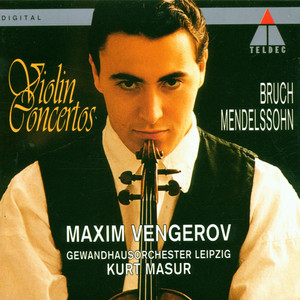 | Mendelssohn: Violin Concerto in E Minor, Op. 64, MWV O14: II. Andante | Felix Mendelssohn, Maxim Vengerov, Kurt Masur, Gewandhausorchester | C Major | 1 | 8B | 96 BPM | |
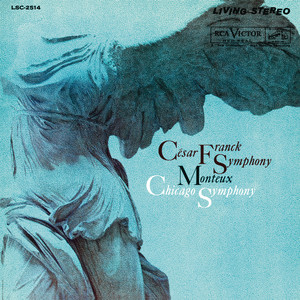 | Symphony in D Minor, FWV 48 (Remastered): II. Allegretto | César Franck, Pierre Monteux, Chicago Symphony Orchestra | E♭ Minor | 0 | 2A | 72 BPM | |
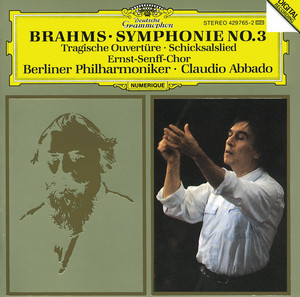 | Symphony No. 3 in F Major, Op. 90: IV. Allegro | Johannes Brahms, Berliner Philharmoniker, Claudio Abbado | C Major | 1 | 8B | 79 BPM | |
 | Stravinsky: The Rite of Spring, Pt. 1 "Adoration of the Earth": Introduction - Augurs of Spring - Dances of the Young Girls - Ritual of Abduction | Igor Stravinsky, Sir Simon Rattle, City Of Birmingham Symphony Orchestra | A Major | 1 | 11B | 103 BPM | |
 | Symphony No. 3 in C Minor, Op. 78 "Organ": II. Allegro moderato | Camille Saint-Saëns, Eugene Ormandy, Philadelphia Orchestra | F Minor | 1 | 4A | 84 BPM | |
 | Fontane di Roma, P. 106: III. La fontana di Trevi al meriggio | Ottorino Respighi, New York Philharmonic, Giuseppe Sinopoli | G Minor | 1 | 6A | 105 BPM | |
 | Prince Igor: Polovtsian Dances (Remastered): No. 17c, Allegro | Alexander Borodin, Leonard Bernstein, New York Philharmonic | D Major | 3 | 10B | 70 BPM | |
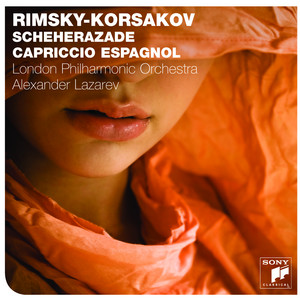 | Scheherazade: Storm at Sea | Nikolai Rimsky-Korsakov, Lars Hjalmar Joakim | C Major | 4 | 8B | 91 BPM | |
 | Organ Concerto in G Minor, FP 93: IV. Tempo allegro. Molto agitato | Francis Poulenc, Philippe Lefebvre, Orchestre National de Lille, Jean-Claude Casadesus | B♭ Minor | 0 | 3A | 133 BPM | |
 | Ligeti : Romanian Concerto : IV Molto vivace | György Ligeti, Jonathan Nott, Berliner Philharmoniker | F Major | 2 | 7B | 96 BPM | |
 | The Three-Cornered Hat: Suite No. 2 - Three Dances, II. The Miller's Dance - Farruca | Manuel de Falla, Philadelphia Orchestra, Raphael Frühbeck de Burgos | G Major | 2 | 9B | 78 BPM | |
 | Verklärte Nacht, Op. 4 (Version for String Orchestra): I. Grave | Arnold Schoenberg, Danish National Symphony Orchestra, Fabio Luisi | D Minor | 2 | 7A | 79 BPM | |
 | Symphony No. 8 in C Minor, WAB 108: II. Scherzo: Allegro moderato - Trio. Langsam | Anton Bruckner, Wiener Philharmoniker, Pierre Boulez | D♭ Major | 1 | 3B | 125 BPM | |
 | Symphony No. 5: II. Stürmisch bewegt, mit größter Vehemenz | Gustav Mahler, Wiener Philharmoniker, Pierre Boulez | B♭ Minor | 2 | 3A | 82 BPM | |
 | Eine Alpensinfonie: VIII. Stille vor den Sturm - Gewitter und Sturm, Abstieg - Sonnenuntergang | Richard Strauss, Bernard Haitink, London Symphony Orchestra | F♯ Major | 2 | 2B | 73 BPM | |
 | Symphony No. 8 in G Minor, Op. 88, B. 163: I. Allegro con brio | Antonín Dvořák, London Symphony Orchestra, Sir Colin Davis | G Major | 1 | 9B | 139 BPM | |
 | Requiem Canticles: Libera me | Igor Stravinsky, Sally Burgess, Roderick Williams, Simon Joly Chorale, Philharmonia Orchestra, Robert Craft | B♭ Major | 3 | 6B | 136 BPM | |
 | Aladdin Suite, Op. 34, FS 89: IV. Chinese Dance | Carl Nielsen, South Jutland Symphony Orchestra, Niklas Willen | E Minor | 1 | 9A | 96 BPM | |
 | Japanese Suite, Op. 33, H. 126: VI. Finale. Dance of the Wolves | Gustav Holst, Ulster Orchestra, Joann Falletta | C Minor | 3 | 5A | 103 BPM | |
 | Schoenberg: Verklärte Nacht, Op. 4: IV. Adagio (1943 Version) | Arnold Schoenberg, Daniel Barenboim, Chicago Symphony Orchestra | D Major | 1 | 10B | 82 BPM | |
| Schoenberg: Verklärte Nacht, Op. 4: II. Molto rallentando (1943 Version) | Arnold Schoenberg, Daniel Barenboim, Chicago Symphony Orchestra | E Major | 2 | 12B | 76 BPM | |
 | Elgar: Cello Concerto in E Minor, Op. 85: II. Lento - Allegro molto | Edward Elgar, Sir John Barbirolli, London Symphony Orchestra | G Major | 2 | 9B | 82 BPM | |
 | Enigma Variations, Op. 36: Theme. Andante | Edward Elgar, BBC Symphony Orchestra, Leonard Bernstein | G Minor | 0 | 6A | 113 BPM | |
 | Concerto for Orchestra, Sz. 116: V. Finale. Pesante – Presto | Béla Bartók, Chicago Symphony Orchestra, Pierre Boulez | A♭ Major | 2 | 4B | 127 BPM |
- ISRC
- GBLWD9105813
- Label
- L-M Records/RCA Records