- BPM
- 60
- Key
- B♭ Major
- Camelot
- 6B
Works For Cello: Nocturne. Adapted From The Six Piano Pieces, Op. 19 by Alexander Rudin / Instrumental Ensemble "Musica Viva", Conductors: Nikolay Alekseyev & Alexander Rudin Song Details
"Works For Cello: Nocturne. Adapted From The Six Piano Pieces, Op. 19" by Alexander Rudin / Instrumental Ensemble "Musica Viva", Conductors: Nikolay Alekseyev & Alexander Rudin had its release date on 1994. With this song being around four minutes long, at 4:01, the duration of this song is pretty average compared to other songs. This track is safe for children and doesn't appear to contain any foul language, since the "Explicit" tag was not present in this track. There are a total of 8 in the song's album "Tchaikovsky: Works For Cello And Orchestra. Serenade For Strings.". In this album, this song's track order is #2. Furthermore, we believe that the track originated from United States. Works For Cello: Nocturne. Adapted From The Six Piano Pieces, Op. 19 is not that popular right now. In our opinion, the overall tone is not very danceable and projects negative sounds, such as being sad, depressed, or angry.
BPM and Tempo
With Works For Cello: Nocturne. Adapted From The Six Piano Pieces, Op. 19 by Alexander Rudin / Instrumental Ensemble "Musica Viva", Conductors: Nikolay Alekseyev & Alexander Rudin having a BPM of 60 with a half-time of 30 BPM and a double-time of 120 BPM, we would consider this track to have a Lento (slowly) tempo marking. Because of this, we believe that the song has an overall slow tempo. The time signature for this track is 4/4.
Music Key
B♭ Major is the music key of this track. Or for those who are familiar with the camelot wheel, this song has a camelot key of 6B. So, the perfect camelot match for 6B would be either 6B or 7A. While, 7B can give you a low energy boost. For moderate energy boost, you would use 3B and a high energy boost can either be 8B or 1B. Though, if you want a low energy drop, you should looking for songs with either a camelot key of 6A or 5B will give you a low energy drop, 9B would be a moderate one, and 4B or 11B would be a high energy drop. Lastly, 3A allows you to change the mood.
Want to find the BPM and music key for other songs? Check out our BPM and Key Finder page!
- Popularity
- 1%
- Loudness
- -24.438 dB
- Acousticness
- 98%
- Danceability
- 10%
- Energy
- 7%
- Instrumentalness
- 77%
- Liveness
- 13%
- Loudness
- 59%
- Speechiness
- 6%
- Valence
- 4%
Recommendations
| Track | Artist | Key | Energy | Camelot | BPM | ||
|---|---|---|---|---|---|---|---|
 | Pavane Pour Une Infante Defunte, M.19 (Arr. for Oboe & Orchestra) | Maurice Ravel, Albrecht Mayer, Academy of St. Martin in the Fields, Mathias Mönius | F♯ Minor | 1 | 11A | 88 BPM | |
 | Cello Concerto in C Minor (spuriously attrib. to Johann Christian Bach): II. Adagio molto espressivo | Henri Casadesus, Yuli Turovsky, I Musici de Montréal | A♭ Major | 0 | 4B | 92 BPM | |
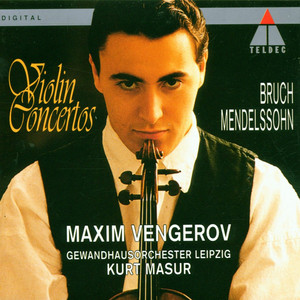 | Bruch : Violin Concerto No.1 in G minor Op.26 : III Finale - Allegro energico | Max Bruch, Maxim Vengerov, Kurt Masur, Gewandhausorchester Leipzig | G Major | 2 | 9B | 90 BPM | |
 | Violin Concerto in D Major, Op. 77: II. Adagio | Johannes Brahms, Takako Nishizaki, Slovak Philharmonic, Stephen Gunzenhauser | C Major | 1 | 8B | 136 BPM | |
 | Introduction and Tarantella, Op. 43 | Pablo de Sarasate, Joshua Bell, Simon Mulligan, Nigel Hess | G Major | 1 | 9B | 105 BPM | |
 | Piano Quartet: Nicht zu schnell | Gustav Mahler, Wiener Klaviertrio | F Major | 1 | 7B | 137 BPM | |
 | Hungarian Rhapsody No. 2 in C sharp minor, S.244 | Franz Liszt, Michele Campanella | D♭ Major | 1 | 3B | 101 BPM | |
 | Symphony No. 5 In C Sharp Minor: 4. Adagietto (Sehr langsam) | Gustav Mahler, Gyeonggi Philharmonic Orchestra, Shi-Yeon Sung | F Major | 0 | 7B | 82 BPM | |
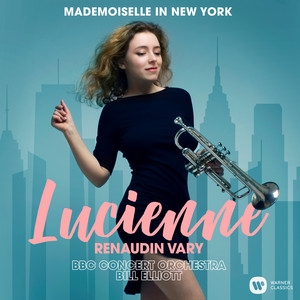 | Pavane pour une infante défunte, M. 19 | Maurice Ravel, Lucienne Renaudin Vary, Bill Elliott, BBC Concert Orchestra | E Minor | 1 | 9A | 87 BPM | |
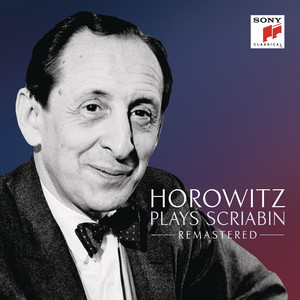 | Etude in D-Sharp Minor, Op. 8, No. 12: Patetico - Remastered | Alexander Scriabin, Vladimir Horowitz | D♭ Minor | 3 | 12A | 72 BPM | |
 | 4 Morceaux, Op. 56: No. 2, Romance | Anton Arensky, Dmitrii Khrychev, Olga Solovieva | G Major | 0 | 9B | 99 BPM | |
 | Piano Trio in C Minor: III. Adagio | Nikolai Rimsky-Korsakov, Trio Karénine | A Major | 4 | 11B | 124 BPM | |
 | Pictures and Tales Suite: IV. Sleep, Baby, Sleep | Karl Weigl, Deutsche Staatsphilharmonie Rheinland-Pfalz, Jurgen Bruns | B Major | 0 | 1B | 119 BPM | |
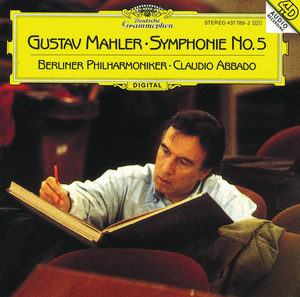 | Symphony No. 5: IV. Adagietto. Sehr langsam | Gustav Mahler, Berliner Philharmoniker, Claudio Abbado | F Major | 0 | 7B | 91 BPM | |
 | Piano Quartet in E-Flat Major, Op. 47: III. Andante cantabile | Robert Schumann, Beaux Arts Trio, Samuel Rhodes | B♭ Major | 0 | 6B | 67 BPM | |
 | Carmen Concert Fantasy, Op. 25: IV. Allegro moderato | Pablo de Sarasate, Tianwa Yang, Navarre Symphony Orchestra, Ernest Martinez Izquierdo | D Major | 1 | 10B | 111 BPM | |
 | Violin Sonata No. 3 in D Minor, Op. 108: Un poco presto e con sentimento | Johannes Brahms, Ilya Kaler, Alexander Peskanov | D Minor | 1 | 7A | 100 BPM | |
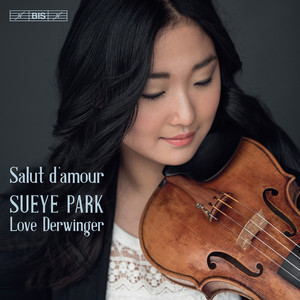 | Salut d'amour, Op. 12 | Edward Elgar, Sueye Park, Love Derwinger | E Major | 1 | 12B | 83 BPM | |
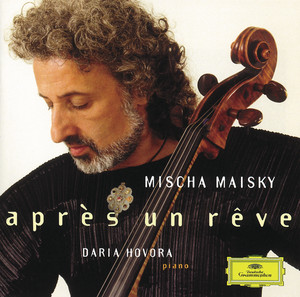 | Les chemins de l'amour, FP. 106 | Francis Poulenc, Mischa Maisky, Daria Hovora | E Major | 1 | 12B | 67 BPM | |
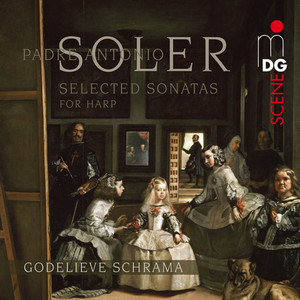 | Harpsichord Sonata No. 48: Allegro (arr. for Harp) | Antonio Soler, Godelieve Schrama | C Minor | 1 | 5A | 106 BPM | |
 | Holberg Suite, Op. 40: 4. Air (Andante religioso) | Edvard Grieg, Academy of St. Martin in the Fields, Sir Neville Marriner | G Major | 2 | 9B | 71 BPM | |
 | Schwanenlied | Fanny Mendelssohn, Eva Oertle, Consuelo Giulianelli | G Minor | 1 | 6A | 143 BPM | |
 | Variations on a Theme by Tchaikovsky, Op. 35a: Var. III. Andantino tranquillo | Anton Arensky, Metamorphose String Orchestra, Pavel Lyubomudrov | E Major | 2 | 12B | 78 BPM | |
 | Sin Noticias De Tu Interior | Sirenas Celestiales | G Major | 3 | 9B | 141 BPM | |
 | Tannhauser: "Song of the Evening Star" | Kenneth Kuo, Chia Yuan Liang | D Major | 2 | 10B | 88 BPM |
- ISRC
- USA370657637
- Label
- L-M Records/RCA Records