- BPM
- 101
- Key
- D♭ Major
- Camelot
- 3B
Hungarian Rhapsody No. 2 in C sharp minor, S.244 by Franz Liszt, Michele Campanella Song Details
"Hungarian Rhapsody No. 2 in C sharp minor, S.244" by Franz Liszt, Michele Campanella had its release date on January 1, 1974. Since This song is still less than 10 minute long, it is still considered a pretty long duration song compared to the average song length. This song does not appear to be explicit due to the lack of the "E" tag. The track order of this song in Franz Liszt, Michele Campanella's "Liszt: Complete Hungarian Rhapsodies" album is number 2 out of 19. On top of that, Netherlands appears to be the country where this track was created. In terms of popularity, Hungarian Rhapsody No. 2 in C sharp minor, S.244 is currently below average in popularity. In our opinion, the overall tone is not very danceable and projects negative sounds, such as being sad, depressed, or angry.
BPM and Tempo
We consider the tempo marking of Hungarian Rhapsody No. 2 in C sharp minor, S.244 by Franz Liszt, Michele Campanella to be Andante (at a walking pace) because the track has a tempo of 101 BPM, a half-time of 50BPM, and a double-time of 202 BPM. Based on that, the speed of the song's tempo is slow. The time signature for this track is 3/4.
Music Key
D♭ Major is the music key of this track. This also means that this song has a camelot key of 3B. So, the perfect camelot match for 3B would be either 3B or 4A. While, 4B can give you a low energy boost. For moderate energy boost, you would use 12B and a high energy boost can either be 5B or 10B. Though, if you want a low energy drop, you should looking for songs with either a camelot key of 3A or 2B will give you a low energy drop, 6B would be a moderate one, and 1B or 8B would be a high energy drop. Lastly, 12A allows you to change the mood.
Want to find the BPM and music key for other songs? Check out our BPM and Key Finder page!
- Popularity
- 28%
- Loudness
- -23.247 dB
- Acousticness
- 99%
- Danceability
- 39%
- Energy
- 10%
- Instrumentalness
- 83%
- Liveness
- 11%
- Loudness
- 61%
- Speechiness
- 5%
- Valence
- 6%
Recommendations
| Track | Artist | Key | Energy | Camelot | BPM | ||
|---|---|---|---|---|---|---|---|
 | Humoresque No. 7 in G-flat Major, Op. 101 | Boston Symphony Orchestra, Yo-Yo Ma, Seiji Ozawa, Itzhak Perlman | F♯ Major | 1 | 2B | 83 BPM | |
 | Liebesleid (Love's Sorrow) | Fritz Kreisler, Sergei Rachmaninoff, RueiBin Chen | A Major | 2 | 11B | 98 BPM | |
 | Sonata In G Minor For Cello & Piano, Op. 19: 3. Andante | Sergei Rachmaninoff, Alisa Weilerstein, Inon Barnatan | F Major | 2 | 7B | 82 BPM | |
 | Morceaux de fantaisie, Op. 3: 5 Morceaux de fantasie, Op. 3: No. 2. Prelude in C-Sharp Minor | Sergei Rachmaninoff, Eldar Nebolsin | A Major | 1 | 11B | 91 BPM | |
 | La lisonjera, Op. 50 | Cécile Chaminade, Péter Nagy | D♭ Major | 1 | 3B | 132 BPM | |
 | Sonata No. 42 in D Minor (Arr. Ólafsson) | Domenico Cimarosa, Víkingur Ólafsson | D Minor | 0 | 7A | 61 BPM | |
 | Schwanengesang, S 560: Ständchen | Franz Schubert, Sergei Rachmaninoff | D Major | 0 | 10B | 86 BPM | |
 | Allegro deciso - | Franz Liszt, Alexandre Kantorow, Tapiola Sinfonietta, Jean-Jacques Kantorow | B♭ Major | 3 | 6B | 131 BPM | |
 | Handel / Orch. Hale: Keyboard Suite No. 4 in D Minor, HWV 437: III. Sarabande | George Frideric Handel, Alexander Briger, Academy of St. Martin in the Fields | D Minor | 0 | 7A | 116 BPM | |
 | Carnaval, Op. 9: XII. Chopin | Robert Schumann, Daniil Trifonov | E Major | 0 | 12B | 68 BPM | |
 | Gold Und Silber (Gold And Silver), Op. 79 | Slovak Radio Symphony Orchestra, Franz Lehár | C Major | 1 | 8B | 81 BPM | |
 | Aus aller Herren Landern (From Foreign Lands), Op. 23: IV. Spanish: Molto vivace | Moritz Moszkowski, Markus Pawlik, Polish National Radio Symphony Orchestra, Antoni Wit | E Minor | 2 | 9A | 105 BPM | |
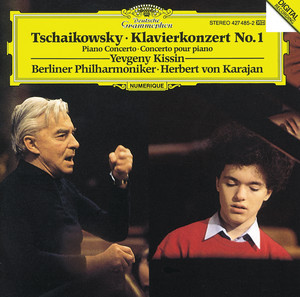 | 4 Pieces, Op. 51: No. 4, Danse languide | Alexander Scriabin, Evgeny Kissin | E♭ Major | 0 | 5B | 74 BPM | |
 | Piano Sonata No.8 In C Minor, Op.13 -"Pathétique": 3. Rondo (Allegro) | Ludwig van Beethoven, Daniel Barenboim | C Minor | 1 | 5A | 97 BPM | |
 | Tales from the Vienna Woods - Waltz Op. 325 | Johann Strauss II, Hallé, Bryden Thomson | F Major | 0 | 7B | 181 BPM | |
 | Piano Concerto No. 1 in D-Flat Major, Op. 10: I. Allegro brioso | Sergei Prokofiev, Evgeny Kissin, Berliner Philharmoniker, Claudio Abbado | D♭ Major | 1 | 3B | 66 BPM | |
 | Scheherazade: Calm at Sea | Nikolai Rimsky-Korsakov, Lars Hjalmar Joakim | E Major | 2 | 12B | 84 BPM | |
 | Serenade in C Major, Op. 48: IV. Finale (Tema Russo) | Pyotr Ilyich Tchaikovsky, Vienna Chamber Orchestra, Philippe Entremont | G Major | 3 | 9B | 146 BPM | |
 | Piano Concerto No. 2 in G Major, Op. 44, TH 60: III. Allegro con fuoco | Pyotr Ilyich Tchaikovsky, Eldar Nebolsin, New Zealand Symphony Orchestra, Michael Stern | G Major | 3 | 9B | 78 BPM | |
 | Piano Concerto No. 2 in G Minor, Op. 22, R. 190: 2. Allegro scherzando | Camille Saint-Saëns, Pascal Rogé, Royal Philharmonic Orchestra, Charles Dutoit | E♭ Major | 1 | 5B | 60 BPM | |
 | Prokofiev: Piano Concerto No. 3 in C Major, Op. 26: II. Tema con variazioni | Sergei Prokofiev, Evgeny Kissin, Vladimir Ashkenazy, Philharmonia Orchestra | C Major | 1 | 8B | 81 BPM | |
 | Schumann: Piano Concerto in A Minor, Op. 54: II. Intermezzo. Andantino grazioso | Robert Schumann, Evgeny Kissin, Sir Colin Davis, London Symphony Orchestra | F Major | 0 | 7B | 90 BPM | |
 | Piano Concerto No. 2, Op. 18: III. Allegro scherzando | Jascha Horenstein, Royal Philharmonic Orchestra, Earl Wild | F Minor | 3 | 4A | 122 BPM | |
 | 24 Preludes, Op. 11: No. 11 in B Major. Allegro assai | Alexander Scriabin, Yuja Wang | B Major | 0 | 1B | 67 BPM | |
 | Symphonie espagnole, Op. 21: I. Allegro non troppo | Édouard Lalo, Itzhak Perlman, Orchestre de Paris, Daniel Barenboim | D Minor | 1 | 7A | 75 BPM |
- ISRC
- NLA507300079
- Label
- L-M Records/RCA Records