- BPM
- 116
- Key
- A Minor
- Camelot
- 8A
Petrouchka - Three Movements for Piano (1921) / Scene 1: IV. Russian Dance by Igor Stravinsky, Yuja Wang Song Details
Igor Stravinsky, Yuja Wang's ' "Petrouchka - Three Movements for Piano (1921) / Scene 1: IV. Russian Dance" was released on its scheduled release date, January 1, 2010. The duration of This song is about two minutes long, specifically at 2:29. This song does not appear to have any foul language. Petrouchka - Three Movements for Piano (1921) / Scene 1: IV. Russian Dance's duration is considered a little bit shorter than the average duration of a typical track. There are a total of 34 in the song's album "transformation". In this album, this song's track order is #1. Furthermore, we believe that the track originated from Germany. In terms of popularity, Petrouchka - Three Movements for Piano (1921) / Scene 1: IV. Russian Dance is currently not that popular. Since there is more of a neutral sound being played, this makes the track somewhat danceable.
BPM and Tempo
With Petrouchka - Three Movements for Piano (1921) / Scene 1: IV. Russian Dance by Igor Stravinsky, Yuja Wang having a BPM of 116 with a half-time of 58 BPM and a double-time of 232 BPM, we would consider this track to have a Moderato (at a moderate speed) tempo marking. Because of this, we believe that the song has an overall moderate tempo. Looking at the BPM of this song, this song might go great with walking. The time signature for this track is 4/4.
Music Key
This song is in the music key of A Minor. Which also means that the camelot key for this song is 8A. So, the perfect camelot match for 8A would be either 8A or 7B. While, a low energy boost can consist of either 8B or 9A. For moderate energy boost, you would use 5A and a high energy boost can either be 10A or 3A. However, if you are looking for a low energy drop, finding a song with a camelot key of 7A would be a great choice. Where 11A would give you a moderate drop, and 6A or 1A would be a high energy drop. Lastly, 11B allows you to change the mood.
Want to find the BPM and music key for other songs? Check out our BPM and Key Finder page!
- Popularity
- 19%
- Loudness
- -20.653 dB
- Acousticness
- 98%
- Danceability
- 48%
- Energy
- 30%
- Instrumentalness
- 87%
- Liveness
- 12%
- Loudness
- 66%
- Speechiness
- 5%
- Valence
- 44%
Recommendations
| Track | Artist | Key | Energy | Camelot | BPM | ||
|---|---|---|---|---|---|---|---|
 | Suite for Piano, Op. 25: VI. Gigue - Musical Moments | Arnold Schoenberg, Yuja Wang | D♭ Major | 2 | 3B | 101 BPM | |
 | Violin Concerto No. 2 in D minor Op. 22 (1985 Digital Remaster): III. Allegro con fuoco - Allegro moderato (à la Zingara) | Henryk Wieniawski, Itzhak Perlman, Seiji Ozawa, Boston Symphony Orchestra | D Major | 2 | 10B | 74 BPM | |
 | Scherzo | Franz Liszt, Jenő Jandó | B♭ Major | 2 | 6B | 128 BPM | |
 | L'Oiseau de feu, K010: X. Khorovod (Ronde) des princesses | Igor Stravinsky, Chicago Symphony Orchestra, Pierre Boulez | B Major | 0 | 1B | 142 BPM | |
 | Sicilienne, Op. 78 | Gabriel Fauré, Harriet Krijgh, Kamilla Isanbaeva | G Minor | 1 | 6A | 123 BPM | |
 | String Quartet No.2 in D Major | Alexander Borodin, Borodin Quartet | D Major | 1 | 10B | 174 BPM | |
 | Lyric Pieces, Book V, Op. 54: No. 4, Notturno. Andante | Edvard Grieg, Javier Perianes | C Major | 0 | 8B | 73 BPM | |
 | Masquerade Suite: I. Waltz | Aram Khachaturian, Karine Poghosyan | E Minor | 1 | 9A | 92 BPM | |
 | Fantasiestücke, Op. 12: I. Des Abends | Robert Schumann, Martha Argerich | G Major | 0 | 9B | 141 BPM | |
 | Orfeo ed Euridice, Wq. 30: Dance of the Blessed Spirits "Melody" (Arr. Sgambati for Piano) | Christoph Willibald Gluck, Yuja Wang | D Minor | 0 | 7A | 70 BPM | |
 | China Gates | John Adams, Yuja Wang | E♭ Minor | 1 | 2A | 161 BPM | |
 | Andante spianato, Op. 22 | Frédéric Chopin, Alain Planès | G Minor | 2 | 6A | 140 BPM | |
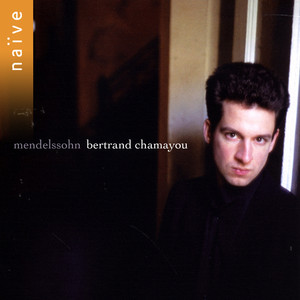 | Rondo Capriccioso In e Minor Opus 14 | Felix Mendelssohn, Bertrand Chamayou | E Major | 1 | 12B | 182 BPM | |
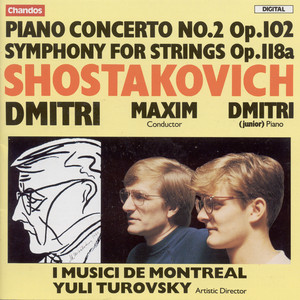 | Piano Concerto No. 2 in F Major, Op. 102: I. Allegro | Dmitri Shostakovich, I Musici de Montréal, Maxim Shostakovich | B♭ Major | 3 | 6B | 160 BPM | |
 | Scherzo-Tarantelle, Op. 16 | Henryk Wieniawski, Kyung Wha Chung, Phillip Moll | D Major | 2 | 10B | 107 BPM | |
 | Cello Concerto No. 1 in A Minor, Op. 33: I. Allegro non troppo | Camille Saint-Saëns, Mischa Maisky, Orpheus Chamber Orchestra | F Major | 2 | 7B | 131 BPM | |
 | The Planets, Op. 32: II. Venus, the Bringer of Peace | Gustav Holst, Lorin Maazel, L'Orchestre National de France, Orchestre National De France | A♭ Major | 0 | 4B | 139 BPM | |
 | The Lark | Mikhail Glinka, Evgeny Kissin | B♭ Minor | 0 | 3A | 96 BPM | |
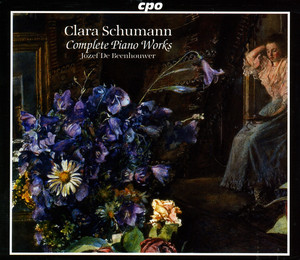 | 3 Preludes and Fugues, Op. 16: No. 2, Prelude and Fugue in B-Flat Major | Clara Schumann, Jozef De Beenhouwer | B♭ Major | 0 | 6B | 101 BPM | |
 | Pictures at an Exhibition: Promenade. Allegro giusto, nel modo rustico, senza allegrezza, ma poco sostenuto - attacca | Modest Mussorgsky, Ivo Pogorelich | D Major | 0 | 10B | 104 BPM | |
 | Wiegenlied, Op. 49, No. 4 | Johannes Brahms, Leonidas Kavakos, Yuja Wang | E♭ Major | 0 | 5B | 74 BPM | |
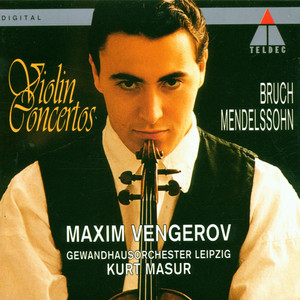 | Mendelssohn: Violin Concerto in E Minor, Op. 64, MWV O14: II. Andante | Felix Mendelssohn, Maxim Vengerov, Kurt Masur, Gewandhausorchester | C Major | 1 | 8B | 96 BPM | |
 | Carnival of the Animals, R. 125: Tortoises | Camille Saint-Saëns, Philippe Entremont, Gaby Casadesus, Yo-Yo Ma, Michel Cerruti, Michel Cals, Régis Pasquier, Yan Pascal Tortelier, Gabin Lauridon, Gerard Causse, Alain Marion, Michel Arrignon | B♭ Major | 0 | 6B | 138 BPM | |
 | The Rite of Spring, Part 1: II. The Augurs of Spring - Dances of the Young Girls | Igor Stravinsky, Vasily Petrenko, Royal Liverpool Philharmonic Orchestra | B♭ Major | 3 | 6B | 115 BPM | |
| Waltz No. 7 in C-Sharp Minor, Op. 64 No. 2 | Frédéric Chopin, Yuja Wang | D♭ Minor | 0 | 12A | 71 BPM |
- ISRC
- DEN961000101
- Label
- L-M Records/RCA Records