- BPM
- 109
- Key
- D Major
- Camelot
- 10B
Fugue in G Minor, BWV 578 by Johann Sebastian Bach, Matthias Roth Song Details
"Fugue in G Minor, BWV 578" by Johann Sebastian Bach, Matthias Roth had its release date on November 26, 2018. With this song being about 5 minutes long, at This song is fairly a long song compared to the average song length. This song does not have an "Explicit" tag, making it safe for all ages. There are a total of 11 in the song's album "Romantische Martinesque (Orgelmusik zeitlos - Steinmeyer-Orgel von 1894 in St. Martin, Bamberg)". In this album, this song's track order is #3. Furthermore, we believe that the track originated from Germany. In terms of popularity, Fugue in G Minor, BWV 578 is currently unknown. In our opinion, the overall tone is not very danceable and projects negative sounds, such as being sad, depressed, or angry.
BPM and Tempo
With Fugue in G Minor, BWV 578 by Johann Sebastian Bach, Matthias Roth having a BPM of 109 with a half-time of 54 BPM and a double-time of 218 BPM, we would consider this track to have a Moderato (at a moderate speed) tempo marking. Because of this, we believe that the song has an overall moderate tempo. The time signature for this track is 4/4.
Music Key
This song is in the music key of D Major. Or for those who are familiar with the camelot wheel, this song has a camelot key of 10B. So, the perfect camelot match for 10B would be either 10B or 11A. While, 11B can give you a low energy boost. For moderate energy boost, you would use 7B and a high energy boost can either be 12B or 5B. Though, if you want a low energy drop, you should looking for songs with either a camelot key of 10A or 9B will give you a low energy drop, 1B would be a moderate one, and 8B or 3B would be a high energy drop. Lastly, 7A allows you to change the mood.
Want to find the BPM and music key for other songs? Check out our BPM and Key Finder page!
- Popularity
- 0%
- Loudness
- -31.114 dB
- Acousticness
- 94%
- Danceability
- 16%
- Energy
- 2%
- Instrumentalness
- 97%
- Liveness
- 10%
- Loudness
- 48%
- Speechiness
- 4%
- Valence
- 4%
Recommendations
| Track | Artist | Key | Energy | Camelot | BPM | ||
|---|---|---|---|---|---|---|---|
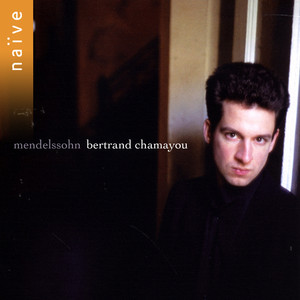 | Songs Without Words, Book VI Opus 67: No. 2 in F-Sharp Minor | Felix Mendelssohn, Bertrand Chamayou | F♯ Minor | 1 | 11A | 69 BPM | |
 | Bach, JS : Well-Tempered Clavier Book 1 : Prelude No.8 in E flat minor BWV853 | Daniel Barenboim | A♭ Minor | 0 | 1A | 70 BPM | |
 | Piano Quartet No. 1 in G Minor, K. 478: II. Andante | Wolfgang Amadeus Mozart, Emanuel Ax, Isaac Stern, Jaime Laredo, Yo-Yo Ma | B♭ Major | 0 | 6B | 67 BPM | |
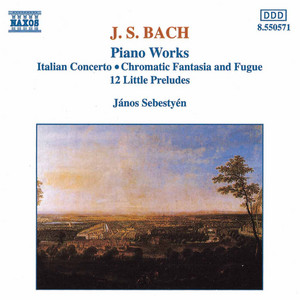 | Prelude In C Major, BWV 924 : Praeambulum In C Major, BWV 924 | Janos Sebestyen, Johann Sebastian Bach | C Major | 2 | 8B | 139 BPM | |
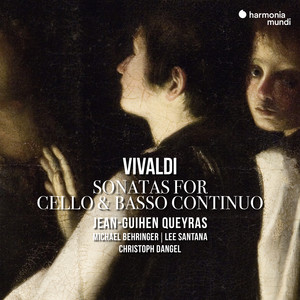 | Cello Sonata in E Minor, RV 40: III. Largo | Antonio Vivaldi, Jean-Guihen Queyras, Michael Behringer, Christoph Dangel | F♯ Major | 0 | 2B | 138 BPM | |
 | Méditation from Thaïs | Jules Massenet, Nicola Benedetti, London Symphony Orchestra, Daniel Harding | E Minor | 1 | 9A | 89 BPM | |
 | Orchestral Suite No. 3 in D Major, BWV 1068: II. Air "on the G String" | Johann Sebastian Bach, David Bell, Berliner Philharmoniker, Herbert von Karajan | D Major | 1 | 10B | 113 BPM | |
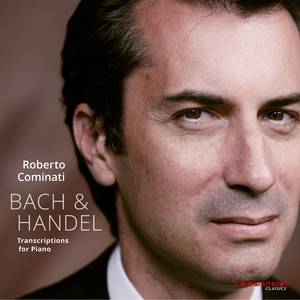 | Minuet in G Minor, HWV 434 No. 4 (Transc. W. Kempff) | George Frideric Handel, Roberto Cominati | G Minor | 0 | 6A | 66 BPM | |
| Bach, JS : Well-Tempered Clavier Book 2 : Fugue No.24 in B minor BWV893 | Daniel Barenboim | F Minor | 1 | 4A | 82 BPM | |
 | Le carnaval des animaux, R. 125: Le cygne | Camille Saint-Saëns, Mischa Maisky, Orpheus Chamber Orchestra | C Major | 0 | 8B | 83 BPM | |
 | IV. Larghetto | Antonín Dvořák, Peter Breiner | G Major | 0 | 9B | 70 BPM | |
 | Bach, JS: Trio Sonata in G Major, BWV 1039: IV. Presto | Johann Sebastian Bach, Marc Hantaï, Ageet Zweistra, Jerome Hantai, Pierre Hantaï | G Major | 3 | 9B | 92 BPM | |
 | Goldberg Variations In G Major BWV 988, Aria With 30 Variations, Goldberg Variationen, G Dur BWV 988, Aria Mit 30 Veränderungen : Aria | Arts Music Recording, Rotterdam, Pieter-Jan Belder, Johann Sebastian Bach | B♭ Major | 4 | 6B | 129 BPM | |
 | Shostakovich / Arr. Atovmyan: Suite from the Gadfly, Op. 97a: VIII. Romance | Dmitri Shostakovich, Tasmin Little, Piers Lane | C Major | 1 | 8B | 175 BPM | |
 | Overture (Suite) No. 4 In D Major, BWV 1069 : II. Bourree I And II | Cologne Chamber Orchestra, Johann Sebastian Bach | B Minor | 4 | 10A | 119 BPM | |
 | Concerto a cinque No. 2, Op. 9: I. Allegro e no presto | Tomaso Albinoni, Paul Dombrecht, Il Fondamento | D♭ Minor | 3 | 12A | 169 BPM | |
 | Acis and Galatea, HWV 49b: Sinfonia | George Frideric Handel, Kym Amps, Angus Davidson, Robin Doveton, David van Asch, The Scholars Baroque Ensemble | G Major | 5 | 9B | 140 BPM | |
 | Musical Offering, BWV 1079: Canon 3. a 2 per Motum contrarium | Johann Sebastian Bach, Nils-Thilo Krämer, Ariane Pfister, Christian Benda, Sebastian Benda, Capella Istropolitana | C Minor | 2 | 5A | 172 BPM | |
 | Mass in B Minor, BWV 232: Domine Deus | Johann Sebastian Bach, René Jacobs, Hillevi Martinpelto, Axel Köhler, Christoph Prégardien, Akademie für Alte Musik Berlin | B♭ Minor | 0 | 3A | 71 BPM | |
 | Clarinet Concerto in A major, K. 622: Clarinet Concerto in A major, K. 622: II. Adagio | Various Artists, David Shifrin, New York Chamber Symphony, Gerard Schwarz | C Major | 1 | 8B | 92 BPM | |
 | II. Adagio cantabile from Piano Sonata No. 8 in C minor, Op. 13 "Pathetique" - Instrumental | Ludwig van Beethoven, Murray Perahia | A♭ Major | 0 | 4B | 62 BPM | |
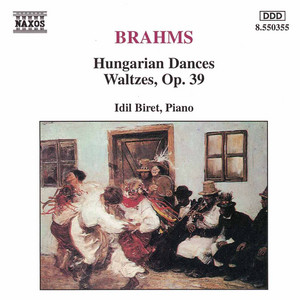 | 16 Waltzes, Op. 39: No. 15 In A Flat Major | Johannes Brahms, Idil Biret | A♭ Major | 0 | 4B | 68 BPM | |
 | Music: Stolzel: Bist Du Bei Mir | John Shrapnel, Jeremy Siepmann, Johann Sebastian Bach | E♭ Major | 1 | 5B | 64 BPM | |
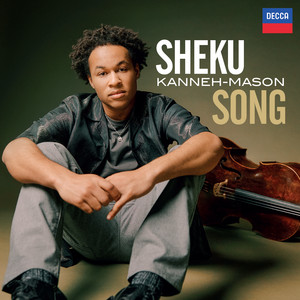 | Savior of the Nations, Come, BWV 659 (Arr. for 4 Cellos) | Johann Sebastian Bach, Sheku Kanneh-Mason, Hannah Roberts, Ben Davies, Max Ruisi | C Major | 0 | 8B | 122 BPM | |
| Concerto a cinque No. 2, Op. 9: II. Adagio | Tomaso Albinoni, Paul Dombrecht, Il Fondamento | A Major | 1 | 11B | 45 BPM |
- ISRC
- DEQ101850003
- Label
- L-M Records/RCA Records