- BPM
- 172
- Key
- F♯ Major
- Camelot
- 2B
Apollo e Dafne, HWV 122: V. Felicissima quest’alma by George Frideric Handel, Roberta Invernizzi, Thomas E. Bauer, La Risonanza, Fabio Bonizzoni Song Details
George Frideric Handel, Roberta Invernizzi, Thomas E. Bauer, La Risonanza, Fabio Bonizzoni's 'Apollo e Dafne, HWV 122: V. Felicissima quest’alma' had a release date set for August 24, 2010. With this song being about 5 minutes long, at This song is fairly a long song compared to the average song length. This song does not have an "Explicit" tag, making it safe for all ages. The track order of this song in George Frideric Handel, Fabio Bonizzoni's "Handel: Italian Cantatas, Vol. 7" album is number 5 out of 32. On top of that, Spain appears to be the country where this track was created. The popularity of Apollo e Dafne, HWV 122: V. Felicissima quest’alma is currently unknown right now. In our opinion, the overall tone is not very danceable and projects negative sounds, such as being sad, depressed, or angry.
BPM and Tempo
We consider the tempo marking of Apollo e Dafne, HWV 122: V. Felicissima quest’alma by George Frideric Handel, Roberta Invernizzi, Thomas E. Bauer, La Risonanza, Fabio Bonizzoni to be Vivace (lively and fast) because the track has a tempo of 172 BPM, a half-time of 86BPM, and a double-time of 344 BPM. Based on that, the speed of the song's tempo is fast. The time signature for this track is 3/4.
Music Key
This song is in the music key of F♯ Major. This also means that this song has a camelot key of 2B. So, the perfect camelot match for 2B would be either 2B or 3A. While, 3B can give you a low energy boost. For moderate energy boost, you would use 11B and a high energy boost can either be 4B or 9B. Though, if you want a low energy drop, you should looking for songs with either a camelot key of 2A or 1B will give you a low energy drop, 5B would be a moderate one, and 12B or 7B would be a high energy drop. Lastly, 11A allows you to change the mood.
Want to find the BPM and music key for other songs? Check out our BPM and Key Finder page!
- Popularity
- 0%
- Loudness
- -20.873 dB
- Acousticness
- 88%
- Danceability
- 19%
- Energy
- 10%
- Instrumentalness
- 4%
- Liveness
- 18%
- Loudness
- 65%
- Speechiness
- 5%
- Valence
- 27%
Recommendations
| Track | Artist | Key | Energy | Camelot | BPM | ||
|---|---|---|---|---|---|---|---|
 | Deborah, HWV 51: Part II: Chorus - The great King of Kings will aid us too | George Frideric Handel, Natacha Ducret, Elisabeth Scholl, Ewa Wolak, Lawrence Zazzo, Junge Kantorei, Frankfurt Baroque Orchestra, Joachim Carlos Martini | D♭ Major | 2 | 3B | 111 BPM | |
 | Brandenburg Concerto No. 4 in G Major, BWV 1049: I. Allegro | Johann Sebastian Bach, Freiburger Barockorchester | F Major | 2 | 7B | 99 BPM | |
 | Handel: Dixit Dominus, HWV 232: I. Dixit Dominus, Domino meo | George Frideric Handel, Emmanuelle Haïm, Karine Deshayes, Le Choeur d'Astrée, Natalie Dessay, Le Concert d'Astrée | A♭ Major | 2 | 4B | 61 BPM | |
 | Pergolesi: Stabat Mater: VIII. Fac ut ardeat cor meum | Giovanni Battista Pergolesi, Philippe Jaroussky, I Barocchisti, Julia Lezhneva, Diego Fasolis | F♯ Minor | 3 | 11A | 71 BPM | |
 | The Tempest: Galliard | Matthew Locke, Vox Orchester, Lorenzo Ghirlanda | F♯ Minor | 2 | 11A | 117 BPM | |
 | Sonata "Follia" Op. 5, No. 12: Adagio | Arcangelo Corelli, Stephen Stubbs, Maxine Eilander, Erin Headley, Milos Valent | D♭ Minor | 0 | 12A | 82 BPM | |
 | Stabat Mater, P. 77: II. Soprano. Cuius animam gementem | Giovanni Battista Pergolesi, Emma Kirkby, Academy of Ancient Music, Christopher Hogwood | G Major | 1 | 9B | 79 BPM | |
| Pergolesi: Stabat Mater: II. Cujus animam gementem | Giovanni Battista Pergolesi, Philippe Jaroussky, Diego Fasolis, I Barocchisti | G Major | 1 | 9B | 103 BPM | |
 | Ode for St. Cecilia's Day, HWV 76: March | George Frideric Handel, Dorothee Mields, Mark Wilde, Alsfelder Vocal Ensemble, Concerto Polacco, Wolfgang Helbich | A♭ Minor | 0 | 1A | 96 BPM | |
 | Albinoni: Oboe Concerto in D Minor, Op. 9 No. 2: II. Adagio | Tomaso Albinoni, Pierre Pierlot, Claudio Scimone, I Solisti Veneti | B♭ Major | 2 | 6B | 72 BPM | |
 | Manna: Laudate pueri: IV. Gloria | Gennaro Manna, Jakub Józef Orliński, Il pomo d'oro Choir, Francesco Corti, Il Pomo D'oro | E Major | 2 | 12B | 80 BPM | |
 | Les Boréades, RCT 31, Acte IV, Scène IV: Entrée pour les Muses, les Zéphyres, les Saisons, les Heures et les Arts | Jean-Philippe Rameau, Teodor Currentzis | D♭ Major | 1 | 3B | 130 BPM | |
 | Noel Symphony No. 4 in D Minor: I. Une jeune pucelle: Moderato | Michel Corrette, Arion Trio | E Major | 2 | 12B | 153 BPM | |
 | Lauda Jerusalem (Salmo 147), RV 609 | Antonio Vivaldi, Concerto Italiano, Roberta Invernizzi, Gemma Bertagnolli, Rinaldo Alessandrini | E Minor | 2 | 9A | 138 BPM | |
 | Overture (Suite) In G Minor, TWV 55: G4: III. Les Irresoluts | Cologne Chamber Orchestra, Georg Philipp Telemann | G Minor | 1 | 6A | 82 BPM | |
 | Alcyone: Marche en rondeau | Marin Marais, Tafelmusik Baroque Orchestra, Jeanne Lamon | D♭ Minor | 2 | 12A | 129 BPM | |
 | Monteverdi / Arr Pluhar: Zefiro torna e di soavi accenti, SV 251 | Claudio Monteverdi, Christina Pluhar, Núria Rial, Philippe Jaroussky | F Major | 2 | 7B | 117 BPM | |
| Ode for St. Cecilia's Day, HWV 76: Air: Orpheus could lead the savage race | George Frideric Handel, Dorothee Mields, Mark Wilde, Alsfelder Vocal Ensemble, Concerto Polacco, Wolfgang Helbich | A♭ Minor | 0 | 1A | 96 BPM | |
 | Suite From Abdelzar: I. Rondeau | Henry Purcell, Tafelmusik Baroque Orchestra, Jeanne Lamon | D♭ Minor | 1 | 12A | 101 BPM | |
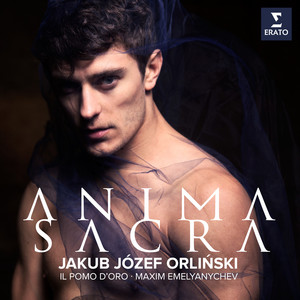 | Fago: Il Faraone sommerso: "Alla gente a Dio diletta" | Francesco Nicola Fago, Jakub Józef Orliński, Maxim Emelyanychev, Il Pomo D'oro | E Major | 1 | 12B | 92 BPM | |
 | Aria IV: Sarabande | Georg Philipp Telemann, La Stagione Frankfurt, Michael Schneider | D♭ Minor | 2 | 12A | 75 BPM | |
 | Oboe Concerto in D Minor: II. Adagio | Alessandro Marcello, Jozsef Kiss, Budapest Ferenc Erkel Chamber Orchestra | D Minor | 1 | 7A | 131 BPM | |
| Oboe Concerto in B-Flat Major, Wq. 164, H. 466: I. Allegretto | Carl Philipp Emanuel Bach, Jozsef Kiss, Budapest Ferenc Erkel Chamber Orchestra | B♭ Major | 1 | 6B | 131 BPM | |
 | Music: Stolzel: Bist Du Bei Mir | John Shrapnel, Jeremy Siepmann, Johann Sebastian Bach | E♭ Major | 1 | 5B | 64 BPM | |
 | Dies iræ, S. 31: Dies iræ | Michel Richard Delalande, Ensemble Correspondances, Sébastien Daucé | B Major | 2 | 1B | 91 BPM |
- ISRC
- ES7891001405
- Label
- L-M Records/RCA Records