- BPM
- 84
- Key
- F Minor
- Camelot
- 4A
Mendelssohn: String Quartet No. 6 in F Minor, Op. 80, MWV R37: IV. Finale (Allegro molto) by Felix Mendelssohn, vision string quartet Song Details
Felix Mendelssohn, vision string quartet's 'Mendelssohn: String Quartet No. 6 in F Minor, Op. 80, MWV R37: IV. Finale (Allegro molto)' had a release date set for March 13, 2020. This song is about six minutes long, preciously at 5:40, making this song fairly long compared to other songs. The track order of this song in vision string quartet's "memento" album is number 13 out of 13. On top of that, United Kingdom appears to be the country where this track was created. Mendelssohn: String Quartet No. 6 in F Minor, Op. 80, MWV R37: IV. Finale (Allegro molto) is not that popular right now. In our opinion, the overall tone is not very danceable and projects negative sounds, such as being sad, depressed, or angry.
BPM and Tempo
We consider the tempo marking of Mendelssohn: String Quartet No. 6 in F Minor, Op. 80, MWV R37: IV. Finale (Allegro molto) by Felix Mendelssohn, vision string quartet to be Andante (at a walking pace) because the track has a tempo of 84 BPM, a half-time of 42BPM, and a double-time of 168 BPM. Based on that, the speed of the song's tempo is slow. The time signature for this track is 4/4.
Music Key
F Minor is the music key of this track. Because this track belongs in the F Minor key, the camelot key is 4A. So, the perfect camelot match for 4A would be either 4A or 3B. While, a low energy boost can consist of either 4B or 5A. For moderate energy boost, you would use 1A and a high energy boost can either be 6A or 11A. However, if you are looking for a low energy drop, finding a song with a camelot key of 3A would be a great choice. Where 7A would give you a moderate drop, and 2A or 9A would be a high energy drop. Lastly, 7B allows you to change the mood.
Want to find the BPM and music key for other songs? Check out our BPM and Key Finder page!
- Popularity
- 4%
- Loudness
- -13.066 dB
- Acousticness
- 93%
- Danceability
- 26%
- Energy
- 30%
- Instrumentalness
- 84%
- Liveness
- 16%
- Loudness
- 78%
- Speechiness
- 5%
- Valence
- 21%
Recommendations
| Track | Artist | Key | Energy | Camelot | BPM | ||
|---|---|---|---|---|---|---|---|
 | Slavonic Dance for Four Hands in E Minor, Op. 72/2: Dumka (Allegretto grazioso) | Antonín Dvořák, Khatia Buniatishvili | C Major | 0 | 8B | 77 BPM | |
 | Thaïs: Méditation | Jules Massenet, Bomsori, NFM Wrocław Philharmonic, Giancarlo Guerrero | D Major | 0 | 10B | 84 BPM | |
 | Piano Concerto No. 23 in A Major, K. 488: I. Allegro (Cadenza by Busoni) | Wolfgang Amadeus Mozart, Vladimir Horowitz, Orchestra Del Teatro Alla Scala, Milano, Carlo Maria Giulini | A Major | 1 | 11B | 140 BPM | |
 | Kinderszenen, Op. 15: I. Von fremden Ländern und Menschen | Robert Schumann, Martha Argerich | G Major | 0 | 9B | 128 BPM | |
 | Fauré: 3 Romances sans paroles, Op. 17: No. 3 in A-Flat Major | Gabriel Fauré, Alexandre Tharaud | A♭ Major | 0 | 4B | 69 BPM | |
 | La separation, Nocturne in F Minor | Mikhail Glinka, Victor Ryabchikov | F Minor | 1 | 4A | 73 BPM | |
 | Lieder ohne Worte I, Op. 19b: II. Andante espressivo, MWV U80 | Felix Mendelssohn, Daniel Barenboim | A Minor | 0 | 8A | 131 BPM | |
 | Scarlatti, D: Keyboard Sonata in D Minor, Kk. 141 | Martha Argerich | F♯ Major | 3 | 2B | 104 BPM | |
 | Symphony No. 9 in E Minor, Op. 95 "From the New World": I. Adagio — Allegro molto | Antonín Dvořák, New York Philharmonic, Alan Gilbert | E Minor | 1 | 9A | 125 BPM | |
 | Piano Sonata No. 8 in C minor, Op. 13, "Pathétique": II. Adagio cantabile | Ludwig van Beethoven, Igor Levit | A♭ Major | 0 | 4B | 63 BPM | |
 | Come, Sweet Death, BWV 478 (Arr. for 5 Cellos) | Sheku Kanneh-Mason, Hannah Roberts, Ben Davies, Desmond Neysmith, Max Ruisi | C Major | 0 | 8B | 122 BPM | |
 | 4 Impromptus, Op. 90, D. 899: No. 3 in G-flat major | Franz Schubert, Khatia Buniatishvili | F♯ Major | 0 | 2B | 69 BPM | |
| Kinderszenen, Op. 15: VII. Träumerei | Robert Schumann, Martha Argerich | F Major | 0 | 7B | 130 BPM | |
 | Violin Concerto No. 1 in G Minor, Op. 26: I. Allegro moderato | Max Bruch, Itzhak Perlman, Bernard Haitink, Concertgebouworkest | E♭ Major | 2 | 5B | 99 BPM | |
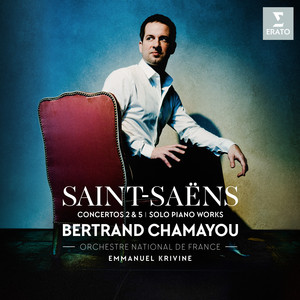 | Saint-Saëns: Piano Concerto No. 2 in G Minor, Op. 22: II. Allegro scherzando | Camille Saint-Saëns, Bertrand Chamayou, Emmanuel Krivine, Orchestre National De France | F♯ Minor | 0 | 11A | 84 BPM | |
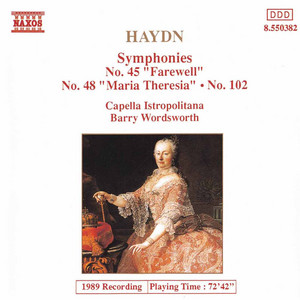 | Symphony No. 45 in F-Sharp Minor, Hob.I:45, "Farewell": I. Allegro assai | Joseph Haydn, Capella Istropolitana, Barry Wordsworth | F♯ Minor | 2 | 11A | 156 BPM | |
 | Paderewski: 6 Humoresques de concert, Op. 14, Cahier I "À l'antique": No. 1, Menuet célèbre | Ignacy Jan Paderewski, Mariam Batsashvili | G Major | 1 | 9B | 106 BPM | |
 | 3 Romances, Op. 11: I. Andante | Clara Schumann, Yoshiko Iwai | C Major | 0 | 8B | 66 BPM | |
 | Sibelius: Violin Concerto in D Minor, Op. 47: III. Allegro ma non tanto | Jean Sibelius, Maxim Vengerov, Daniel Barenboim, Chicago Symphony Orchestra | D Major | 2 | 10B | 105 BPM | |
 | Jeux d'enfants, Op. 22: No. 3, La poupée | Georges Bizet, Katia Labèque, Marielle Labèque | B Major | 0 | 1B | 64 BPM | |
 | Sonata in D Minor, K. 9 | Domenico Scarlatti, Ivo Pogorelich | D Minor | 0 | 7A | 94 BPM | |
 | Etudes-Tableaux, Op. 33, No. 4 in D Minor | Hélène Grimaud | D Minor | 2 | 7A | 94 BPM | |
 | Symphony No. 6 in B Minor, Op. 74 "Pathétique": IV. Finale. Adagio lamentoso – Andante | Pyotr Ilyich Tchaikovsky, Berliner Philharmoniker, Kirill Petrenko | B Minor | 1 | 10A | 71 BPM | |
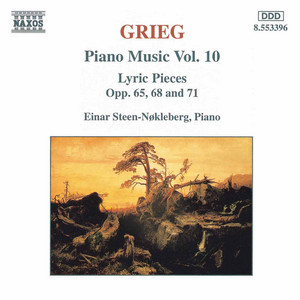 | Lyric Pieces, Book 9, Op. 68: Badnlat (Cradle Song) | Edvard Grieg, Einar Steen-Nøkleberg | B♭ Major | 0 | 6B | 72 BPM | |
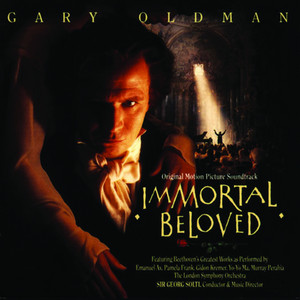 | II. Adagio cantabile from Piano Sonata No. 8 in C minor, Op. 13 "Pathetique" - Instrumental | Ludwig van Beethoven, Murray Perahia | A♭ Major | 0 | 4B | 62 BPM |
- ISRC
- GBAYC1902375
- Label
- L-M Records/RCA Records