- BPM
- 76
- Key
- B♭ Major
- Camelot
- 6B
Requiem, Op. 48: Pie Jesu by Gabriel Fauré, Renée Fleming, Royal Philharmonic Orchestra, Andreas Delfs Song Details
"Requiem, Op. 48: Pie Jesu" by Gabriel Fauré, Renée Fleming, Royal Philharmonic Orchestra, Andreas Delfs had its release date on January 1, 2005. With this song being around four minutes long, at 4:02, the duration of this song is pretty average compared to other songs. This track is safe for children and doesn't appear to contain any foul language, since the "Explicit" tag was not present in this track. There are a total of 17 in the song's album "Sacred Songs (US Bonus Track Version)". In this album, this song's track order is #9. Requiem, Op. 48: Pie Jesu is not that popular right now. In our opinion, the overall tone is not very danceable and projects negative sounds, such as being sad, depressed, or angry.
BPM and Tempo
With Requiem, Op. 48: Pie Jesu by Gabriel Fauré, Renée Fleming, Royal Philharmonic Orchestra, Andreas Delfs having a BPM of 76 with a half-time of 38 BPM and a double-time of 152 BPM, we would consider this track to have a Adagio (slowly with great expression) tempo marking. Because of this, we believe that the song has an overall slow tempo. The time signature for this track is 4/4.
Music Key
This song is in the music key of B♭ Major. Or for those who are familiar with the camelot wheel, this song has a camelot key of 6B. So, the perfect camelot match for 6B would be either 6B or 7A. While, 7B can give you a low energy boost. For moderate energy boost, you would use 3B and a high energy boost can either be 8B or 1B. Though, if you want a low energy drop, you should looking for songs with either a camelot key of 6A or 5B will give you a low energy drop, 9B would be a moderate one, and 4B or 11B would be a high energy drop. Lastly, 3A allows you to change the mood.
Want to find the BPM and music key for other songs? Check out our BPM and Key Finder page!
- Popularity
- 16%
- Loudness
- -19.596 dB
- Acousticness
- 98%
- Danceability
- 13%
- Energy
- 9%
- Instrumentalness
- 79%
- Liveness
- 9%
- Loudness
- 67%
- Speechiness
- 5%
- Valence
- 4%
Recommendations
| Track | Artist | Key | Energy | Camelot | BPM | ||
|---|---|---|---|---|---|---|---|
 | Salut d'amour, Op. 12 | Edward Elgar, Daniel Lozakovich, Stanislav Soloviev | E Major | 1 | 12B | 88 BPM | |
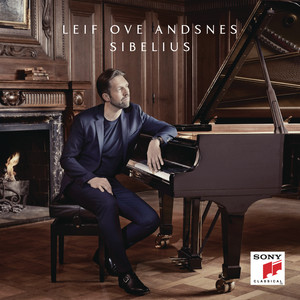 | 13 Pieces for Piano, Op. 76: Elegiaco, No. 10 | Jean Sibelius, Leif Ove Andsnes | E Major | 0 | 12B | 169 BPM | |
 | Abendlied, Op. 85, No. 12 (Arr. for String Orchestra by Johan Svendsen) | Robert Schumann, Lucerne Festival Strings, Daniel Dodds | B Major | 1 | 1B | 113 BPM | |
 | Pelléas et Mélisande Suite, Op. 80: III. Sicilienne. Allegretto molto moderato | Gabriel Fauré, Berliner Philharmoniker, Daniel Barenboim | E♭ Major | 0 | 5B | 56 BPM | |
 | Sonata for Cello and Piano in G minor, Op. 19: 3. Andante | Sergei Rachmaninoff, Lynn Harrell, Vladimir Ashkenazy | E♭ Major | 0 | 5B | 74 BPM | |
 | Adagio from Violin Sonata in G Minor, Op. 5 No. 5 (Arr. Leopold Stokowski) | Arcangelo Corelli, Matthias Bamert, BBC Philharmonic | G Minor | 0 | 6A | 175 BPM | |
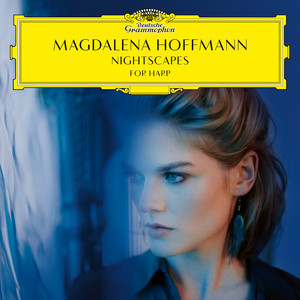 | Nocturne in B Flat Major, H. 37 (Version for Harp) | John Field, Magdalena Hoffmann | B♭ Major | 1 | 6B | 97 BPM | |
 | Chants du Rhin, WD 52: Les rêves | Georges Bizet, Nathanaël Gouin | D♭ Major | 0 | 3B | 65 BPM | |
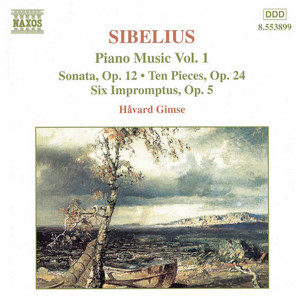 | 6 Impromptus, Op. 5: Impromptu No. 5 in B Minor | Jean Sibelius, Håvard Gimse | B Minor | 0 | 10A | 84 BPM | |
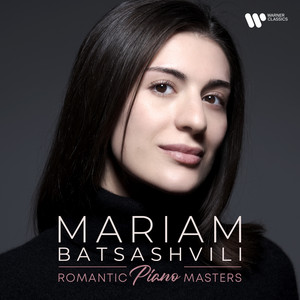 | Liszt: Lieder aus Franz Schubert's "Schwanengesang", S. 560: No. 7 Ständchen | Franz Liszt, Mariam Batsashvili | A Minor | 1 | 8A | 120 BPM | |
 | Romance for Violin and Piano, Op. 23 | Amy Beach, Esther Abrami, Iyad Sughayer | A Major | 2 | 11B | 87 BPM | |
 | Fauré: 3 Romances sans paroles, Op. 17: No. 3 in A-Flat Major | Gabriel Fauré, Alexandre Tharaud | A♭ Major | 0 | 4B | 69 BPM | |
 | 4 Lieder, Op. 82, B. 157: I. Lasst mich allein. Andante (Arr. Soltani For Solo Cello and Cello Ensemble) | Antonín Dvořák, Kian Soltani, Staatskapelle Berlin, Cellists, Otto Tolonen | B Major | 0 | 1B | 140 BPM | |
 | XIII. Le cygne (Transcr. L. Godowsky for Piano) | Camille Saint-Saëns, Leopold Godowsky, Konstantin Scherbakov | F♯ Major | 0 | 2B | 72 BPM | |
 | 3 Intermezzi, Op. 117: No. 1 in E-Flat Major. Andante moderato | Johannes Brahms, Radu Lupu | E♭ Major | 0 | 5B | 73 BPM | |
 | L'elisir d'amore / Act II: "Una furtiva lagrima" (Adapt. for Cello and Orchestra) | Gaetano Donizetti, Camille Thomas, Brussels Philharmonic, Mathieu Herzog | B♭ Minor | 1 | 3A | 169 BPM | |
 | I. Prélude. Andantino | César Franck, Jean-Pierre Armengaud | D Major | 0 | 10B | 66 BPM | |
 | 6 Impromptus, Op. 5: Impromptu V | Jean Sibelius, Leif Ove Andsnes | B Minor | 0 | 10A | 72 BPM | |
 | Les Boréades, RCT 31, Acte IV, Scène IV: Entrée pour les Muses, les Zéphyres, les Saisons, les Heures et les Arts | Jean-Philippe Rameau, Teodor Currentzis | D♭ Major | 1 | 3B | 130 BPM | |
 | Mancini: Moon River (From "Breakfast at Tiffany's") | Renaud Capuçon | C Major | 1 | 8B | 82 BPM | |
 | Le carnaval des animaux, R. 125: Le cygne | Camille Saint-Saëns, Mischa Maisky, Orpheus Chamber Orchestra | C Major | 0 | 8B | 83 BPM | |
 | 13 Pieces for Piano, Op. 76: II. Etude | Jean Sibelius, Jian Wang, Göran Söllscher | G Minor | 0 | 6A | 124 BPM | |
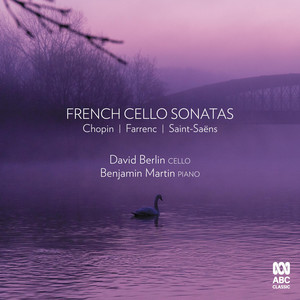 | Cello Sonata in B-Flat Major, Op. 46: 2. Andante sostenuto | Louise Farrenc, David Berlin, Benjamin Martin | A♭ Major | 0 | 4B | 65 BPM | |
 | Melody from « Orfeo » | Christoph Willibald Gluck, Roberto Giordano | G Minor | 2 | 6A | 115 BPM | |
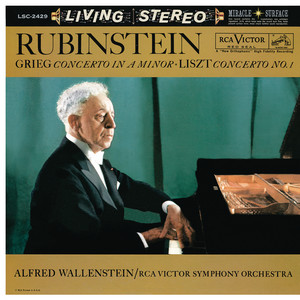 | Piano Concerto in A Minor, Op. 16: II. Adagio - Remastered | Edvard Grieg, Arthur Rubinstein, RCA Victor Symphony Orchestra, Alfred Wallenstein | D♭ Major | 0 | 3B | 86 BPM |
- ISRC
- This song does not have an ISRC.
- Label
- L-M Records/RCA Records