- BPM
- 109
- Key
- F Major
- Camelot
- 7B
Three Preludes: III. Allegro Ben Ritmato E Deciso by George Gershwin, Mark Anderson Song Details
George Gershwin, Mark Anderson's ' "Three Preludes: III. Allegro Ben Ritmato E Deciso" was released on its scheduled release date, January 1, 1999. With This song being less than two minutes long, at 1:21, we are fairly confident that this song is not explicit and is safe for all ages. Based on the duration of this song, this song duration is much smaller than the average song duration. The song is number 10 out of 22 in Copland & Gershwin: Piano Music by Mark Anderson. Going off of the ISRC code of this track, we detected that the origin of this track is from United Kingdom. In terms of popularity, Three Preludes: III. Allegro Ben Ritmato E Deciso is currently unknown. Since there is more of a neutral sound being played, this makes the track somewhat danceable.
BPM and Tempo
The tempo marking of Three Preludes: III. Allegro Ben Ritmato E Deciso by George Gershwin, Mark Anderson is Moderato (at a moderate speed), since this song has a tempo of 109 BPM. With that information, we can conclude that the song has a moderate tempo. The time signature for this track is 4/4.
Music Key
This song is in the music key of F Major. This also means that this song has a camelot key of 7B. So, the perfect camelot match for 7B would be either 7B or 8A. While, 8B can give you a low energy boost. For moderate energy boost, you would use 4B and a high energy boost can either be 9B or 2B. Though, if you want a low energy drop, you should looking for songs with either a camelot key of 7A or 6B will give you a low energy drop, 10B would be a moderate one, and 5B or 12B would be a high energy drop. Lastly, 4A allows you to change the mood.
Want to find the BPM and music key for other songs? Check out our BPM and Key Finder page!
- Popularity
- 0%
- Loudness
- -19.898 dB
- Acousticness
- 100%
- Danceability
- 53%
- Energy
- 32%
- Instrumentalness
- 92%
- Liveness
- 12%
- Loudness
- 67%
- Speechiness
- 5%
- Valence
- 43%
Recommendations
| Track | Artist | Key | Energy | Camelot | BPM | ||
|---|---|---|---|---|---|---|---|
 | Lieder ohne Worte (Songs without Words), Book 2, Op. 30: No. 7 in E-Flat Major, Op. 30, No. 1, MWV U103 | Felix Mendelssohn, Péter Nagy | E♭ Major | 0 | 5B | 65 BPM | |
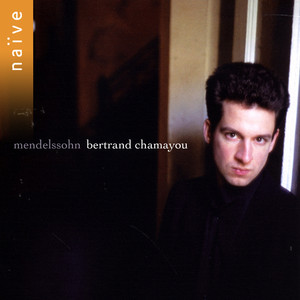 | Songs Without Words, Book VI Opus 67: No. 2 in F-Sharp Minor | Felix Mendelssohn, Bertrand Chamayou | F♯ Minor | 1 | 11A | 69 BPM | |
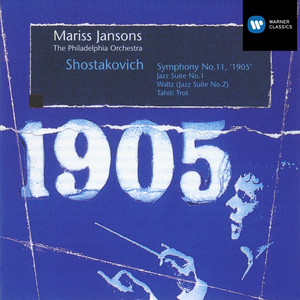 | Shostakovich: Tahiti Trot, Op. 16 (Orchestration of "Tea for Two") | Vincent Youmans, Philadelphia Orchestra, Mariss Jansons | A♭ Major | 1 | 4B | 84 BPM | |
 | Peer Gynt, Op. 23: No. 16, Anitra's Dance | Edvard Grieg, San Francisco Symphony, Herbert Blomstedt | A Minor | 0 | 8A | 82 BPM | |
 | The Boulevardier | Frederic Curzon, Slovak Radio Symphony Orchestra, Adrian Leaper | B♭ Major | 1 | 6B | 98 BPM | |
 | Simple Symphony, Op. 4: I. Boisterous Bourrée | Benjamin Britten, English Chamber Orchestra | A Minor | 2 | 8A | 106 BPM | |
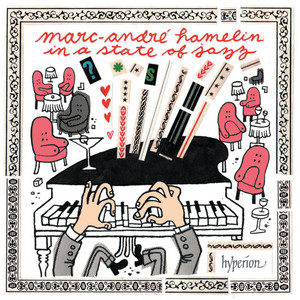 | Play Piano Play: I. Moderato | Friedrich Gulda, Marc-André Hamelin | E Minor | 0 | 9A | 80 BPM | |
 | Tritsch-Tratsch Polka, Op. 214 (Arr. Cziffra for Piano) | Johann Strauss II, Yuja Wang | E Major | 2 | 12B | 80 BPM | |
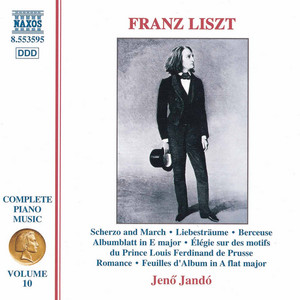 | Liebestraume, S541/R211 : No. 3: Nocturne in A-Flat Major | Franz Liszt, Jenő Jandó | A♭ Major | 0 | 4B | 60 BPM | |
 | La forza del destino: Overture (Sinfonia) | Giuseppe Verdi, Berliner Philharmoniker, Claudio Abbado | E Minor | 2 | 9A | 80 BPM | |
 | Pictures At An Exhibition: Promenade I | Modest Mussorgsky, Chicago Symphony Orchestra, Carlo Maria Giulini | F Major | 1 | 7B | 79 BPM | |
 | Swanee | George Gershwin, Irving Caesar | F Major | 2 | 7B | 127 BPM | |
 | 3 Liebesträume, S. 541/3: No. 3, O lieb, so lang du lieben kannst (Arr. for Harp by Nora von Marschall) | Franz Liszt, Nora von Marschall | B♭ Major | 0 | 6B | 85 BPM | |
 | The Watermill | Ronald Binge, Slovak Radio Symphony Orchestra, Ernest Tomlinson | F Major | 0 | 7B | 80 BPM | |
 | Humoresques, Op. 101, B. 187: VII. Poco lento e grazioso | Antonín Dvořák, Tiffany Poon | B♭ Major | 0 | 6B | 66 BPM | |
 | Pelléas et Mélisande, Op. 80 (Arr. C. Koechlin): III. Andante moderato | Gabriel Fauré, Radio Sinfonieorchester Stuttgart des SWR, Heinz Holliger | N/A | N/A | N/A | 0 BPM | |
 | Grand Fantasy on Porgy and Bess: Summertime (after G. Gershwin) | Earl Wild, Isata Kanneh-Mason | A♭ Minor | 1 | 1A | 74 BPM | |
 | Nocturne No. 20 In C-Sharp Minor, Op. Posth. | Jacques Loussier | F♯ Minor | 1 | 11A | 117 BPM | |
 | Thaïs / Acte Deux: Meditation | Jules Massenet, Michel Schwalbé, Berliner Philharmoniker, Herbert von Karajan | B♭ Major | 3 | 6B | 99 BPM | |
 | The Planets, Op. 32: 4. Jupiter, the Bringer of Jollity | Gustav Holst, Berliner Philharmoniker, Herbert von Karajan | G Minor | 3 | 6A | 140 BPM | |
 | The Rite of Spring, K15, Pt. 1: I. Introduction | Igor Stravinsky, Berliner Philharmoniker, Herbert von Karajan | A Minor | 5 | 8A | 127 BPM | |
 | Solfeggio in C Minor | Carl Philipp Emanuel Bach, Eugen Cicero | C Minor | 6 | 5A | 150 BPM | |
 | Ravel: Jeux d`eau (라벨: 물의 희롱) | 김준영 | G Minor | 1 | 6A | 96 BPM | |
 | Symphony No. 1 in E Minor: IV. Finale | Florence Beatrice Price, Fort Smith Symphony, John Jeter | C Major | 1 | 8B | 76 BPM | |
 | Rhapsody on a Theme of Paganini, Op. 43: Variation 18 | Sergei Rachmaninoff, Bernd Glemser, Polish National Radio Symphony Orchestra, Antoni Wit | D♭ Major | 1 | 3B | 76 BPM |
- ISRC
- GBAJU9800104
- Label
- L-M Records/RCA Records