- BPM
- 107
- Key
- B♭ Major
- Camelot
- 6B
Variations on an Original Theme: Variation 9 by Johannes Brahms, David Wilde Song Details
On March 2, 2009, the song "Variations on an Original Theme: Variation 9" was released by Johannes Brahms, David Wilde. With This song being less than two minutes long, at 1:08, we are fairly confident that this song is not explicit and is safe for all ages. Based on the duration of this song, this song duration is much smaller than the average song duration. This song is part of Wilde Plays Brahms: Two Rhapsodies, Variations on an Original Theme, Three Intermezzi by Johannes Brahms, David Wilde. The song's track number on the album is #12 out of 44 tracks. Based on our data, United Kingdom was the country where this track was produced or recorded. In terms of popularity, Variations on an Original Theme: Variation 9 is currently unknown. The mood doesn't appear to be that danceable, but it still produces a high amount of positive energy.
BPM and Tempo
Since Variations on an Original Theme: Variation 9 by Johannes Brahms, David Wilde has a tempo of 107 beats per a minute, the tempo markings of this song would be Andante (at a walking pace). With Variations on an Original Theme: Variation 9 being at 107 BPM, the half-time would be 54 BPM with a double-time of 214 BPM.In addition, we consider the tempo speed to be pretty slow for this song. The time signature for this track is 3/4.
Music Key
This song is in the music key of B♭ Major. Or for those who are familiar with the camelot wheel, this song has a camelot key of 6B. So, the perfect camelot match for 6B would be either 6B or 7A. While, 7B can give you a low energy boost. For moderate energy boost, you would use 3B and a high energy boost can either be 8B or 1B. Though, if you want a low energy drop, you should looking for songs with either a camelot key of 6A or 5B will give you a low energy drop, 9B would be a moderate one, and 4B or 11B would be a high energy drop. Lastly, 3A allows you to change the mood.
Want to find the BPM and music key for other songs? Check out our BPM and Key Finder page!
- Popularity
- 0%
- Loudness
- -17.157 dB
- Acousticness
- 98%
- Danceability
- 37%
- Energy
- 30%
- Instrumentalness
- 85%
- Liveness
- 12%
- Loudness
- 71%
- Speechiness
- 4%
- Valence
- 90%
Recommendations
| Track | Artist | Key | Energy | Camelot | BPM | ||
|---|---|---|---|---|---|---|---|
 | Mendelssohn - Lieder, S547/R217 (7 Lieder From Mendelssohn, Op, 19a, 34, 47) : Auf Flugeln Des Gesanges(From Op. 34, No. 2) | Joseph Banowetz, Franz Liszt | A♭ Major | 0 | 4B | 149 BPM | |
 | 13 Pieces, Op. 76: No. 2, Etude | Jean Sibelius, Olli Mustonen | G Major | 0 | 9B | 66 BPM | |
 | Symphony No. 5 in C Minor, Op. 67: I. Allegro con brio | Ludwig van Beethoven, Wiener Philharmoniker, Carlos Kleiber | C Major | 3 | 8B | 86 BPM | |
 | Schwanengesang, D. 957: Ständchen | Franz Schubert, Mischa Maisky, Daria Hovora | D Minor | 0 | 7A | 179 BPM | |
 | Violin Concerto in D Major, Op. 77: III. Allegro giocoso, ma non troppo vivace | Johannes Brahms, Takako Nishizaki, Slovak Philharmonic, Stephen Gunzenhauser | F Major | 1 | 7B | 91 BPM | |
 | Scherzo-tarantelle in G Minor, Op.16 - 1987 Remastered Version | Henryk Wieniawski, Itzhak Perlman, Samuel Sanders | D Major | 3 | 10B | 114 BPM | |
 | Minuet in A major, D. 334 | Franz Schubert, Arcadi Volodos | A Major | 0 | 11B | 92 BPM | |
 | 21 Hungarian Dances, WoO 1: Hungarian Dance No. 4 in F Minor. Poco sostenuto (Orch. Juon in F-Sharp Minor) | Johannes Brahms, Wiener Philharmoniker, Claudio Abbado | F♯ Minor | 2 | 11A | 80 BPM | |
 | Variations on a Theme by Haydn, Op. 56a "St. Anthony Variations": I. Theme. Andante | Johannes Brahms, London Philharmonic Orchestra, Marin Alsop | B♭ Major | 0 | 6B | 71 BPM | |
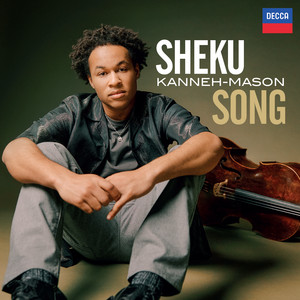 | Come, Sweet Death, BWV 478 (Arr. for 5 Cellos) | Sheku Kanneh-Mason, Hannah Roberts, Ben Davies, Desmond Neysmith, Max Ruisi | C Major | 0 | 8B | 122 BPM | |
 | Humoresque No. 7 in G-flat Major, Op. 101 | Boston Symphony Orchestra, Yo-Yo Ma, Seiji Ozawa, Itzhak Perlman | F♯ Major | 1 | 2B | 83 BPM | |
 | Kinderszenen | Robert Schumann, Ivan Moravec | F Major | 0 | 7B | 131 BPM | |
| Chopin - 6 Chants Polonais, S480/R145: No. 2. Fruhling(Wiosna, Spring) | Joseph Banowetz, Franz Liszt | G Major | 1 | 9B | 108 BPM | |
 | Violin Concerto No. 1 in G Minor, Op. 26: I. Allegro moderato | Max Bruch, Itzhak Perlman, Bernard Haitink, Concertgebouworkest | E♭ Major | 2 | 5B | 99 BPM | |
 | Carmen Suite No. 1: Intermezzo | Georges Bizet, Orchestre Symphonique de Montréal, Charles Dutoit | E♭ Major | 0 | 5B | 80 BPM | |
 | Cello Concerto No. 1 in A Minor, Op. 33: I. Allegro non troppo | Camille Saint-Saëns, Mischa Maisky, Orpheus Chamber Orchestra | F Major | 2 | 7B | 131 BPM | |
 | Du bist wie eine Blume, Op. 25/24 | Nils Mönkemeyer | A♭ Major | 0 | 4B | 82 BPM | |
 | La lisonjera, Op. 50 | Cécile Chaminade, Péter Nagy | D♭ Major | 1 | 3B | 132 BPM | |
 | Bagatelles et impromptus, JB 1:19: VII. Love | Bedřich Smetana, William Howard | A Major | 0 | 11B | 76 BPM | |
 | Cello Sonata in G Minor, Op. 65: III. Largo | Frédéric Chopin, Emmanuelle Bertrand, Pascal Amoyel | B♭ Major | 0 | 6B | 89 BPM | |
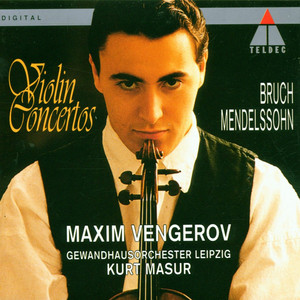 | Bruch : Violin Concerto No.1 in G minor Op.26 : III Finale - Allegro energico | Max Bruch, Maxim Vengerov, Kurt Masur, Gewandhausorchester Leipzig | G Major | 2 | 9B | 90 BPM | |
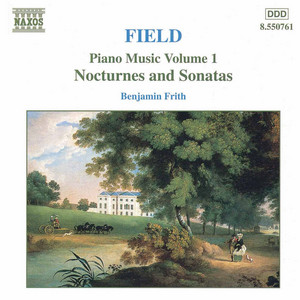 | Nocturne No. 5 in B-Flat Major, H 37 | John Field, Benjamin Frith | B♭ Major | 0 | 6B | 70 BPM | |
 | 6 Melodies, Op. 4 - 6 melodies, Op. 5: Allegretto | Fanny Mendelssohn, Beatrice Rauchs | G Minor | 1 | 6A | 107 BPM | |
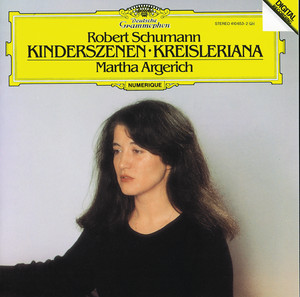 | Kinderszenen, Op. 15: I. Von fremden Ländern und Menschen | Robert Schumann, Martha Argerich | G Major | 0 | 9B | 128 BPM | |
 | Kinderszenen, Op. 15: VII. Träumerei | Robert Schumann, Alfred Brendel | F Major | 0 | 7B | 135 BPM |
- ISRC
- GBEBL0904012
- Label
- L-M Records/RCA Records