- BPM
- 104
- Key
- A Major
- Camelot
- 11B
Mefistofele: Prologue - Salmodia Finale - Salve Regina! by Arrigo Boito, Riccardo Muti, Orchestra Del Teatro Alla Scala, Milano, Chorus of Teatro alla Scala, Treble Choir of Teatro alla Scala and the Verdi Conservatory Song Details
"Mefistofele: Prologue - Salmodia Finale - Salve Regina!" by Arrigo Boito, Riccardo Muti, Orchestra Del Teatro Alla Scala, Milano, Chorus of Teatro alla Scala, Treble Choir of Teatro alla Scala and the Verdi Conservatory had its release date on 1996. Since This song is still less than 10 minute long, it is still considered a pretty long duration song compared to the average song length. This song does not appear to be explicit due to the lack of the "E" tag. The song is number 6 out of 34 in Boito: Mefistofele by Arrigo Boito, Riccardo Muti. Going off of the ISRC code of this track, we detected that the origin of this track is from United States. In terms of popularity, Mefistofele: Prologue - Salmodia Finale - Salve Regina! is currently not that popular. In our opinion, the overall tone is not very danceable and projects negative sounds, such as being sad, depressed, or angry.
BPM and Tempo
The tempo marking of Mefistofele: Prologue - Salmodia Finale - Salve Regina! by Arrigo Boito, Riccardo Muti, Orchestra Del Teatro Alla Scala, Milano, Chorus of Teatro alla Scala, Treble Choir of Teatro alla Scala and the Verdi Conservatory is Andante (at a walking pace), since this song has a tempo of 104 BPM. With that information, we can conclude that the song has a slow tempo. The time signature for this track is 4/4.
Music Key
A Major is the music key of this track. This also means that this song has a camelot key of 11B. So, the perfect camelot match for 11B would be either 11B or 12A. While, 12B can give you a low energy boost. For moderate energy boost, you would use 8B and a high energy boost can either be 1B or 6B. Though, if you want a low energy drop, you should looking for songs with either a camelot key of 11A or 10B will give you a low energy drop, 2B would be a moderate one, and 9B or 4B would be a high energy drop. Lastly, 8A allows you to change the mood.
Want to find the BPM and music key for other songs? Check out our BPM and Key Finder page!
- Popularity
- 4%
- Loudness
- -18.725 dB
- Acousticness
- 98%
- Danceability
- 15%
- Energy
- 24%
- Instrumentalness
- 45%
- Liveness
- 8%
- Loudness
- 69%
- Speechiness
- 4%
- Valence
- 4%
Recommendations
| Track | Artist | Key | Energy | Camelot | BPM | ||
|---|---|---|---|---|---|---|---|
 | Pagliacci, Act I: Prologue: Si puo? Si puo? | Ruggero Leoncavallo, Dmitri Hvorostovsky, Russia Spiritual Revival Choir, Philharmonia of Russia, Constantine Orbelian | G Minor | 1 | 6A | 93 BPM | |
 | Lohengrin, WWV 75, Act I Scene 3: Durch Gottes Sieg ist jetzt dein Leben mein | Richard Wagner, Siegfried Jerusalem, Kurt Moll, Cheryl Studer, Waltraud Meier, Hartmut Welker, Wiener Staatsopernchor, Peter Burian, Wiener Philharmoniker, Claudio Abbado | B♭ Major | 6 | 6B | 92 BPM | |
 | Nerone, Act I: Canto d'amore vola col vento (3 Women's Voices, Chorus, Simon Mago, Tigellino, A Bass Voice, Nerone, A Tenor Voice) - Live | Arrigo Boito, Natalia Gavrilan, Francesca Zanatta, Luana Spinola, Franco Vassallo, Dongho Kim, Nicola Ebau, Fiorenzo Tornincasa, Mikheil Sheshaberidze, Coro del Teatro Lirico di Cagliari, Orchestra del Teatro Lirico di Cagliari, Francesco Cilluffo | F Major | 2 | 7B | 80 BPM | |
 | Peter Grimes, Op.33 / Act 1: "Hi! Give Us a Hand" | Benjamin Britten, Sir Peter Pears, Raymond Nilsson, James Pease, Jean Watson, Geraint Evans, David Kelly, Orchestra of the Royal Opera House, Covent Garden | E♭ Major | 2 | 5B | 133 BPM | |
 | Stabat Mater: 6. Sancta Mater istud agas | Gioachino Rossini, Katia Ricciarelli, Lucia Valentini Terrani, Dalmacio Gonzales, Ruggero Raimondi, Philharmonia Orchestra, Carlo Maria Giulini | A♭ Major | 1 | 4B | 71 BPM | |
 | Il barbiere di Siviglia / Act 1: No. 6 Aria: "La calunnia è un venticello" | Gioachino Rossini, Nicolai Ghiaurov, Orchestra del Teatro San Carlo di Napoli, Silvio Varviso | C Major | 2 | 8B | 81 BPM | |
 | Fedora / Act 2: "Amor ti vieta" | Umberto Giordano, Roberto Alagna, Orchestra of the Royal Opera House, Covent Garden, Sir Mark Elder | C Major | 1 | 8B | 91 BPM | |
 | Bizet: Les pêcheurs de perles, Act 1: "Ô Dieu Brahma !" (Leïla, Nadir, Chœur) | Georges Bizet, Pierre Dervaux, Chœur du Théâtre National de l’Opéra-Comique, Janine Micheau, Nicolai Gedda, Orchestre du Theatre National de IOpera-Comique | F Major | 0 | 7B | 65 BPM | |
 | Lucrezia Borgia: Prologue: Com'e bello! quale incanto (Lucrezia, Don Alfonso, Rustighello) | Gaetano Donizetti, Dimitra Theodossiou, Roberto De Biasio, Enrico Giuseppe Iori, Nidia Palacios, Luigi Albani, Giuseppe Di Paola, Mauro Corna, Livio Scarpellini, Giovanni Manfrin, Luca Dall'Amico, Dario Giorgele, Bergamo Musica Festival Chorus, Bergamo Mu | E♭ Major | 0 | 5B | 88 BPM | |
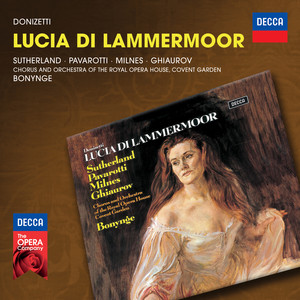 | Lucia di Lammermoor / Act 3: "S'avanza Enrico" | Gaetano Donizetti, Dame Joan Sutherland, Sherrill Milnes, Nicolai Ghiaurov, Chorus of the Royal Opera House, Covent Garden, Orchestra of the Royal Opera House, Covent Garden, Richard Bonynge | G Major | 0 | 9B | 107 BPM | |
 | Manon Lescaut / Act 2: Minuetto | Giacomo Puccini, Anthony Laciura, Giuseppe Taddei, Mirella Freni, Metropolitan Opera Chorus, Metropolitan Opera Orchestra, James Levine | D Major | 0 | 10B | 146 BPM | |
 | Puccini: Turandot, Act 1: "Perduta la battaglia" (Timur, Calaf, Liù, La Folla) | Giacomo Puccini, Franco Corelli, Francesco Molinari-Pradelli, Orchestra Del Teatro Dell'Opera Di Roma | A Minor | 1 | 8A | 113 BPM | |
 | Berlioz: La Damnation de Faust, Op. 24, H 111, Pt. 4: "Nature immense" (Faust) | Hector Berlioz, John Nelson, Michael Spyres, Orchestre Philharmonique De Strasbourg | F Major | 0 | 7B | 72 BPM | |
 | La Gioconda / Act 1: Feste! Pane! Feste! | Amilcare Ponchielli, Sherrill Milnes, The London Opera Chorus, National Philharmonic Orchestra, Bruno Bartoletti | B♭ Major | 4 | 6B | 67 BPM | |
 | Madama Butterfly: Act III, Lo so che alle sue pene | Giacomo Puccini, Lorin Maazel, Philharmonia Orchestra | F♯ Major | 4 | 2B | 98 BPM | |
| Stabat Mater: 4. Pro peccatis suae gentis | Gioachino Rossini, Ruggero Raimondi, Philharmonia Orchestra, Carlo Maria Giulini | C Major | 3 | 8B | 80 BPM | |
 | Boito: Mefistofele, Epilogue: "Giunto sul passo estremo" (Faust, Mefistofele) | Arrigo Boito, Norman Treigle, Julius Rudel, London Symphony Orchestra | A♭ Major | 1 | 4B | 81 BPM | |
 | Don Pasquale, Act II Prima Scena: Chercherò lontana terra (Ernesto) | Gaetano Donizetti, Gösta Winbergh/Philharmonia Orchestra/Riccardo Muti, Riccardo Muti, Philharmonia Orchestra | F Minor | 1 | 4A | 92 BPM | |
 | Madama Butterfly (1986 - Remaster), Act I: Viene la sera (Pinkerton/Butterfly/Suzuki) | Giacomo Puccini, Renata Scotto, Anna Di Stasio, Carlo Bergonzi, Renata Scotto, Carlo Bergonzi, Orchestra del Teatro dell’Opera di Roma & Sir John Barbirolli, Sir John Barbirolli, Orchestra Del Teatro Dell'Opera Di Roma | E♭ Major | 0 | 5B | 117 BPM | |
 | Cendrillon: Faites-vous très belles | Jules Massenet, Philharmonia Orchestra, Julius Rudel | B♭ Major | 1 | 6B | 115 BPM | |
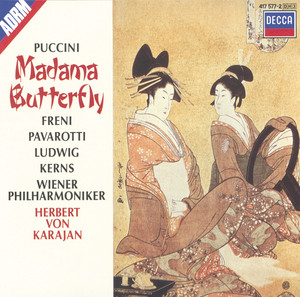 | Madama Butterfly / Act 2: Ora a noi. Sedete qui. | Giacomo Puccini, Robert Kerns, Mirella Freni, Wiener Philharmoniker, Herbert von Karajan | B♭ Major | 0 | 6B | 168 BPM | |
 | Lucia di Lammermoor / Act 3: Spargi d'amaro pianto | Gaetano Donizetti, Nadine Sierra, Capella Cracoviensis, Orchestra Sinfonica Nazionale della Rai, Riccardo Frizza | E♭ Major | 1 | 5B | 89 BPM | |
 | Puccini : La bohème : Act 2 "Quando me'n vo soletta" [Musetta, Marcello, Alcindoro, Mimì] | Giacomo Puccini, James Conlon, Orchestre National De France | E Major | 1 | 12B | 87 BPM | |
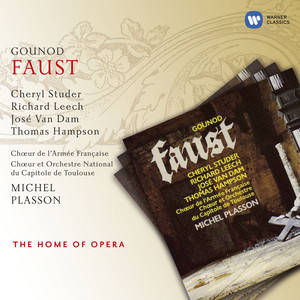 | Gounod: Faust, Act 2: "Allons, amis ! Point de vaines alarmes !" (Wagner, Méphistophélès, Chœur) | Charles Gounod, Michel Plasson, Chœur de l'Armée française, Choeur Du Capitole De Toulouse, José van Dam, Marc Barrard, Orchestre Du Capitole De Toulouse | F Major | 2 | 7B | 94 BPM | |
 | Massenet: Werther, Act 3: "Toute mon âme est là !" - "Pourquoi me réveiller" (Werther, Charlotte) | Jules Massenet, Michel Plasson, Alfredo Kraus, Tatiana Troyanos, London Philharmonic Orchestra | G Major | 2 | 9B | 128 BPM |
- ISRC
- USBC19605037
- Label
- L-M Records/RCA Records