- BPM
- 107
- Key
- A♭ Major
- Camelot
- 4B
組曲第 2番, 作品 17: 1. 序奏 by Sergei Rachmaninoff, Nikolai Lugansky, Vadim Rudenko Song Details
Sergei Rachmaninoff, Nikolai Lugansky, Vadim Rudenko's '組曲第 2番, 作品 17: 1. 序奏' had a release date set for 2004. With this song being around four minutes long, at 4:03, the duration of this song is pretty average compared to other songs. This track is safe for children and doesn't appear to contain any foul language, since the "Explicit" tag was not present in this track. There is only one song in ラフマニノフ:2台のピアノのための組曲 第 1番&第 2番, so we believe that "組曲第 2番, 作品 17: 1. 序奏" is a single. In terms of popularity, 組曲第 2番, 作品 17: 1. 序奏 is currently not that popular. In our opinion, the overall tone is not very danceable and projects negative sounds, such as being sad, depressed, or angry.
BPM and Tempo
The tempo marking of 組曲第 2番, 作品 17: 1. 序奏 by Sergei Rachmaninoff, Nikolai Lugansky, Vadim Rudenko is Andante (at a walking pace), since this song has a tempo of 107 BPM. With that information, we can conclude that the song has a slow tempo. The time signature for this track is 4/4.
Music Key
This song has a musical key of A♭ Major. This also means that this song has a camelot key of 4B. So, the perfect camelot match for 4B would be either 4B or 5A. While, 5B can give you a low energy boost. For moderate energy boost, you would use 1B and a high energy boost can either be 6B or 11B. Though, if you want a low energy drop, you should looking for songs with either a camelot key of 4A or 3B will give you a low energy drop, 7B would be a moderate one, and 2B or 9B would be a high energy drop. Lastly, 1A allows you to change the mood.
Want to find the BPM and music key for other songs? Check out our BPM and Key Finder page!
- Popularity
- 2%
- Loudness
- -22.978 dB
- Acousticness
- 99%
- Danceability
- 34%
- Energy
- 9%
- Instrumentalness
- 90%
- Liveness
- 73%
- Loudness
- 62%
- Speechiness
- 3%
- Valence
- 21%
Recommendations
| Track | Artist | Key | Energy | Camelot | BPM | ||
|---|---|---|---|---|---|---|---|
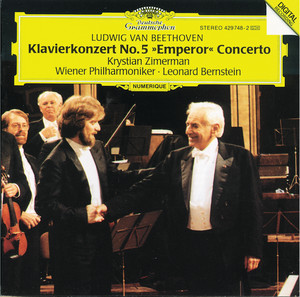 | Piano Concerto No. 5 in E-Flat Major, Op. 73 "Emperor": II. Adagio un poco moto - Live | Ludwig van Beethoven, Krystian Zimerman, Wiener Philharmoniker, Leonard Bernstein | B Major | 0 | 1B | 85 BPM | |
 | Scheherazade: Calm at Sea | Nikolai Rimsky-Korsakov, Lars Hjalmar Joakim | E Major | 2 | 12B | 84 BPM | |
 | Capriol Suite: 5. Pied-en- l'air | Peter Warlock, Academy of St. Martin in the Fields, Nicholas Kraemer, Sir Neville Marriner | G Major | 1 | 9B | 113 BPM | |
 | Ständchen, S. 560 (Trans. from Schwanengesang No. 4, D. 957) | Franz Schubert, Franz Liszt, Khatia Buniatishvili | D Major | 0 | 10B | 67 BPM | |
 | Sonata in D Minor, K. 9 | Domenico Scarlatti, Ivo Pogorelich | D Minor | 0 | 7A | 94 BPM | |
 | Lieder ohne Worte, Op. 19b: Lieder ohne Worte (Song without Words) No. 6 in G Minor, Op. 19, No. 6, "Venezianisches Gondellied" [Venetian Gondola Song] | Felix Mendelssohn, Péter Nagy | G Major | 0 | 9B | 101 BPM | |
 | Le tombeau de Couperin: 3. Menuet (version for orchestra) | Maurice Ravel, フランス国立リヨン管弦楽団, レナード・スラットキン | A Major | 1 | 11B | 107 BPM | |
 | Piano Concerto No. 3 in C Major, Op. 26: I. Andante - Allegro | Sergei Prokofiev, Martha Argerich, Berliner Philharmoniker, Claudio Abbado | C Major | 2 | 8B | 116 BPM | |
 | Douze valses, Le ruban dénoué: No. 1, Décrets indolents du hasard | Reynaldo Hahn, Huseyin Sermet, Kun-Woo Paik | F♯ Minor | 0 | 11A | 104 BPM | |
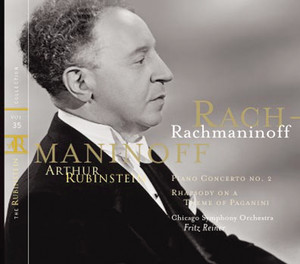 | Piano Concerto No. 2 in C Minor, Op. 18: I. Moderato | Sergei Rachmaninoff, Arthur Rubinstein, Fritz Reiner | C Minor | 1 | 5A | 71 BPM | |
 | II. Dumka (Arr. P. Breiner for Piano) | Antonín Dvořák, Peter Breiner | B Minor | 0 | 10A | 71 BPM | |
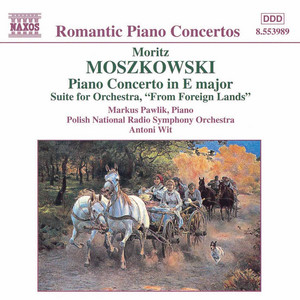 | Aus aller Herren Landern (From Foreign Lands), Op. 23: V. Polish: Allegro con fuoco | Moritz Moszkowski, Markus Pawlik, Polish National Radio Symphony Orchestra, Antoni Wit | B♭ Major | 1 | 6B | 82 BPM | |
 | Liebesleid (Love's Sorrow) | Fritz Kreisler, Sergei Rachmaninoff, RueiBin Chen | A Major | 2 | 11B | 98 BPM | |
 | Five Pieces For Two Violins and Piano: I. Prelude | Dmitri Shostakovich, Julian Rachlin, Janine Jansen, Yuri Bashmet, Mischa Maisky, Itamar Golan | G Major | 0 | 9B | 85 BPM | |
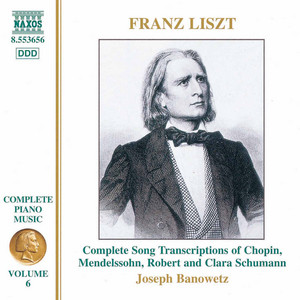 | Chopin - 6 Chants Polonais, S480/R145: No. 2. Fruhling(Wiosna, Spring) | Joseph Banowetz, Franz Liszt | G Major | 1 | 9B | 108 BPM | |
 | Allegro molto agitato in D Minor | Fanny Mendelssohn, Heather Schmidt | D Major | 1 | 10B | 111 BPM | |
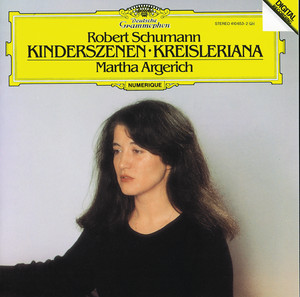 | Kinderszenen, Op. 15: X. Fast zu ernst | Robert Schumann, Martha Argerich | A♭ Minor | 0 | 1A | 67 BPM | |
 | 3 Violin Duets (1996 Digital Remaster): I. Praeludium | Pinchas Zukerman, Itzhak Perlman | B Minor | 1 | 10A | 91 BPM | |
 | Serenade For Strings In E Major, Op.22, B.52: 2. Tempo di valse | Antonín Dvořák, Wiener Philharmoniker, Myung-Whun Chung | A Major | 1 | 11B | 177 BPM | |
 | Polovetsian Dances from Prince Igor: Introduzione | Alexander Borodin, George Szell, The Cleveland Orchestra | A Major | 1 | 11B | 83 BPM | |
 | Saint-Saëns: Valse nonchalante in D-Flat Major, Op. 110 | Camille Saint-Saëns, Bertrand Chamayou | C Major | 1 | 8B | 66 BPM | |
 | Violin Concerto No. 1 in G Minor, Op. 26: III. Allegro energico | Max Bruch, Itzhak Perlman, Bernard Haitink, Royal Concertgebouw Orchestra | G Major | 3 | 9B | 97 BPM | |
 | Carmen Variations | Vladimir Horowitz | E Major | 2 | 12B | 148 BPM | |
 | Symphony No. 5 In C Sharp Minor: 4. Adagietto (Sehr langsam) | Gustav Mahler, Gyeonggi Philharmonic Orchestra, Shi-Yeon Sung | F Major | 0 | 7B | 82 BPM | |
 | Symphony No. 5: IV. Adagietto. Sehr langsam | Gustav Mahler, Wiener Philharmoniker, Pierre Boulez | F Major | 0 | 7B | 87 BPM |
- ISRC
- JPG200404565
- Label
- L-M Records/RCA Records