- BPM
- 82
- Key
- F♯ Major
- Camelot
- 2B
Comus, HWV 44: There Sweetest Flowers by George Frideric Handel, Patrizia Kwella, Academy of Ancient Music, Christopher Hogwood Song Details
George Frideric Handel, Patrizia Kwella, Academy of Ancient Music, Christopher Hogwood's ' "Comus, HWV 44: There Sweetest Flowers" was released on its scheduled release date, January 1, 1989. With this song being about 5 minutes long, at This song is fairly a long song compared to the average song length. This song does not have an "Explicit" tag, making it safe for all ages. The track order of this song in George Frideric Handel, Christopher Hogwood, Academy of Ancient Music's "Handel: Alceste; Comus" album is number 22 out of 25. On top of that, United Kingdom appears to be the country where this track was created. Comus, HWV 44: There Sweetest Flowers is unknown right now. The overall mood can be danceable to some, especially with it's high amount of postive energy.
BPM and Tempo
We consider the tempo marking of Comus, HWV 44: There Sweetest Flowers by George Frideric Handel, Patrizia Kwella, Academy of Ancient Music, Christopher Hogwood to be Andante (at a walking pace) because the track has a tempo of 82 BPM, a half-time of 41BPM, and a double-time of 164 BPM. Based on that, the speed of the song's tempo is slow. The time signature for this track is 4/4.
Music Key
This song is in the music key of F♯ Major. This also means that this song has a camelot key of 2B. So, the perfect camelot match for 2B would be either 2B or 3A. While, 3B can give you a low energy boost. For moderate energy boost, you would use 11B and a high energy boost can either be 4B or 9B. Though, if you want a low energy drop, you should looking for songs with either a camelot key of 2A or 1B will give you a low energy drop, 5B would be a moderate one, and 12B or 7B would be a high energy drop. Lastly, 11A allows you to change the mood.
Want to find the BPM and music key for other songs? Check out our BPM and Key Finder page!
- Popularity
- 0%
- Loudness
- -19.174 dB
- Acousticness
- 95%
- Danceability
- 52%
- Energy
- 23%
- Instrumentalness
- 0%
- Liveness
- 6%
- Loudness
- 68%
- Speechiness
- 4%
- Valence
- 72%
Recommendations
| Track | Artist | Key | Energy | Camelot | BPM | ||
|---|---|---|---|---|---|---|---|
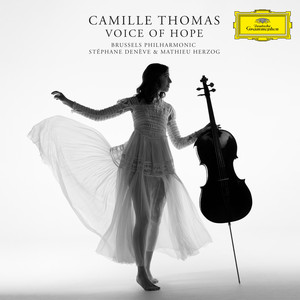 | Dido and Aeneas, Z. 626 / Act III: "When I Am Laid in Earth" Dido's Lamento (Arr. by Mathieu Herzog for Cello and Strings) | Henry Purcell, Camille Thomas, Brussels Philharmonic, Mathieu Herzog | G Minor | 1 | 6A | 77 BPM | |
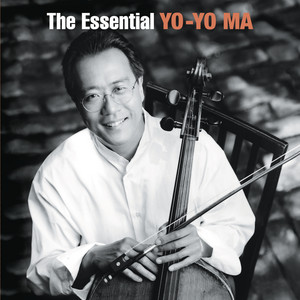 | Wachet auf, ruft uns die Stimme, BWV 645 | Yo-Yo Ma, Ton Koopman, Amsterdam Baroque Orchestra | D Major | 0 | 10B | 79 BPM | |
 | Deborah, HWV 51: Part I: Chorus - Let thy deeds be glorious | George Frideric Handel, Natacha Ducret, Elisabeth Scholl, Ewa Wolak, Lawrence Zazzo, Junge Kantorei, Frankfurt Baroque Orchestra, Joachim Carlos Martini | A Minor | 0 | 8A | 172 BPM | |
 | Handel: Water Music, Suite No. 2 in D Major, HWV 349: III. Gigue | George Frideric Handel, Yehudi Menuhin, Bath Festival Orchestra | D Major | 1 | 10B | 118 BPM | |
 | Ode for St. Cecilia's Day, HWV 76: Interlude | George Frideric Handel, Dorothee Mields, Mark Wilde, Alsfelder Vocal Ensemble, Concerto Polacco, Wolfgang Helbich | A♭ Minor | 0 | 1A | 96 BPM | |
 | Handel: Concerto a due cori No. 1 in B-Flat Major, HWV 332: I. Overture - Allegro ma non troppo | George Frideric Handel, Leslie Pearson, Menuhin Festival Orchestra, Yehudi Menuhin | F Major | 1 | 7B | 135 BPM | |
 | String Quintet No. 60 in C Major, G. 324 "La musica notturna delle strade di Madrid": I. Il campane quando suonano l'Ave Maria | Luigi Boccherini, Cuarteto Casals, Eckart Runge | C Major | 1 | 8B | 103 BPM | |
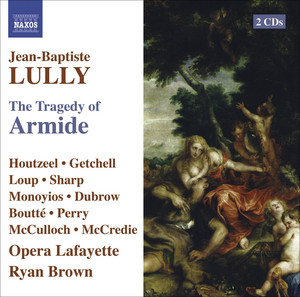 | Armide: Overture | Jean-Baptiste Lully, Stephanie Houtzeel, Robert Getchell, François Loup, William Sharp, Ann Monoyios, Miriam Dubrow, Tony Boutté, Darren Perry, Adria McCulloch, Tara McCredie, Opera Lafayette Chorus, Opera Lafayette Orchestra, Ryan Brown | B♭ Major | 1 | 6B | 70 BPM | |
 | Tu mancavi a tormentarmi, crudelissima speranza (Arr. L. Stokowski) | Antonio Cesti, Brussels Philharmonic, Richard Egarr | E Major | 1 | 12B | 87 BPM | |
 | Purcell: Trumpet Sonata in D Major, Z. 850: II. Adagio | Henry Purcell, John Eliot Gardiner, English Baroque Soloists | D♭ Minor | 0 | 12A | 103 BPM | |
 | Stabat Mater: 4. Quae moerabat | Giovanni Battista Pergolesi, Lucia Valentini Terrani, London Symphony Orchestra, Claudio Abbado, Leslie Pearson | E♭ Major | 1 | 5B | 75 BPM | |
 | String Quartet No. 62 in C Major, Op. 76 No. 3, Hob. III:77 "Emperor": II. Poco adagio, cantabile | Joseph Haydn, Kodály Quartet | G Major | 1 | 9B | 110 BPM | |
 | Oboe Concerto in D Minor: II. Adagio | Alessandro Marcello, Jozsef Kiss, Budapest Ferenc Erkel Chamber Orchestra | D Minor | 1 | 7A | 131 BPM | |
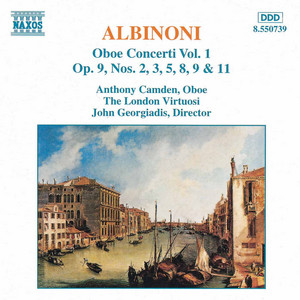 | Oboe Concerto in D Minor, Op. 9, No. 2: I. Allegro e non presto | Tomaso Albinoni, Anthony Camden, London Virtuosi, John Georgiadis | D Minor | 2 | 7A | 145 BPM | |
 | Stabat Mater, P. 77: II. Soprano. Cuius animam gementem | Giovanni Battista Pergolesi, Emma Kirkby, Academy of Ancient Music, Christopher Hogwood | G Major | 1 | 9B | 79 BPM | |
 | Overture No. 2 in F Major: III. Sarabande | Francesco Maria Veracini, Accademia I Filarmonici, Alberto Martini | F Major | 1 | 7B | 108 BPM | |
 | Concerto grosso in B minor, Op. 6, No. 12: 3. Larghetto, e piano | George Frideric Handel, Michel Schwalbé, Hanns-Joachim Westphal, Ottomar Borwitzky, Edith Picht-Axenfeld, Herbert von Karajan, Karl Scheit, Friedrich Fischer, Berliner Philharmoniker | G Major | 2 | 9B | 85 BPM | |
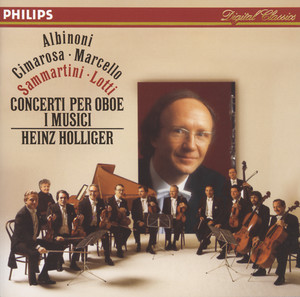 | Oboe Concerto in C: 3. Siciliana | Domenico Cimarosa, Heinz Holliger, I Musici | A Minor | 1 | 8A | 84 BPM | |
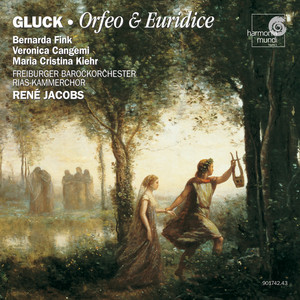 | Orfeo ed Euridice: Act II, Scene 2, Ballo. Andante | Christoph Willibald Gluck, René Jacobs, Freiburger Barockorchester | C Major | 0 | 8B | 74 BPM | |
 | Symphony No. 1 in B-Flat Major, Op. 2: I. Allegro | William Boyce, Aradia Ensemble, Kevin Mallon | A Major | 1 | 11B | 86 BPM | |
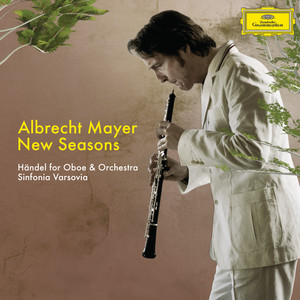 | Alcina, HWV 34 / Act II: "Verdi prati" (Arr. for Oboe d'amore, Strings and Basso Continuo) | George Frideric Handel, Albrecht Mayer, Jakub Haufa, Monika Razynska, Sinfonia Varsovia | D Minor | 2 | 7A | 176 BPM | |
 | Oboe Concerto in D Minor, S. Z799: III. Presto | Alessandro Marcello, Marcel Ponseele, Il Gardellino | D♭ Minor | 3 | 12A | 70 BPM | |
 | Flute Concerto No. 3 in C: 3. Allegro assai | Frederick the Great, Patrick Gallois, Carl Philipp Emanuel Bach Chamber Orchestra, Peter Schreier | C Major | 1 | 8B | 130 BPM | |
 | Les Boréades, RCT 31, Acte IV, Scène IV: Entrée pour les Muses, les Zéphyres, les Saisons, les Heures et les Arts | Jean-Philippe Rameau, Teodor Currentzis | D♭ Major | 1 | 3B | 130 BPM | |
 | Concerto Per Oboe, Archi E Continuo In Re Minore: II. Adagio | Alessandro Marcello, Venice Baroque Orchestra | D♭ Minor | 0 | 12A | 79 BPM |
- ISRC
- GBF078010433
- Label
- L-M Records/RCA Records