- BPM
- 107
- Key
- B♭ Major
- Camelot
- 6B
Variations on an Original Theme by Handel: Variation 6 by Johannes Brahms, David Wilde Song Details
On March 2, 2009, the song "Variations on an Original Theme by Handel: Variation 6" was released by Johannes Brahms, David Wilde. With This song being less than a minute long, we are pretty confident that this song does not contain any foul language. That being said, this song is pretty short compared to other songs. This song is part of Wilde Plays Brahms: Two Rhapsodies, Variations on an Original Theme, Three Intermezzi by Johannes Brahms, David Wilde. The song's track number on the album is #24 out of 44 tracks. Based on our data, United Kingdom was the country where this track was produced or recorded. In terms of popularity, Variations on an Original Theme by Handel: Variation 6 is currently unknown. The mood doesn't appear to be that danceable, but it still produces a high amount of positive energy.
BPM and Tempo
Since Variations on an Original Theme by Handel: Variation 6 by Johannes Brahms, David Wilde has a tempo of 107 beats per a minute, the tempo markings of this song would be Andante (at a walking pace). With Variations on an Original Theme by Handel: Variation 6 being at 107 BPM, the half-time would be 54 BPM with a double-time of 214 BPM.In addition, we consider the tempo speed to be pretty slow for this song. The time signature for this track is 3/4.
Music Key
This song is in the music key of B♭ Major. Or for those who are familiar with the camelot wheel, this song has a camelot key of 6B. So, the perfect camelot match for 6B would be either 6B or 7A. While, 7B can give you a low energy boost. For moderate energy boost, you would use 3B and a high energy boost can either be 8B or 1B. Though, if you want a low energy drop, you should looking for songs with either a camelot key of 6A or 5B will give you a low energy drop, 9B would be a moderate one, and 4B or 11B would be a high energy drop. Lastly, 3A allows you to change the mood.
Want to find the BPM and music key for other songs? Check out our BPM and Key Finder page!
- Popularity
- 0%
- Loudness
- -17.157 dB
- Acousticness
- 98%
- Danceability
- 37%
- Energy
- 30%
- Instrumentalness
- 85%
- Liveness
- 12%
- Loudness
- 71%
- Speechiness
- 4%
- Valence
- 90%
Recommendations
| Track | Artist | Key | Energy | Camelot | BPM | ||
|---|---|---|---|---|---|---|---|
 | Badinerie from Orchestral Suite No. 2 in B Minor, BWV 1067 (Arr. for Four Hands) | Johann Sebastian Bach, Khatia Buniatishvili, Gvantsa Buniatishvili | B Minor | 3 | 10A | 133 BPM | |
 | Pelléas et Mélisande, Op.80: 3. Sicilienne | Gabriel Fauré, Academy of St. Martin in the Fields, Sir Neville Marriner | G Minor | 0 | 6A | 111 BPM | |
 | Shéhérazade, Op. 35: III. The Young Prince and the Young Princess | Nikolai Rimsky-Korsakov, Sergej Galaktionov, Gianandrea Noseda, Filarmonica Teatro Regio Torino | G Major | 0 | 9B | 103 BPM | |
 | Liszt: Lieder aus Franz Schubert's "Schwanengesang", S. 560: No. 7 Ständchen | Franz Liszt, Mariam Batsashvili | A Minor | 1 | 8A | 120 BPM | |
 | 13 Pieces, Op. 76: No. 2, Etude | Jean Sibelius, Olli Mustonen | G Major | 0 | 9B | 66 BPM | |
 | Keyboard Sonata in B Minor, Wq. 55/3, H. 245: Cantabile | Carl Philipp Emanuel Bach, Christopher Hinterhuber | E Minor | 1 | 9A | 106 BPM | |
 | Romance "O pourquoi donc" in E Minor, S. 169 | Franz Liszt, Lang Lang | E Minor | 0 | 9A | 67 BPM | |
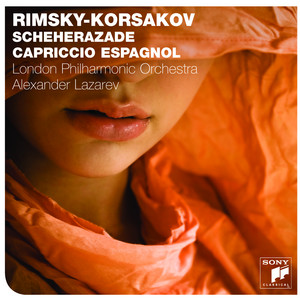 | Scheherazade: Calm at Sea | Nikolai Rimsky-Korsakov, Lars Hjalmar Joakim | E Major | 2 | 12B | 84 BPM | |
 | Rachmaninov: 10 Preludes, Op. 23: No. 5 in G Minor | Sergei Rachmaninoff, Nikolai Lugansky | G Minor | 1 | 6A | 113 BPM | |
 | Violin Concerto No. 1 in A minor, BWV 1041: I. (Allegro moderato) | Johann Sebastian Bach, Daniel Lozakovich, Chamber Orchestra of the Bavarian Radio, Radoslaw Szulc, Olga Watts | A Minor | 4 | 8A | 91 BPM | |
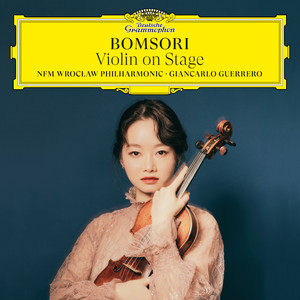 | Thaïs: Méditation | Jules Massenet, Bomsori, NFM Wrocław Philharmonic, Giancarlo Guerrero | D Major | 0 | 10B | 84 BPM | |
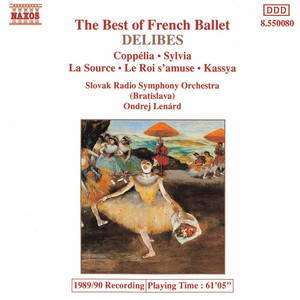 | Le roi s'amuse: Pavane | Léo Delibes, Slovak Philharmonic, Ondrej Lenard | B♭ Major | 0 | 6B | 91 BPM | |
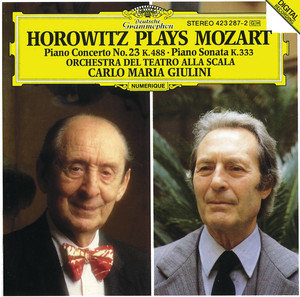 | Piano Concerto No. 23 in A Major, K. 488: I. Allegro (Cadenza by Busoni) | Wolfgang Amadeus Mozart, Vladimir Horowitz, Orchestra Del Teatro Alla Scala, Milano, Carlo Maria Giulini | A Major | 1 | 11B | 140 BPM | |
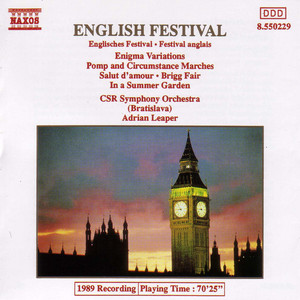 | Salut d'amour, Op. 12 (version for orchestra) | Edward Elgar, Slovak Radio Symphony Orchestra, Adrian Leaper | B♭ Major | 1 | 6B | 82 BPM | |
 | Rachmaninov: Rhapsody on a Theme of Paganini, Op. 43: Variation XVIII | Sergei Rachmaninoff, Nikolai Lugansky, Sakari Oramo, City Of Birmingham Symphony Orchestra | D♭ Major | 1 | 3B | 61 BPM | |
 | Le Carnaval des Animaux, R. 125: Le Cygne | Camille Saint-Saëns, Mischa Maisky, Martha Argerich, Nelson Freire | G Major | 0 | 9B | 88 BPM | |
 | Sonata in D Minor, K. 9 | Domenico Scarlatti, Ivo Pogorelich | D Minor | 0 | 7A | 94 BPM | |
 | Cantabile | Niccolò Paganini, Midori, Robert McDonald | D Major | 1 | 10B | 81 BPM | |
 | Symphonie fantastique, Op. 14, H 48: II. Un Bal | Hector Berlioz, London Symphony Orchestra, Sir Colin Davis | A Major | 1 | 11B | 113 BPM | |
 | Double Concerto in A Minor, Op. 102 for Violin, Cello and Orchestra: III. Vivace non troppo | Johannes Brahms, Joshua Bell, Steven Isserlis, Academy of St. Martin in the Fields | A Minor | 2 | 8A | 86 BPM | |
 | Consolation No. 3 in D-Flat Major, S. 172/3 | Franz Liszt, Vladimir Horowitz | D♭ Major | 0 | 3B | 70 BPM | |
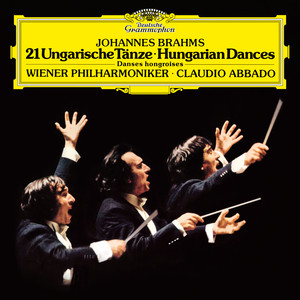 | 21 Hungarian Dances, WoO 1: Hungarian Dance No. 4 in F Minor. Poco sostenuto (Orch. Juon in F-Sharp Minor) | Johannes Brahms, Wiener Philharmoniker, Claudio Abbado | F♯ Minor | 2 | 11A | 80 BPM | |
 | L'Arlésienne Suite No. 2 (Arr. Guiraud): III. Menuet | Georges Bizet, Orchestre Symphonique de Montréal, Charles Dutoit | E♭ Major | 0 | 5B | 128 BPM | |
 | Bach, JS : Well-Tempered Clavier Book 1 : Prelude No.1 in C major BWV846 | Daniel Barenboim | C Major | 0 | 8B | 95 BPM | |
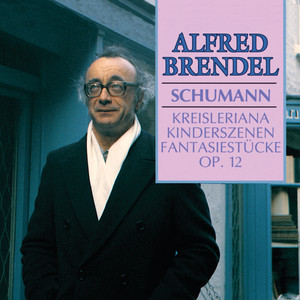 | Kinderszenen, Op. 15: VII. Träumerei | Robert Schumann, Alfred Brendel | F Major | 0 | 7B | 135 BPM |
- ISRC
- GBEBL0904024
- Label
- L-M Records/RCA Records