- BPM
- 101
- Key
- F Major
- Camelot
- 7B
Symphony No. 2: III. Allegro by Christopher Rouse, Houston Symphony, Christoph Eschenbach Song Details
"Symphony No. 2: III. Allegro" by Christopher Rouse, Houston Symphony, Christoph Eschenbach had its release date on May 1, 1997. Since This song is still less than 10 minute long, it is still considered a pretty long duration song compared to the average song length. This song does not appear to be explicit due to the lack of the "E" tag. There are a total of 9 in the song's album "Rouse: Symphony No. 2, Flute Concerto & Phaethon". In this album, this song's track order is #3. Furthermore, we believe that the track originated from United States. In terms of popularity, Symphony No. 2: III. Allegro is currently unknown. In our opinion, the overall tone is not very danceable and projects negative sounds, such as being sad, depressed, or angry.
BPM and Tempo
With Symphony No. 2: III. Allegro by Christopher Rouse, Houston Symphony, Christoph Eschenbach having a BPM of 101 with a half-time of 50 BPM and a double-time of 202 BPM, we would consider this track to have a Andante (at a walking pace) tempo marking. Because of this, we believe that the song has an overall slow tempo. The time signature for this track is 4/4.
Music Key
F Major is the music key of this track. Or for those who are familiar with the camelot wheel, this song has a camelot key of 7B. So, the perfect camelot match for 7B would be either 7B or 8A. While, 8B can give you a low energy boost. For moderate energy boost, you would use 4B and a high energy boost can either be 9B or 2B. Though, if you want a low energy drop, you should looking for songs with either a camelot key of 7A or 6B will give you a low energy drop, 10B would be a moderate one, and 5B or 12B would be a high energy drop. Lastly, 4A allows you to change the mood.
Want to find the BPM and music key for other songs? Check out our BPM and Key Finder page!
- Popularity
- 0%
- Loudness
- -21.309 dB
- Acousticness
- 75%
- Danceability
- 31%
- Energy
- 37%
- Instrumentalness
- 60%
- Liveness
- 31%
- Loudness
- 64%
- Speechiness
- 10%
- Valence
- 15%
Recommendations
| Track | Artist | Key | Energy | Camelot | BPM | ||
|---|---|---|---|---|---|---|---|
 | Organ Concerto in G Minor, FP 93: VI. Tempo de I' Allegro intial | Francis Poulenc, Philippe Lefebvre, Orchestre National de Lille, Jean-Claude Casadesus | A♭ Minor | 0 | 1A | 71 BPM | |
 | Clarinet Concerto in C Minor, Op. 31: II. Adagio, ma senza rigore | Gerald Finzi, Robert Plane, Royal Northern Sinfonia, Howard Griffiths | F♯ Major | 0 | 2B | 52 BPM | |
 | Wood Notes: II. Autumn Night: Lightly | William Grant Still, Fort Smith Symphony, John Jeter | D Minor | 0 | 7A | 65 BPM | |
 | Symphony No. 3: II | Arvo Pärt, NFM Wrocław Philharmonic, Tõnu Kaljuste | A Minor | 0 | 8A | 95 BPM | |
 | Shostakovich: Piano Concerto No. 2 in F Major, Op. 102: I. Allegro | Dmitri Shostakovich, Elisabeth Leonskaja, Hugh Wolff, Saint Paul Chamber Orchestra | B♭ Major | 2 | 6B | 77 BPM | |
 | Scythian Suite, Op. 20 - "Ala and Lolly": 1. Invocation to Veles and Ala | Sergei Prokofiev, Mariinsky Orchestra, Valery Gergiev | G Major | 1 | 9B | 85 BPM | |
 | Háry János Suite: IV. The Battle and Defeat of Napoleon | Zoltán Kodály, Neeme Järvi, Chicago Symphony Orchestra, Laurence Kaptain | F Major | 1 | 7B | 84 BPM | |
 | Symphony No. 4, Op. 29 "The Inextinguishable": II. Poco allegretto | Carl Nielsen, Danish National Symphony Orchestra, Fabio Luisi | C Major | 0 | 8B | 77 BPM | |
 | Sérénité Nocturne | Etoilee | E Major | 3 | 12B | 178 BPM | |
 | Symphony No. 14, "Morgenen" (the Morning), BVN 336: II. Upaagtede morgenstjerner [Unnoticed morning stars] | Rued Langgaard, Danish National Choir, Danish National Symphony Orchestra, Thomas Dausgaard | F Major | 0 | 7B | 81 BPM | |
 | Symphony No. 2 in C Minor, Op. 29: IIId. Tempo I (Fig. 63) | Alexander Scriabin, Danish National Symphony Orchestra, Fabio Luisi | B♭ Minor | 2 | 3A | 86 BPM | |
 | Galactic Pulse | Kira Nebula | E Major | 1 | 12B | 167 BPM | |
 | The Planets, Op. 32: II. Venus, the Bringer of Peace | Gustav Holst, Daniel Harding, Bavarian Radio Symphony Orchestra | C Minor | 2 | 5A | 89 BPM | |
 | 2 Pieces for Small Orchestra: No. 1, On Hearing the First Cuckoo in Spring | Frederick Delius, Royal Scottish National Orchestra, David Lloyd-Jones | E Minor | 0 | 9A | 79 BPM | |
 | Reisado do pastoreio: III. Batuque | Oscar Lorenzo Fernández, Minas Gerais Philharmonic Orchestra, Fabio Mechetti | F Major | 7 | 7B | 100 BPM | |
 | Sibelius: Symphony No. 1 in E Minor, Op. 39: I. Andante, ma non troppo - Allegro energico | Jean Sibelius, Paavo Berglund, Helsinki Philharmonic Orchestra | C Major | 2 | 8B | 109 BPM | |
 | Dove: Figures in the Garden: VII. Nocturne. Figaro and Susanna | Jonathan Dove, Antony Pay, Orchestra of the Age of Enlightenment | D♭ Major | 0 | 3B | 81 BPM | |
 | 2 Elegiac Melodies, Op. 34: No. 1, The Wounded Heart | Edvard Grieg, Malmö Symphony Orchestra, Bjarte Engeset | G Major | 2 | 9B | 72 BPM | |
 | Pelleas and Melisande Suite, Op. 46, JS 147: V. Pastorale | Jean Sibelius, Turku Philharmonic Orchestra, Leif Segerstam | A♭ Major | 0 | 4B | 94 BPM | |
 | Fastnachts-Sinfonie: Tranquillo non troppo sostenuto (1) | Richard Flury, BBC Symphony Orchestra, Paul Mann | D Minor | 1 | 7A | 105 BPM | |
 | Dolly Suite, Op. 56 (arr. H. Rabaud): III. Le Jardin de Dolly | Henri Rabaud, Gabriel Fauré, RTE Sinfonietta, John Georgiadis | E Major | 0 | 12B | 64 BPM | |
 | L'oiseau de feu, K. 10. Suite 1919: VII. Final | Igor Stravinsky, Budapest Festival Orchestra, Iván Fischer | A Major | 0 | 11B | 90 BPM | |
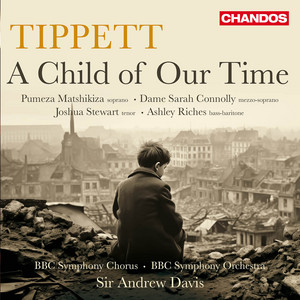 | A Child of our Time, Part I: The world turns on its dark side (Chorus) | Michael Tippett, BBC Symphony Chorus, BBC Symphony Orchestra, Andrew Davis | E Minor | 0 | 9A | 64 BPM | |
 | D'un matin de printemps | Lili Boulanger, Yan Pascal Tortelier, BBC Philharmonic | C Major | 1 | 8B | 130 BPM | |
| Sibelius: Symphony No. 1 in E Minor, Op. 39: III. Scherzo. Allegro | Jean Sibelius, Paavo Berglund, Helsinki Philharmonic Orchestra | C Major | 2 | 8B | 109 BPM |
- ISRC
- USTE10303452
- Label
- L-M Records/RCA Records