- BPM
- 72
- Key
- C Major
- Camelot
- 8B
Rigoletto, Act II: Old man, you're mistaken (Rigoletto, Gilda) by Giuseppe Verdi, Sir Mark Elder, English National Opera Orchestra, John Rawnsley, Helen Field Song Details
"Rigoletto, Act II: Old man, you're mistaken (Rigoletto, Gilda)" by Giuseppe Verdi, Sir Mark Elder, English National Opera Orchestra, John Rawnsley, Helen Field had its release date on January 1, 2000. The duration of This song is about two minutes long, specifically at 2:15. This song does not appear to have any foul language. Rigoletto, Act II: Old man, you're mistaken (Rigoletto, Gilda)'s duration is considered a little bit shorter than the average duration of a typical track. This song is part of Verdi: Rigoletto by Giuseppe Verdi, Sir Mark Elder, English National Opera Orchestra, John Rawnsley, Helen Field, Arthur Davies, John Tomlinson, Jean Rigby, Norman Bailey. The song's track number on the album is #10 out of 38 tracks. Based on our data, United Kingdom was the country where this track was produced or recorded. Rigoletto, Act II: Old man, you're mistaken (Rigoletto, Gilda) is unknown right now. In our opinion, the overall tone is not very danceable and projects negative sounds, such as being sad, depressed, or angry.
BPM and Tempo
Since Rigoletto, Act II: Old man, you're mistaken (Rigoletto, Gilda) by Giuseppe Verdi, Sir Mark Elder, English National Opera Orchestra, John Rawnsley, Helen Field has a tempo of 72 beats per a minute, the tempo markings of this song would be Adagio (slowly with great expression). With Rigoletto, Act II: Old man, you're mistaken (Rigoletto, Gilda) being at 72 BPM, the half-time would be 36 BPM with a double-time of 144 BPM.In addition, we consider the tempo speed to be pretty slow for this song. The time signature for this track is 4/4.
Music Key
This song is in the music key of C Major. Or for those who are familiar with the camelot wheel, this song has a camelot key of 8B. So, the perfect camelot match for 8B would be either 8B or 9A. While, 9B can give you a low energy boost. For moderate energy boost, you would use 5B and a high energy boost can either be 10B or 3B. Though, if you want a low energy drop, you should looking for songs with either a camelot key of 8A or 7B will give you a low energy drop, 11B would be a moderate one, and 6B or 1B would be a high energy drop. Lastly, 5A allows you to change the mood.
Want to find the BPM and music key for other songs? Check out our BPM and Key Finder page!
- Popularity
- 0%
- Loudness
- -15.334 dB
- Acousticness
- 94%
- Danceability
- 22%
- Energy
- 28%
- Instrumentalness
- 6%
- Liveness
- 9%
- Loudness
- 74%
- Speechiness
- 4%
- Valence
- 4%
Recommendations
| Track | Artist | Key | Energy | Camelot | BPM | ||
|---|---|---|---|---|---|---|---|
 | Carmen, WD 31, Act I: Habanera: L'amour est un oiseau rebelle | Georges Bizet, Alexandrina Milcheva, Nikola Nikolov, Liliana Vassileva, Nicola Ghiuselev, Stefka Popangelova, Tsvetanka Arshinkova, Milen Paounov, Verter Vrachovsky, Pavel Gerdjikov, Georgi Genov, Sofia National Opera Chorus, Sofia National Opera Orchestra, Ivan Marinov | D Major | 1 | 10B | 131 BPM | |
 | Carmina Burana: I. O fortuna | Carl Orff, Orchester der Deutschen Oper Berlin, Eugen Jochum, Chor der Deutschen Oper Berlin | B♭ Major | 2 | 6B | 70 BPM | |
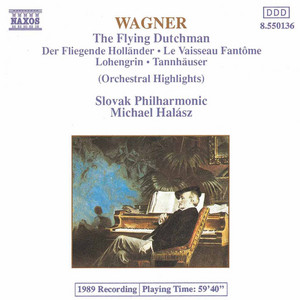 | Lohengrin, Act III: Prelude | Richard Wagner, Slovak Philharmonic Orchestra, Michael Halasz | G Major | 2 | 9B | 94 BPM | |
| Carmina Burana / Fortuna Imperatrix Mundi: "Fortune plango vulnera" | Carl Orff, Chor der Deutschen Oper Berlin, Orchester der Deutschen Oper Berlin, Eugen Jochum | B♭ Major | 2 | 6B | 132 BPM | |
 | Una voce poco fa from Il Barbiere di Siviglia, '(The) Barber of Seville' | Maria Callas, Philharmonia Orchestra, Tullio Serafin | E Major | 1 | 12B | 136 BPM | |
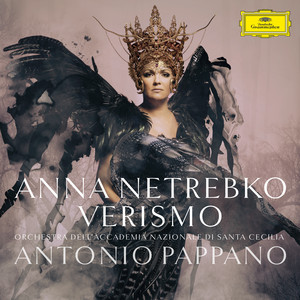 | Adriana Lecouvreur / Act 1: "Ecco: respiro appena ... Io son l'umile ancella" | Francesco Cilea, Anna Netrebko, Orchestra dell'Accademia Nazionale di Santa Cecilia, Antonio Pappano | A♭ Major | 1 | 4B | 82 BPM | |
 | Il Trovatore - Act II | Maria Callas, Giuseppe Di Stefano, Rolando Panerai, Renato Ercolani, Giuseppe Verdi, Fedora Barbieri, Luisa Villa, Herbert von Karajan, Orchestra and Chorus of La Scala, Nicola Zaccaria | G Major | 3 | 9B | 128 BPM | |
 | La sonnambula, Act I: Come per me sereno | Vincenzo Bellini, Maria Callas, Orchestra Del Teatro Alla Scala, Milano, Antonino Votto | E♭ Major | 1 | 5B | 88 BPM | |
 | Voices of Spring, Op. 410 | Johann Strauss II, Leonard Bernstein | B♭ Major | 2 | 6B | 110 BPM | |
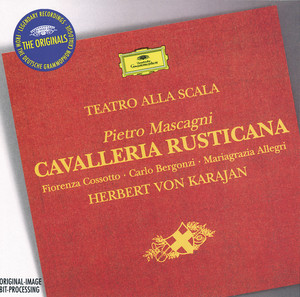 | Cavalleria rusticana: "O lola ch'ai di latti la cammisa" (Siciliana) | Pietro Mascagni, Carlo Bergonzi, Orchestra Del Teatro Alla Scala, Milano, Herbert von Karajan | F Minor | 0 | 4A | 167 BPM | |
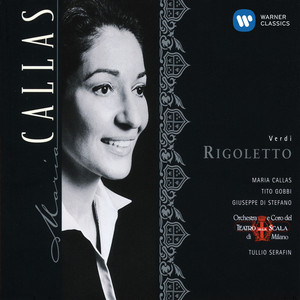 | Verdi: Rigoletto, Act 1 Scene 13: No. 6, Scene ed Aria, "Gualtier Maldè! … Caro nome che il mio cor" (Gilda, Borsa, Ceprano, Marullo, Chorus) | Giuseppe Verdi, Maria Callas, Renato Ercolani, William Dickie, Orchestra Del Teatro Alla Scala, Milano, Tullio Serafin, Orchestra Del Teatro Alla Scala Di Milan, Philharmonia Orchestra | E Major | 0 | 12B | 68 BPM | |
 | Bizet: Carmen, Act 1: Séguedille. "Près des remparts de Séville" (Carmen, José) | Georges Bizet, Maria Callas, Nicolai Gedda, Orchestre de l'Opéra National de Paris, Georges Prêtre, Orchestre du Théâtre National de l'Opéra Paris, Paris Opera Orchestra | D Major | 1 | 10B | 83 BPM | |
| Carmina Burana: XXV. O fortuna | Carl Orff, Chor der Deutschen Oper Berlin, Orchester der Deutschen Oper Berlin, Eugen Jochum | B♭ Major | 3 | 6B | 142 BPM | |
 | Don Giovanni, ossia Il dissoluto punito, K.527 / Act 2: "Don Giovanni, a cenar teco m'invitasti" | Wolfgang Amadeus Mozart, Paata Burchuladze, Samuel Ramey, Ferruccio Furlanetto, Berliner Philharmoniker, Herbert von Karajan, Chor der Deutschen Oper Berlin | B♭ Major | 3 | 6B | 76 BPM | |
 | Norma: Sinfonia | Vincenzo Bellini, Welsh National Opera Orchestra, Richard Bonynge | G Major | 1 | 9B | 140 BPM | |
 | Carmen / Act 2: Chanson: "Les tringles des sistres tintaient" | Georges Bizet, Elina Garanca, Cristina Antoaneta Pasaroiu, Giuseppina Bridelli, Orchestra Sinfonica Nazionale Della RAI, Karel Mark Chichon | C Major | 1 | 8B | 111 BPM | |
| Carmina Burana: V. Ecce gratum | Carl Orff, Chor der Deutschen Oper Berlin, Orchester der Deutschen Oper Berlin, Eugen Jochum | B♭ Major | 4 | 6B | 139 BPM | |
 | Das Liebesverbot: Overture | Richard Wagner, Staatskapelle Dresden, Giuseppe Sinopoli | G Major | 6 | 9B | 120 BPM | |
 | Die Fledermaus: Overture | Johann Strauss II, Bavarian State Orchestra, Carlos Kleiber | G Major | 1 | 9B | 100 BPM | |
 | Carmen, Act I, No.2 : Scène et Choeur: Regardez donc cette petite qui semble vouloir nous parler (Moralès/Micaëla/Dragons) | Georges Bizet, Ludovic Tézier/Inva Mula/Choeur 'Les Elements'/Orchestre National du Capitole de Toulouse/Michel Plasson, Michel Plasson, Wolff, Orchestre National Du Capitole De Toulouse | B♭ Major | 1 | 6B | 89 BPM | |
 | 21 Hungarian Dances, WoO 1: Hungarian Dance No. 5 in G Minor. Allegro (Orch. Schmeling) | Johannes Brahms, Wiener Philharmoniker, Claudio Abbado | G Minor | 2 | 6A | 145 BPM | |
 | Il Trovatore / Act 3: "Squilli, echeggi la tromba" | Giuseppe Verdi, Nicolai Ghiaurov, The London Opera Chorus, National Philharmonic Orchestra, Richard Bonynge | E Major | 4 | 12B | 110 BPM | |
 | Gypsy Melodies, Op. 55: 4. Songs My Mother Taught Me (Orchestral Version) | Antonín Dvořák, Greta Bradman, Adelaide Symphony Orchestra, Luke Dollman | C Major | 2 | 8B | 189 BPM | |
| Bizet: Carmen, Act 1: "Avec la garde montante" (Children's Chorus, Moralès, José) | Georges Bizet, Nicolai Gedda/Claude Calès/Choeurs d'Enfants Jean Pesneaud/Orchestre de l'Opéra National de Paris/Georges Prêtre, Georges Prêtre, Orchestre du Théâtre National de l'Opéra Paris, Orchestre de l'Opéra National de Paris, Paris Opera Orchestra | D Minor | 1 | 7A | 122 BPM | |
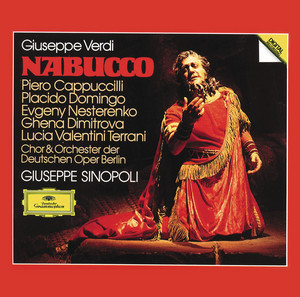 | Nabucco / Act 1: Viva Nabucco! | Giuseppe Verdi, Ghena Dimitrova, Yevgeny Nesterenko, Plácido Domingo, Piero Cappuccilli, Orchester der Deutschen Oper Berlin, Giuseppe Sinopoli, Chor der Deutschen Oper Berlin | A Major | 3 | 11B | 79 BPM |
- ISRC
- GBLWD0001110
- Label
- L-M Records/RCA Records