- BPM
- 108
- Key
- A Minor
- Camelot
- 8A
Introduction et rondo capriccioso, Op. 28, R. 188 by Camille Saint-Saëns, Tianwa Yang, Malmö Symphony Orchestra, Marc Soustrot Song Details
Camille Saint-Saëns, Tianwa Yang, Malmö Symphony Orchestra, Marc Soustrot's 'Introduction et rondo capriccioso, Op. 28, R. 188' had a release date set for November 10, 2017. Since This song is still less than 10 minute long, it is still considered a pretty long duration song compared to the average song length. This song does not appear to be explicit due to the lack of the "E" tag. There are a total of 7 in the song's album "Saint-Saëns: Works for Violin & Orchestra". In this album, this song's track order is #7. Furthermore, we believe that the track originated from Hong Kong. In terms of popularity, Introduction et rondo capriccioso, Op. 28, R. 188 is currently not that popular. In our opinion, the overall tone is not very danceable and projects negative sounds, such as being sad, depressed, or angry.
BPM and Tempo
With Introduction et rondo capriccioso, Op. 28, R. 188 by Camille Saint-Saëns, Tianwa Yang, Malmö Symphony Orchestra, Marc Soustrot having a BPM of 108 with a half-time of 54 BPM and a double-time of 216 BPM, we would consider this track to have a Andante (at a walking pace) tempo marking. Because of this, we believe that the song has an overall moderate tempo. The time signature for this track is 4/4.
Music Key
A Minor is the music key of this track. Which also means that the camelot key for this song is 8A. So, the perfect camelot match for 8A would be either 8A or 7B. While, a low energy boost can consist of either 8B or 9A. For moderate energy boost, you would use 5A and a high energy boost can either be 10A or 3A. However, if you are looking for a low energy drop, finding a song with a camelot key of 7A would be a great choice. Where 11A would give you a moderate drop, and 6A or 1A would be a high energy drop. Lastly, 11B allows you to change the mood.
Want to find the BPM and music key for other songs? Check out our BPM and Key Finder page!
- Popularity
- 2%
- Loudness
- -26.155 dB
- Acousticness
- 80%
- Danceability
- 38%
- Energy
- 7%
- Instrumentalness
- 11%
- Liveness
- 12%
- Loudness
- 56%
- Speechiness
- 4%
- Valence
- 20%
Recommendations
| Track | Artist | Key | Energy | Camelot | BPM | ||
|---|---|---|---|---|---|---|---|
 | Cello Concerto in D Minor: II. Intermezzo: Andantino con moto - Allegro - Presto | Édouard Lalo, Maria Kliegel, Nicolaus Esterhazy Sinfonia, Michael Halasz | D Major | 0 | 10B | 168 BPM | |
 | Dance of the goblins | Razvan Stoica | C Major | 4 | 8B | 177 BPM | |
 | Orientale No. 9, Op. 50 from Kaleidoscope | César Cui, Midori, Robert McDonald | G Minor | 1 | 6A | 106 BPM | |
 | Chopin: Ballade No. 1 in G Minor, Op. 23 | Frédéric Chopin, Alexandre Tharaud | G Minor | 2 | 6A | 69 BPM | |
 | Sonata In G Minor For Cello & Piano, Op. 19: 3. Andante | Sergei Rachmaninoff, Alisa Weilerstein, Inon Barnatan | F Major | 2 | 7B | 82 BPM | |
 | Moses Fantasy | Niccolò Paganini, Nemanja Radulović | C Major | 1 | 8B | 100 BPM | |
 | Moments Musicaux, Op. 16: No. 4 in E Minor. Presto - Più vivo - Prestissimo | Sergei Rachmaninoff, Xiayin Wang | E Minor | 2 | 9A | 103 BPM | |
 | Sonata op. 166: Andantino | Camille Saint-Saëns, Pauline Oostenrijk, Ivo Janssen | D Major | 1 | 10B | 137 BPM | |
 | Hungarian Dance No. 1 in G Minor, WoO 1 | Johannes Brahms, Budapest Festival Orchestra, Iván Fischer | G Minor | 2 | 6A | 115 BPM | |
 | Accolay: Violin Concerto No. 1 in A Minor | Jean Baptist Accolay, Itzhak Perlman, Lawrence Foster, The Juilliard Orchestra | A Minor | 2 | 8A | 97 BPM | |
 | Scheherazade, Op. 35: II. Lento - Andantino "The Legend of the Kalendar Prince" | Nikolai Rimsky-Korsakov, New York Philharmonic, Alan Gilbert, Lawrence Rock | G Major | 1 | 9B | 59 BPM | |
 | Introduction et rondo capriccioso in A minor, Op. 28: I. Andante | RCA Victor Symphony Orchestra & William Steinberg | F Minor | 3 | 4A | 172 BPM | |
 | From Holberg's Time, Op. 40: V. Rigaudon: Allegro con brio | Edvard Grieg, Moscow Soloists, Yuri Bashmet | C Major | 0 | 8B | 109 BPM | |
 | Zigeunerweisen, Op. 20 (version for violin and orchestra): III. Allegro molto vivace | RCA Victor Symphony Orchestra & William Steinberg | A♭ Major | 1 | 4B | 88 BPM | |
 | I. Un poco andante - Allegro molto ed agitato (Arr. R. Tognetti for string orchestra) | Edvard Grieg, Australian Chamber Orchestra, Richard Tognetti | F Major | 0 | 7B | 92 BPM | |
 | Sibelius: Violin Concerto in D Minor, Op. 47: III. Allegro ma non tanto | Jean Sibelius, Itzhak Perlman, André Previn, Pittsburgh Symphony Orchestra | D Major | 3 | 10B | 108 BPM | |
 | Mendelssohn: Violin Concerto in E Minor, Op. 64, MWV O14: II. Andante | Felix Mendelssohn, Maxim Vengerov, Kurt Masur, Gewandhausorchester | C Major | 1 | 8B | 96 BPM | |
 | Slavonic Dance for Four Hands in E Minor, Op. 72/2: Dumka (Allegretto grazioso) | Antonín Dvořák, Khatia Buniatishvili | C Major | 0 | 8B | 77 BPM | |
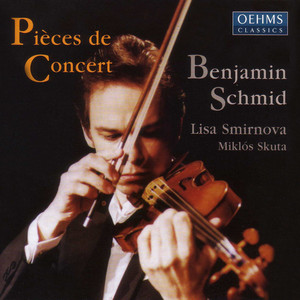 | Carmen, fantasie brillante, Op. 3, No. 3: Andante moderato | Jenő Hubay, Benjamin Schmid, Lisa Smirnova | B Minor | 2 | 10A | 73 BPM | |
 | Notturno in G Minor | Fanny Mendelssohn, Heather Schmidt | G Minor | 1 | 6A | 125 BPM | |
 | Violin Concerto No. 2 in D minor Op. 22 (1985 Digital Remaster): III. Allegro con fuoco - Allegro moderato (à la Zingara) | Henryk Wieniawski, Itzhak Perlman, Seiji Ozawa, Boston Symphony Orchestra | D Major | 2 | 10B | 74 BPM | |
 | Symphonie Espagnole In D Minor, Op.21: 3. Intermezzo (Allegretto non troppo) | Édouard Lalo, Itzhak Perlman, Orchestre de Paris, Daniel Barenboim | A Minor | 1 | 8A | 115 BPM | |
 | Piano Quartet No. 1 in G Minor, Op. 25: IV. Rondo alla Zingarese | Johannes Brahms, Martha Argerich, Gidon Kremer, Yuri Bashmet, Mischa Maisky | G Major | 1 | 9B | 88 BPM | |
 | Romeo & Juliet, Op. 64, Act I: No. 13, Dance of the Knights (Montagues & Capulets) | Sergei Prokofiev, Baltimore Symphony Orchestra, Marin Alsop | C Major | 1 | 8B | 101 BPM | |
 | Bruch: Violin Concerto No. 1 in G Minor, Op. 26: I. Prelude. Allegro moderato | Max Bruch, Sarah Chang, Kurt Masur, Dresdner Philharmonie | C Minor | 2 | 5A | 118 BPM |
- ISRC
- HKI191717607
- Label
- L-M Records/RCA Records